
Late blight: identify, prevent, control
Updated October 2026
Most likely in cool, wet spells from midsummer to fall in the Northeast, the mid-Atlantic, the upper Midwest and the Pacific Northwest, and in winter in Florida.
Late blight is the disease behind the Irish potato famine, and it is still the most destructive disease of tomatoes and potatoes. It is caused by a water mold that produces huge numbers of airborne spores, so a single infected garden can seed outbreaks miles away. In cool, damp weather it can kill a tomato planting in a week, which is why fast action and telling your neighbors matter.
Phytophthora infestans
.jpg)
How to identify it
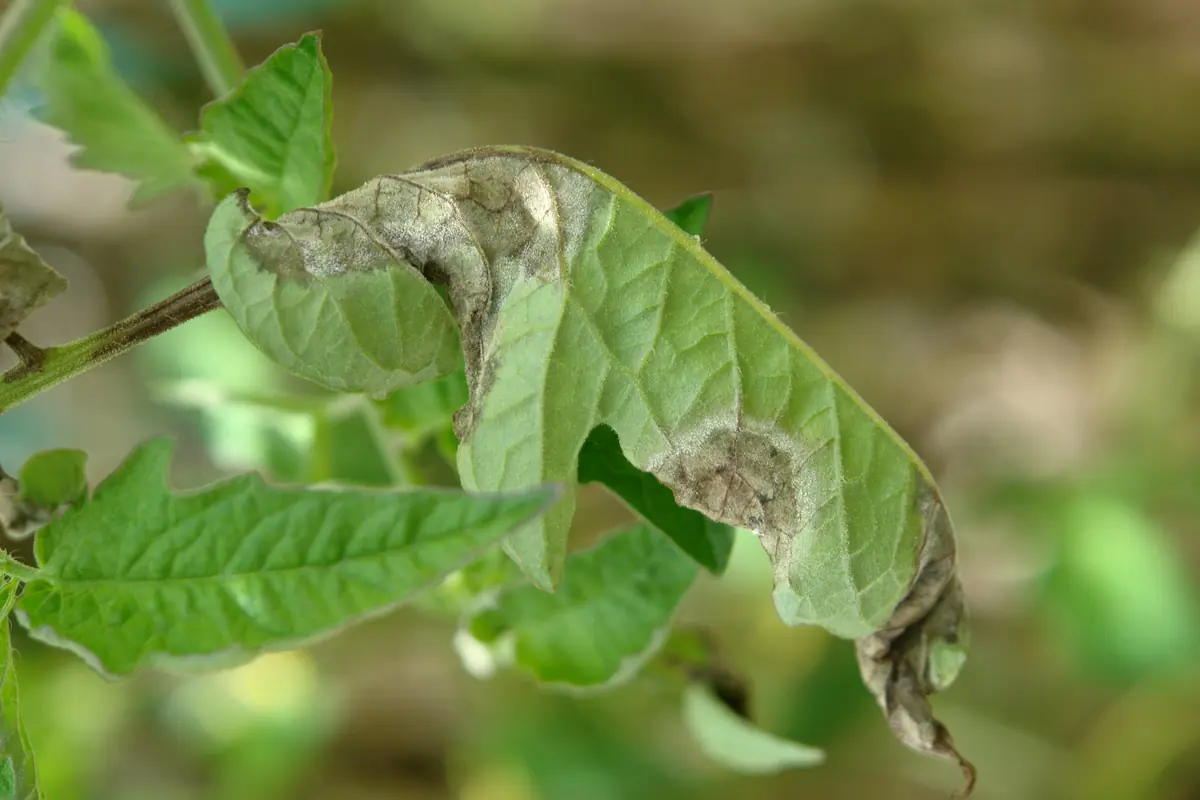
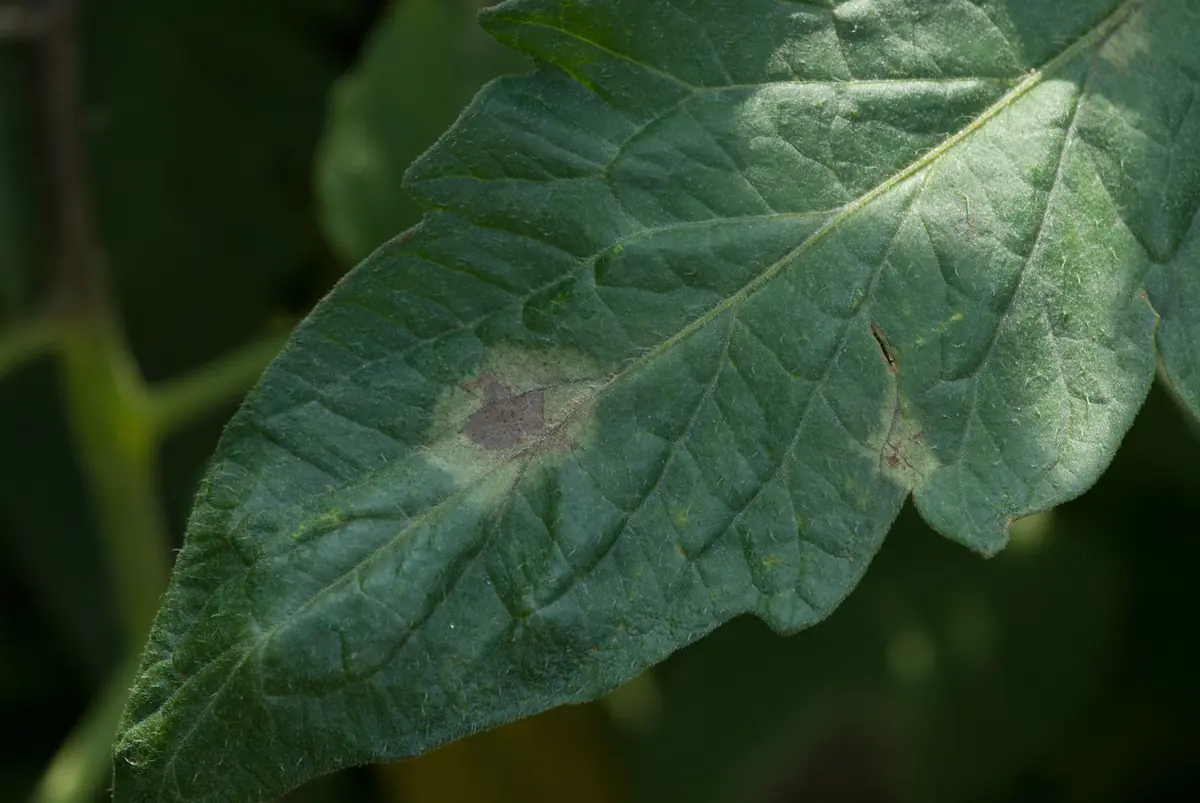
- Large, irregular, pale green to gray-green patches that look water-soaked or greasy appear on leaves, often near the top of the plant first.
- The patches quickly turn brown to nearly black and spread across the leaf, and the leaf shrivels and hangs on the stem.
- In humid weather or early in the morning a fuzzy white growth forms on the underside of the leaf, around the edge of the dead tissue.
- Dark brown to black, greasy-looking lesions develop on stems and leaf stalks, and the stem can collapse at those points.
- Tomato fruit develops firm, greasy, olive-brown to chocolate-brown patches, often on the upper half, that stay firm until other rots move in.
- Potato tubers show reddish-brown, dry, granular rot just under the skin, and infected tubers often go soft and smelly in storage.
.jpg)
What it is often confused with
Early blight
Early blight spots are smaller, brown and ringed like a target, and start on the lowest leaves, while late blight patches are large, greasy, have no rings and often show white fuzz underneath.
Frost or chemical damage
Frost and herbicide or fertilizer burn also blacken leaves suddenly, but they appear all at once after a cold night or a spray and never produce white fuzz or keep spreading in the days after.
Gray mold
Gray mold makes soft brown patches with dusty gray-brown spores, usually starting from dead flowers or wounds, whereas late blight sporulates as fine white fuzz on the leaf underside.
When and where it is worst
Late blight needs living plants and cool, wet weather. Nights in the 50s and 60s°F with days in the 70s or low 80s, plus rain, fog or heavy dew, give it ideal conditions, and new lesions show within three to five days of infection. That is why outbreaks often appear in July and August in the Northeast, the mid-Atlantic and the Great Lakes states, in late summer and fall in the Pacific Northwest, and in the cooler months in Florida and along the Gulf where tomatoes and potatoes grow in winter.
In most of the United States the pathogen does not survive the winter in soil or on tomato stakes. It carries over in living tissue, mainly infected potato tubers left in the ground, cull piles or seed potatoes, and it arrives on infected transplants or as spores blowing in from other gardens and farms. The national USABlight project at usablight.org maps confirmed outbreaks, which helps you know when to be on guard.
Plants it affects
These plants in our library list it as a problem to watch for.
How to prevent it
- Plant certified seed potatoes and never plant potatoes saved from your own crop or from the grocery store.
- Dig up every potato at harvest and pull any volunteer potatoes or tomatoes that come up next spring, because they can carry the disease over.
- Inspect tomato transplants before you buy them and leave behind any with dark, greasy blotches on leaves or stems.
- Choose resistant tomatoes such as Defiant PhR, Mountain Merit, Mountain Magic, Plum Regal or Matt's Wild Cherry, especially in areas that see late blight most years.
- Space and stake plants so leaves dry quickly, and water at the base in the morning rather than overhead.
- Check usablight.org or your county Extension office during cool, wet weather and start protective sprays when late blight is reported nearby.
Organic control, step by step
- Check plants every few days in cool, wet weather and look under the leaves for white fuzz along the edge of dark patches.
- If only a few leaves are infected, cut them off on a dry day, bag them and put them in the trash.
- If the disease is spreading through a plant, pull the whole plant, seal it in a plastic bag and either put it in the trash or leave the bag in the sun until everything inside is dead, then dispose of it.
- Protect nearby healthy plants with a fixed copper product labeled for tomatoes and potatoes, applied every 5 to 7 days while the weather stays cool and wet.
- Tell neighbors who grow tomatoes or potatoes, and report the outbreak to your county Extension office or usablight.org so others can protect their plants.
Conventional control
- Chlorothalonil is the main protectant for home gardens and works best when applied before the disease arrives and repeated every 7 days during cool, wet weather.
- Mancozeb and fixed copper products labeled for tomatoes and potatoes are other home garden protectants on a similar schedule.
- No home garden product cures infected leaves or stems, so sprays are only worth it to protect healthy plants once late blight is reported nearby.
- Read the label, check that tomatoes or potatoes are listed, and keep to the pre-harvest interval.
Frequently asked questions
Can I eat tomatoes from a plant with late blight?
Fruit that shows no lesions is safe to eat, though it may not keep well. Do not eat or can fruit with lesions, because other rots often follow and canning relies on sound fruit.
Can I compost plants with late blight?
Only once they are completely dead. Bag the plants and leave them in the sun or put them in the trash, because living tissue can keep producing spores for days.
Will late blight be in my soil next year?
In most of the country it does not survive in soil or on dead tomato vines. The main risks are potato tubers left in the ground and infected transplants, so dig all potatoes and pull volunteers next spring.
Are potatoes from a blighted patch safe to store?
Wait two to three weeks after the vines have died before you dig, so spores on the soil surface die off. Sort carefully and eat or discard any tuber with brown, granular rot under the skin, because it will rot in storage.
Is late blight reportable?
It is not a quarantine disease in most states, but extension services ask gardeners to report it. Contact your county Extension office or post it to usablight.org so nearby growers can protect their crops.
Related problems
Sources: NC State Extension, Tomato late blight; University of Minnesota Extension, Late blight; University of Maryland Extension, Key points about late blight; USABlight, national late blight monitoring project. Identification and control follow these sources. Always read and follow the product label.