
Cucumber Trellis Ideas: Three DIY Builds With Measurements
Updated November 2026
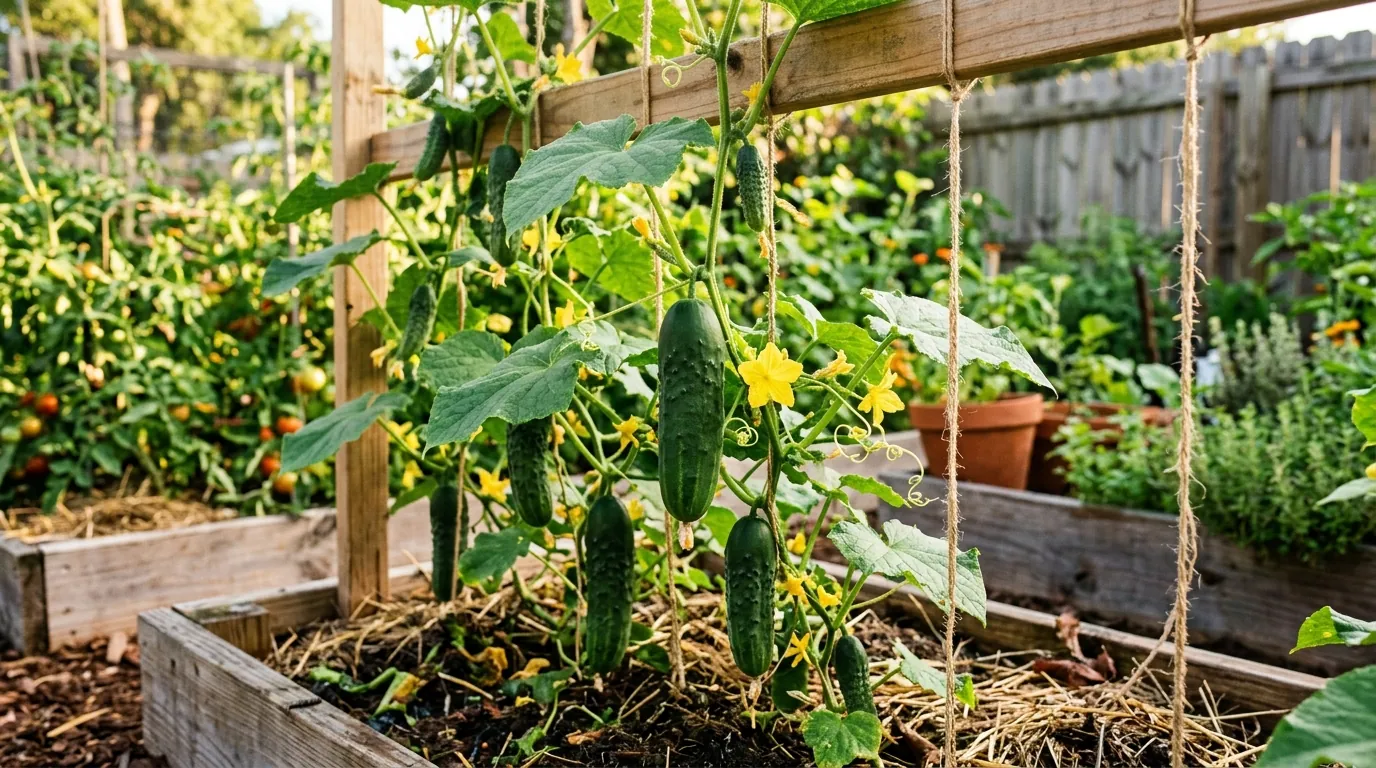
A flat net, an A-frame and a cane teepee, with the sizes that work
A good cucumber trellis is tall enough for a full vine, strong enough for a heavy crop and open enough to reach through. This page gives three DIY builds with measurements: a flat net between two posts, an A-frame that shades a salad bed and a cane teepee for containers. Each works for vining varieties such as Suyo Long and Marketmore 76 and uses posts, netting, canes and twine.
Trellising pays off. The University of Minnesota Extension says a 3 to 4 foot (1 to 1.2 m) trellis lets you space rows closer together and grows straight fruit, and the University of Maryland Extension lists higher yield per square foot, fruit kept off the ground and, in commercial trials, trellised slicers yielding two to three times as much as non-trellised ones. Because trellised plants dry out faster, they may need more frequent watering. Planting windows and care are in how to grow cucumbers.
Which cucumber trellis should you build?
| Build | Size | Plants it holds | Best for |
|---|---|---|---|
| Flat net or mesh panel | 6 ft (1.8 m) high, 8 ft (2.4 m) between posts | About 6 plants | Garden rows and raised beds |
| A-frame | Two panels 4 ft by 6 ft (1.2 m by 1.8 m), feet 3 ft (90 cm) apart | About 8 to 10 plants | Small yards, with lettuce in the shade below |
| Cane teepee | Five canes 7 ft (2.1 m) long in a 3 ft (90 cm) ring | 3 or 4 plants | Large containers and corners |
Build 1: flat net between two posts
- Cut two posts 8 ft (2.4 m) long and set each 2 ft (60 cm) in the ground, leaving 6 ft (1.8 m) showing. Place them 8 ft (2.4 m) apart.
- Stretch welded wire mesh or strong netting between the posts. Choose openings of 4 to 6 inches (10 to 15 cm) so tendrils can wrap and a hand can reach in.
- Plant a seedling every 12 to 18 inches (30 to 45 cm) along the base, about six plants on an 8 ft panel.
- Tie the first shoots in with soft twine and let the tendrils take over.
- Keep a second row at least 4 ft (1.2 m) away so air can move between the rows.
Use rot-resistant posts or steel T-posts. A vine in full growth is heavy, and a sagging net drags the whole crop down.
Build 2: A-frame
- Build two panels, each 4 ft (1.2 m) wide and 6 ft (1.8 m) long, from lumber and welded wire or from two pieces of mesh.
- Stand them in an A with the feet 3 ft (90 cm) apart and hinge them at the top with bolts or heavy zip ties. The peak is about 5 ft 10 in (1.75 m) high.
- Add a rail across the frame near the top and stake the feet down against wind.
- Plant on both outer sides every 12 to 18 inches (30 to 45 cm), about 8 to 10 plants in total.
- Grow lettuce or spinach in the shade underneath in warm weather.
Build 3: cane teepee
- Push five canes or stakes, each 7 ft (2.1 m) long, 8 inches (20 cm) into the soil in a ring about 3 ft (90 cm) across.
- Lean the tops together and tie them securely so the teepee stands about 6 ft (1.8 m) tall.
- Wrap twine around the canes at 12 inch (30 cm) steps for the tendrils to grip.
- Plant one seedling at the base of every second cane, so three or four plants.
- In a container, use a pot of at least 10 gallons (38 L), set the canes near the rim and weigh the pot down.
Training the vines
Guide the leading shoot toward the support every 8 to 12 inches (20 to 30 cm) and let the tendrils wrap. Keep the lower stem clear of leaves for airflow. Water at the base in the morning, because dense, wet canopy encourages powdery mildew and downy mildew. Row cover on young plants keeps cucumber beetles off before flowering.
Common trellis mistakes
- A trellis under 6 ft (1.8 m), which leaves the vines flopping back down.
- Wire openings smaller than 4 inches (10 cm), which trap swelling fruit.
- Plants closer than 12 inches (30 cm), which shut out air.
- A tall flat trellis on the south side of the bed, which shades everything behind it. In the US the sun is to the south, so place the trellis on the north side of the bed.
More support and companion ideas
The trellis and support guide covers other crops by type. Cucumber companion plants lists what grows well alongside, cucumbers in a pot covers containers and vertical gardening has ideas for small spaces.
Questions
How tall should a cucumber trellis be?
At least 6 ft (1.8 m) for vining varieties. The University of Minnesota Extension says even a 3 to 4 foot (1 to 1.2 m) trellis gives straight fruit and lets you space rows closer.
What is the best spacing on a cucumber trellis?
We use 12 to 18 inches (30 to 45 cm). The University of Maryland Extension says vertical plants can be spaced 18 inches apart, and Oregon State Extension gives 12 to 24 inches in rows 48 to 72 inches apart.
What size mesh should I use?
Openings of 4 to 6 inches (10 to 15 cm) let tendrils wrap and let you reach in to pick.
Does trellising increase yield?
Maryland Extension lists increased total yield and yield per square foot as a benefit in home gardens, and says trellised slicers may yield two to three times as much in commercial fields.
Can I use a cattle panel?
Yes, a welded wire panel works well as a flat trellis. Fix it upright between sturdy posts and check the openings are large enough to reach through.
Do trellised cucumbers need more water?
Often yes. The University of Minnesota Extension notes trellised plants may need watering more often because they dry out faster.
Sources
- University of Minnesota Extension, Growing cucumbers in home gardens
- University of Maryland Extension, Growing Cucumbers in a Home Garden
- Oregon State University Extension, Grow your own cucumbers
- Johnny's Selected Seeds (US), Suyo Long, Marketmore 76 and Diva listings, read 2026-11-13
Plant profile
The cucumber profile has sowing times for your region, companion plants and common pests.