
Downy mildew: identify, prevent, control
Updated October 2026
Worst in cool to warm, wet or humid spells, from spring and fall greens to the late summer cucumber and basil outbreaks that move north each year.
Downy mildew is caused by water molds (oomycetes), which are related to the organisms behind late blight rather than to true fungi. There is a separate downy mildew for cucurbits, basil, lettuce, brassicas, onions, spinach, grapes, sunflowers and lima beans, and each one stays on its own crop group. It moves fast in wet weather and can strip a cucumber or basil planting in one to two weeks.
Pseudoperonospora, Peronospora, Bremia, Plasmopara and related species
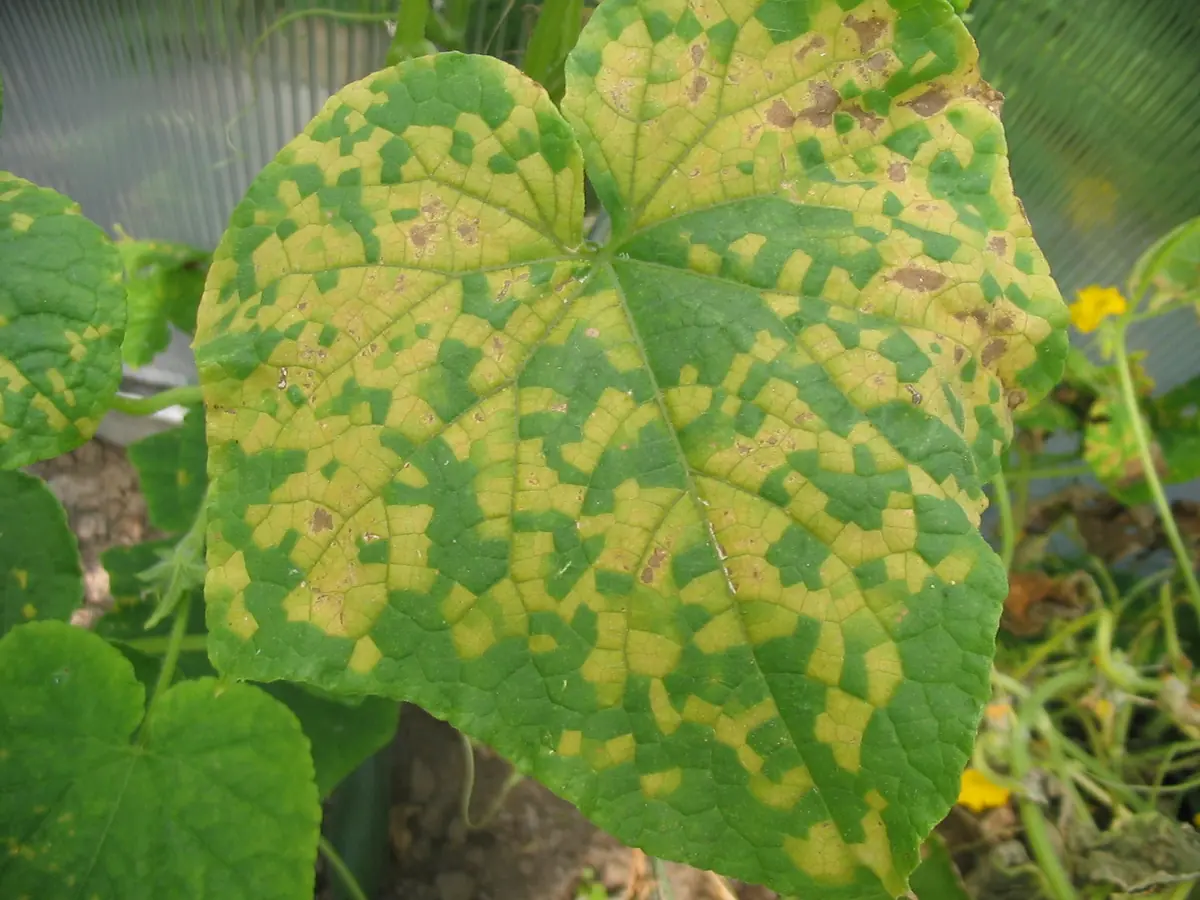

How to identify it
- Look first at the upper side of older leaves for pale green to yellow patches that are squared off by the leaf veins, giving a mosaic or checkerboard look on cucumbers.
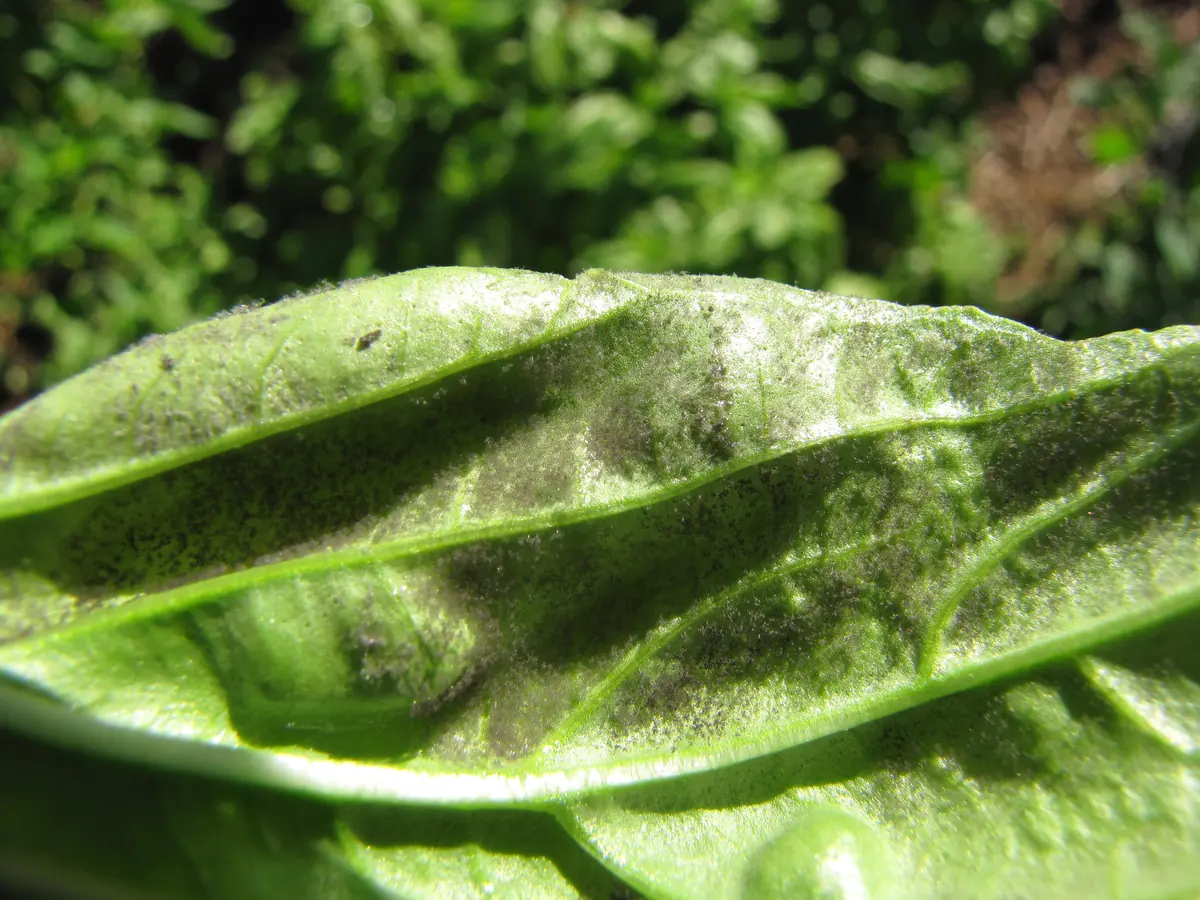
- Turn the leaf over early in the morning and you will see gray, brown or purplish fuzz under those patches, which is where the spores form.
- On basil the yellowing starts near the central vein and spreads outward, and the underside turns dusty gray to purple-brown.
- On lettuce, spinach, brassicas such as kale, broccoli and cabbage, and on onions, the patches turn brown and papery, and onion leaves may bend and collapse.
- On grapes you see yellow oily spots on the leaves with white down beneath, and young berries can turn gray or brown and shrivel.
- Within days the patches die and turn brown, and badly affected cucurbit vines look scorched from the center outward.
.jpg)
What it is often confused with
Powdery mildew
Powdery mildew is white powder sitting mostly on the upper leaf surface and likes dry weather. Downy mildew shows yellow angular patches above and dark fuzz only below, and it needs moisture.
Leaf spot
Bacterial and fungal leaf spots on cucurbits and greens are also angular, but they have no fuzzy growth on the underside. A hand lens and a humid morning usually settle it.
When and where it is worst
Downy mildews need leaf wetness from rain, dew, fog or sprinklers. Cucurbit downy mildew is most severe at about 59 to 68°F with wet leaves, though it infects across a much wider range. It survives the winter only where cucurbits grow year round, mainly Florida and southern Texas, and its spores ride storm systems north each summer, so outbreaks in the Southeast, Mid Atlantic, Northeast and Midwest usually arrive from June to August. A public forecast service, the Cucurbit Downy Mildew ipmPIPE, maps confirmed reports through the season.
Basil downy mildew was first confirmed in the US in Florida in 2007 and now turns up each summer in the East and Midwest, and through the year in Florida, Hawaii and greenhouses. Lettuce, spinach, brassica and onion downy mildews are cool season problems, worst in spring and fall plantings and through winter in California, the Pacific Northwest and the Gulf Coast.
Plants it affects
These plants in our library list it as a problem to watch for.
How to prevent it
- Grow resistant varieties: many cucumber varieties carry downy mildew resistance, and basil varieties such as Rutgers Obsession DMR, Devotion DMR, Passion DMR and Thunderstruck were bred for it.
- Water with drip or soaker hoses, or water early in the day so leaves dry quickly, and avoid evening sprinkling.
- Space and trellis plants for good air movement, and keep basil and lettuce out of damp, shady corners.
- Plant cucumbers and squash early in the season so you harvest before the yearly downy mildew wave reaches your area.
- Buy clean seed and transplants, since basil downy mildew can travel on seed and nursery plants.
- Remove and bag or bury infected plants promptly, and clear crop debris at the end of each season.
Organic control, step by step
- Check the undersides of cucumber and basil leaves twice a week once your area has reports of the disease.
- Pull, bag and bin plants as soon as symptoms appear in basil, lettuce and cucumbers, since infected leaves will not recover and keep producing spores.
- Fixed copper products give some protection on cucurbits, grapes and many vegetables when sprayed before infection and repeated after heavy rain.
- Harvest healthy basil and greens quickly if the disease is nearby; the leaves are safe to eat if they look and taste fine.
Conventional control
- Extension specialists agree that home garden products give limited control once downy mildew has started, so sprays must begin before symptoms and be repeated.
- Chlorothalonil and copper are labeled for downy mildew on cucurbits in home garden products; start when the disease is reported in your region and repeat on the label interval.
- Mancozeb and captan home products list grapes, and some phosphorous acid (potassium phosphite) products list certain vegetables and grapes for downy mildew.
- Read the label, check that your crop is listed, and keep to the pre-harvest interval shown for that crop.
Frequently asked questions
Is basil with downy mildew safe to eat?
Yes. The pathogen does not harm people, so leaves that still look good can be eaten or made into pesto. Spotted leaves taste poor and spoil quickly, so harvest the clean leaves and remove the plant.
Can I save cucumbers once downy mildew shows up?
Usually not for long. Pick what you can and remove the vines, because sprays available to home gardeners rarely stop the disease once it is active. Next year plant a resistant variety and plant early.
Does downy mildew live in my soil?
Cucurbit and basil downy mildews do not survive cold winters in garden soil and blow in each year. Some others, such as onion, lettuce and grape downy mildews, can carry over in plant debris, infected bulbs or resting spores, so cleanup and rotation help.
Why do my kale and broccoli get downy mildew in spring and fall but not summer?
Brassica downy mildew likes cool, damp weather with long dew periods. Hot summer weather shuts it down, so spring and fall crops and seedlings take most of the damage.
Related problems
Sources: University of Minnesota Extension, Downy mildew of cucumber, melon and squash; NC State Extension, Basil Downy Mildew; Clemson HGIC, Cucumber, Squash, Melon and Other Cucurbit Diseases; University of Maryland Extension, Downy Mildew on Basil in the Home Garden. Identification and control follow these sources. Always read and follow the product label.