
Black spot: identify, prevent, control
Updated October 2026
Starts with spring rains as new leaves open and keeps going through wet summers, worst in the humid East, the Midwest and west of the Cascades.
Gardeners use the name black spot for several different fungal diseases that leave dark spots on leaves and fruit. On roses it means rose black spot, on apples and pears it is the disease extension services call scab, and some growers use it for grape anthracnose. They are caused by different fungi, but all of them are spread by rain, start in spring and are kept down by the same clean-up habits and well-timed protective sprays.
Diplocarpon rosae; Venturia inaequalis; Venturia pirina; Elsinoe ampelina

How to identify it
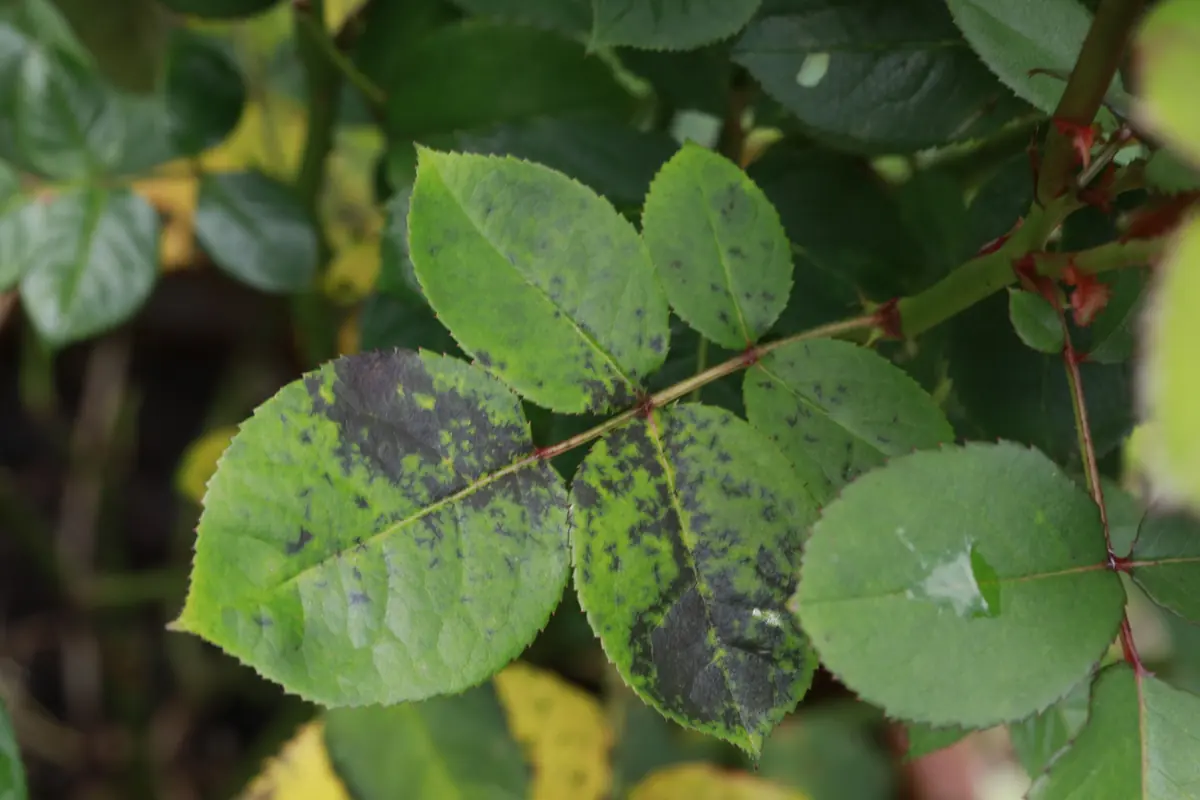
- Rose black spot shows as round black spots up to half an inch across with feathery, fringed edges on the upper leaf surface, usually starting on lower leaves; the leaf around them turns yellow and drops, and a badly hit bush can lose most of its leaves by late summer.
- Apple scab starts as olive-green, velvety spots on young leaves that turn dark brown to black, and leaves may curl, yellow and fall early.
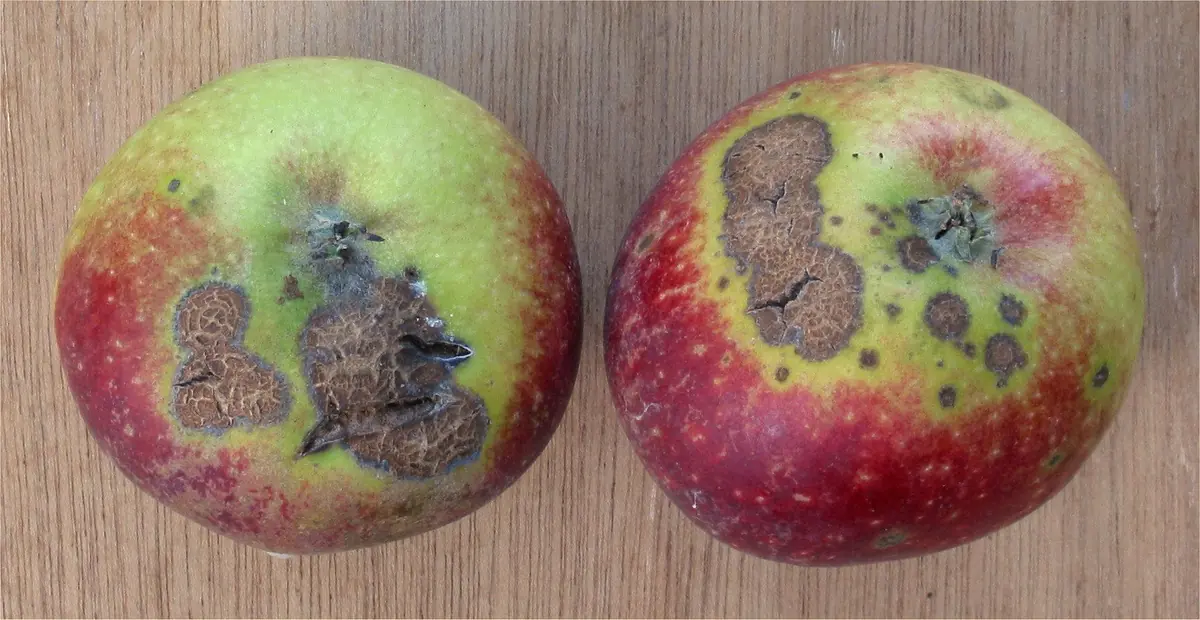
- On apples, scab makes dark, rough, corky spots on the skin, and fruit infected young can crack and grow lopsided.
- Pear scab looks much the same as apple scab, with sooty dark spots on leaves and dark, cracked, corky spots on the fruit, and it can also form small blisters on young twigs.
- Grape anthracnose makes small dark spots with gray centers on leaves and sunken dark cankers on shoots, and the berries get round spots with a whitish-gray center and a dark rim, which is why it is also called bird's-eye rot.
.jpg)
What it is often confused with
Rose downy mildew
Downy mildew makes purplish-red to dark brown, angular blotches limited by the leaf veins and causes sudden leaf drop in cool, damp weather, while black spot spots are round with fringed edges.
Grape black rot
Grape black rot (Guignardia bidwellii) makes tan leaf spots ringed with tiny black dots and turns berries into hard, shriveled black mummies, unlike the bird's-eye spots of anthracnose.
Sooty blotch and flyspeck
These late-summer apple and pear blemishes are smudgy dark patches and clusters of tiny black dots that rub off the skin, while scab spots are rough and part of the fruit surface.
When and where it is worst
All four diseases need water on the leaves to infect. Apple and pear scab spores are released from last year's fallen leaves from bud break through bloom and early summer, and as little as six hours of wetness at about 70°F can infect young apple fruit. Rose black spot spores splash from infected canes and fallen leaves whenever leaves stay wet for several hours, so it keeps spreading all season in rainy weather. Grape anthracnose overwinters in cankers on the canes and is worst in warm, rainy springs.
These diseases are most troublesome in the humid Northeast, mid-Atlantic, Southeast and Midwest, and west of the Cascades in the Pacific Northwest. They are much milder in the dry Southwest, the Mountain West and inland California, where spring rains are short.
Plants it affects
These plants in our library list it as a problem to watch for.
How to prevent it
- Plant resistant varieties: Knock Out and many modern shrub roses resist black spot, and apples such as Liberty, Enterprise, Freedom, GoldRush, Pristine and Williams' Pride are bred to resist scab.
- Rake up and remove or shred fallen leaves in fall, because that is where apple and pear scab spend the winter, and clear rose leaves from under the bushes.
- Prune for open, airy plants in late winter, cutting out cankered rose and grape canes and thinning crowded apple and pear branches.
- Water at the base of the plant in the morning and never wet the leaves in the evening.
- Give roses full sun and room between plants so the leaves dry quickly after rain or dew.
- Mulch under roses and fruit trees to stop rain splashing spores from the soil and old leaves up onto new growth.
Organic control, step by step
- Pick off spotted rose leaves and fallen leaves as you see them and put them in the trash.
- On roses, spray potassium bicarbonate, neem oil or sulfur every 7 to 10 days through wet weather, starting as the leaves open in spring.
- On apples and pears, apply sulfur or a fixed copper product labeled for the crop from green tip through bloom and petal fall, repeating after rain.
- On grapes, apply lime sulfur while the vines are fully dormant in late winter to knock back anthracnose on the canes, then use sulfur or copper during the season, checking first because some American grape varieties such as Concord are damaged by sulfur.
- Do not apply sulfur within about two weeks of an oil spray, or in temperatures over about 85°F, because it can burn leaves.
Conventional control
- For rose black spot, home garden products containing chlorothalonil, myclobutanil, tebuconazole, mancozeb or captan protect new leaves when applied every 7 to 14 days through the wet season.
- For apple and pear scab, captan, myclobutanil and mancozeb are labeled in home orchard products, starting at green tip and continuing through bloom and early fruit set.
- For grape anthracnose, a dormant lime sulfur spray followed by captan or mancozeb from bud break onward gives the best control.
- Read the label, check that the crop is listed, and keep to the pre-harvest interval.
Frequently asked questions
Can I eat apples with scab?
Yes. Scab spots are only skin deep, so you can peel or cut them away and eat the fruit. Badly scabbed fruit that has cracked may not store well, so use it first.
Will black spot kill my rose?
It rarely kills a rose outright, but repeated leaf loss year after year weakens the plant, reduces flowering and makes it less hardy in winter. Clean-up and a resistant variety make the biggest difference.
Is rose black spot the same as apple scab?
No. They are caused by different fungi, and the fungus on roses does not infect apples or pears. They share the name because both make dark spots in wet weather.
When should I start spraying for apple scab?
Start at green tip, when the first green leaf tissue shows in the buds, and keep leaves protected through bloom and about two weeks after petal fall. Most scab infection happens in that window, and dry springs need fewer sprays.
Related problems
Sources: Pacific Northwest Plant Disease Management Handbook, Apple scab; Oklahoma State University Extension, Black spot of rose; Purdue Extension, Apple scab (BP-1-W); Iowa State University Extension and Outreach, Anthracnose on grape. Identification and control follow these sources. Always read and follow the product label.