Carrot rust fly: identify, prevent, control
Updated October 2026
Worst in cool, moist regions, with adults flying from mid April to June and again from August to October.
The carrot rust fly is a small black fly whose maggots feed on the roots of carrots, parsnips, Hamburg parsley, celery, celeriac and parsley. The tunnels fill with rust colored droppings, spoil the roots for eating and storage, and can kill young seedlings. Because there is nothing to see above ground until damage is done, prevention is what counts.
Chamaepsila rosae (formerly Psila rosae)
How to identify it
- Most gardeners first find the damage at harvest, when carrots and parsnips are scarred with rust brown tunnels running just under the skin, mostly in the lower part of the root.
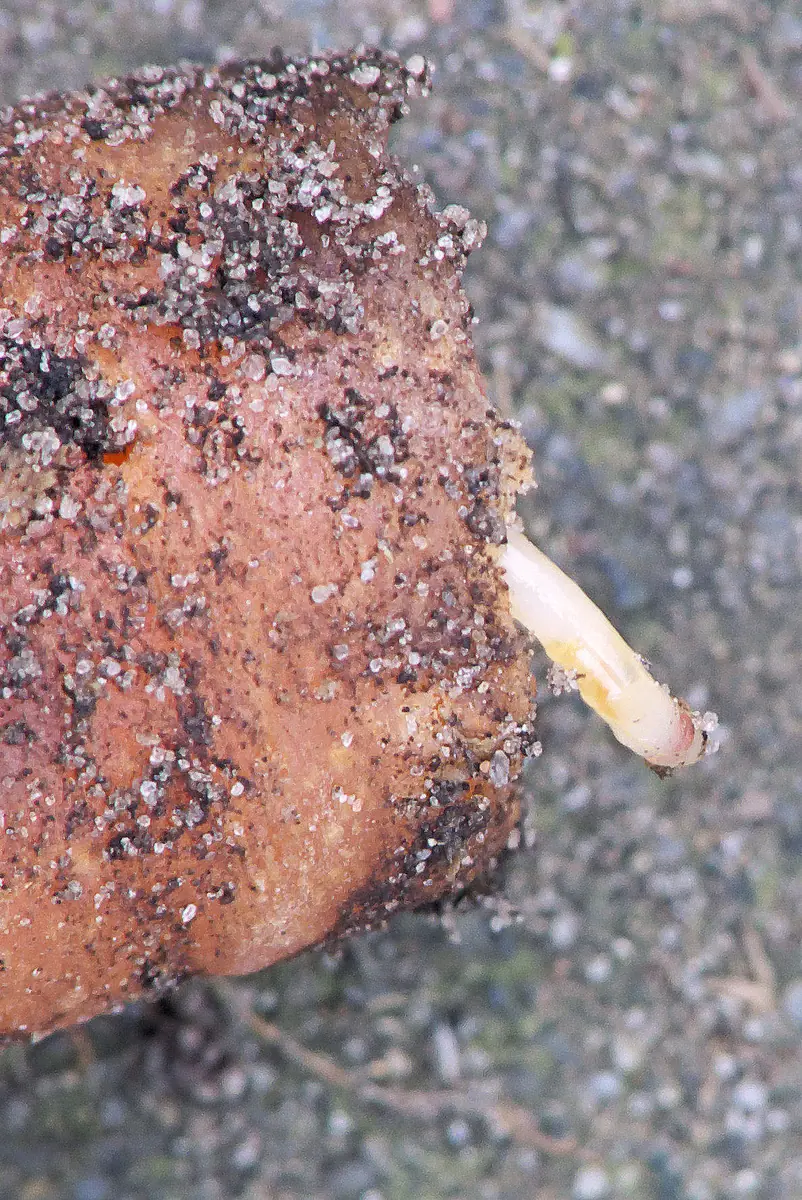
- Inside the tunnels you may find stiff, creamy white maggots up to about 1/3 inch long with no visible head or legs.
- Badly damaged roots may rot or split, and damaged carrots can taste bitter.
- Heavily infested young plants may have leaves with a reddish or yellowed tinge and can wilt in hot weather, though older plants often show nothing above ground.
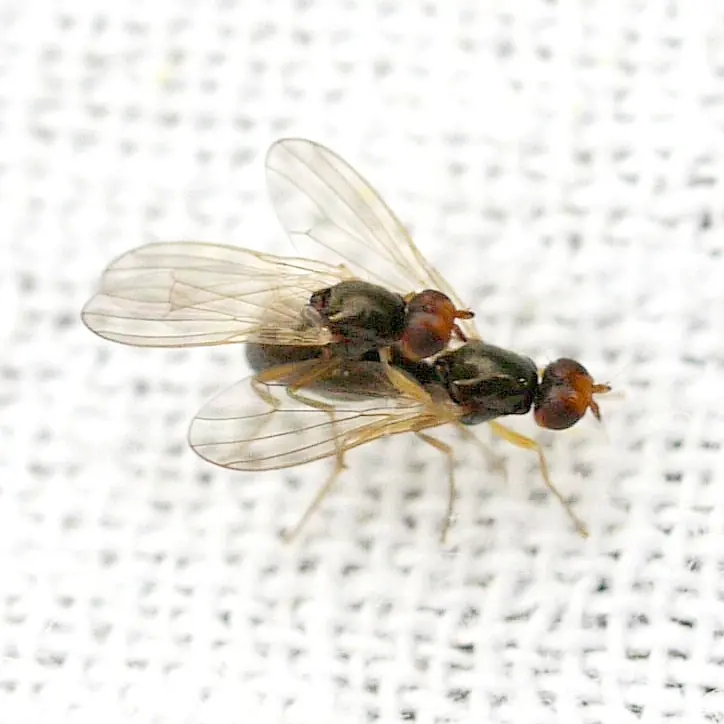
- The adult fly is about 1/4 inch long, shiny black with a reddish brown head and yellow legs, and you are more likely to see it on yellow sticky traps than in the garden.

What it is often confused with
Root-knot nematodes
Root-knot nematodes make carrots forked, hairy and lumpy with small galls, but there are no tunnels or maggots. Carrot rust fly leaves open, rusty tunnels.
Wireworms
Wireworms bore narrow, clean round holes straight into roots and are hard, shiny, orange brown larvae. Carrot rust fly tunnels run along the surface and are filled with rusty material.
When and where it is worst
Carrot rust fly is a pest of cool, moist regions. It is most common in the Pacific Northwest west of the Cascades, the Northeast, the Great Lakes states and coastal Northern California, and it is rarely a problem in hot, dry areas. In western Oregon there are three generations a year: the first adults fly from mid April to June, larvae feed on roots in May and June, the second generation flies in August and September, and later adults overlap into October.
Maggots that hatch in late summer keep feeding through fall and winter in roots left in the ground, so overwintered carrots and parsnips are a major source of next spring's flies.
Plants it attacks
These plants in our library list it as a problem to watch for.
How to prevent it
- Sow carrots after the first generation has finished, in late May or early June in the Pacific Northwest, so the crop is between generations; in mild climates, sow in late winter or late summer instead.
- Cover the bed with floating row cover immediately after sowing and bury the edges, leaving it on until harvest, because carrots and parsnips do not need pollinating for their roots.
- Grow carrots in a different spot each year, as far as you can from last year's bed.
- Harvest early-sown carrots by late summer and dig the whole planting at once, rather than pulling a few at a time, which releases scent that attracts the flies.
- Do not leave carrots, parsnips or Hamburg parsley in the ground over winter where the fly is common.
- Remove wild carrot (Queen Anne's lace) and other wild relatives near the garden, which can host the fly.
Organic control, step by step
- Put up yellow sticky traps at a slight angle near the crop to see when flies are active and when it is safe to remove covers.
- Surround small beds with a 2 foot high wall of fine mesh or row cover, which can stop many of the low-flying females reaching the crowns, though it is less reliable than a full cover.
- Peel or cut away damaged parts of carrots and use them soon, because they do not store well.
- Treat spinosad, neem and pyrethrins as untested here, because Oregon State notes they have not been well evaluated against this pest.
Conventional control
- There is no insecticide that extension services recommend to home gardeners for carrot rust fly, so prevention with timing and row cover is your main tool.
- Diazinon, once used by commercial growers at planting, has not been sold for home use since EPA cancelled residential uses in the mid 2000s, so do not use old stocks.
- Read the label every time, check that the crop you are treating is listed, and keep to the pre-harvest interval before you pick.
Frequently asked questions
Can I eat carrots with rust fly damage?
Yes, after cutting away the tunnels and any soft or discolored flesh. Damaged parts can taste bitter, and the roots will not keep well, so eat them first.
Do companion plants like onions keep carrot rust fly away?
Interplanting with onions or strong herbs is often suggested, but there is little evidence that it gives reliable protection. Row cover and sowing time do far more.
Why did my fall carrots have more damage than my summer ones?
Carrots left in the ground into fall are exposed to the second and third generations, which are often larger than the first. Lifting carrots by early fall reduces damage.
Related problems
Sources: Oregon State University Small Farms, Carrot rust fly biology and management; UC IPM, Carrot rust fly. Identification and control follow these sources. Always read and follow the product label.