
Damping off: identify, prevent, control
Updated October 2026
Any time you start seeds, but worst in cool, wet spring seed starting and in warm, humid microgreen trays.
Damping off is the death of seeds and young seedlings caused by soil-dwelling water molds and fungi. These organisms are present in most garden soil and can arrive on dirty trays, tools or water, and they attack only very young, soft tissue. Once a tray has damping off it is hard to stop, so prevention is the whole game.
Pythium, Rhizoctonia, Fusarium and Phytophthora species

How to identify it
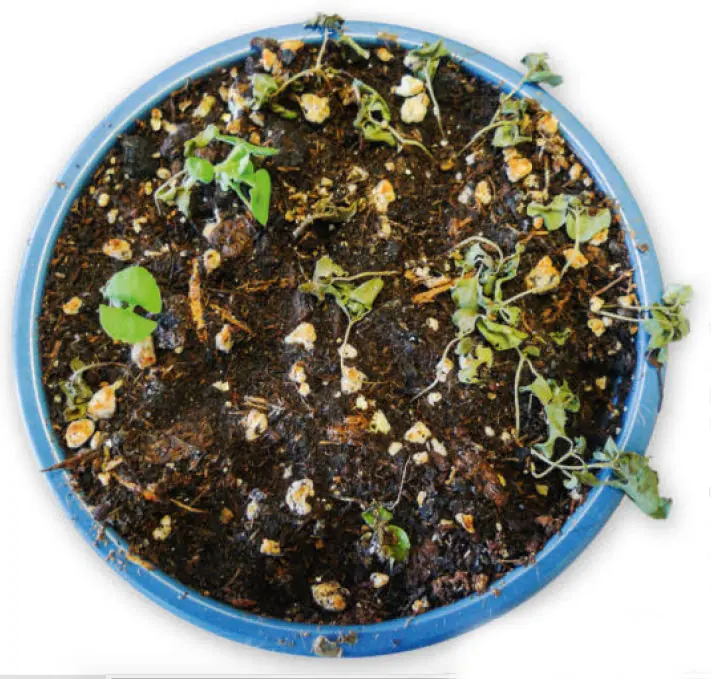
- Seeds fail to come up, or a patchy stand appears because some seeds rotted before or just after germinating.
- Young seedlings that looked healthy suddenly wilt and fall over, often overnight.
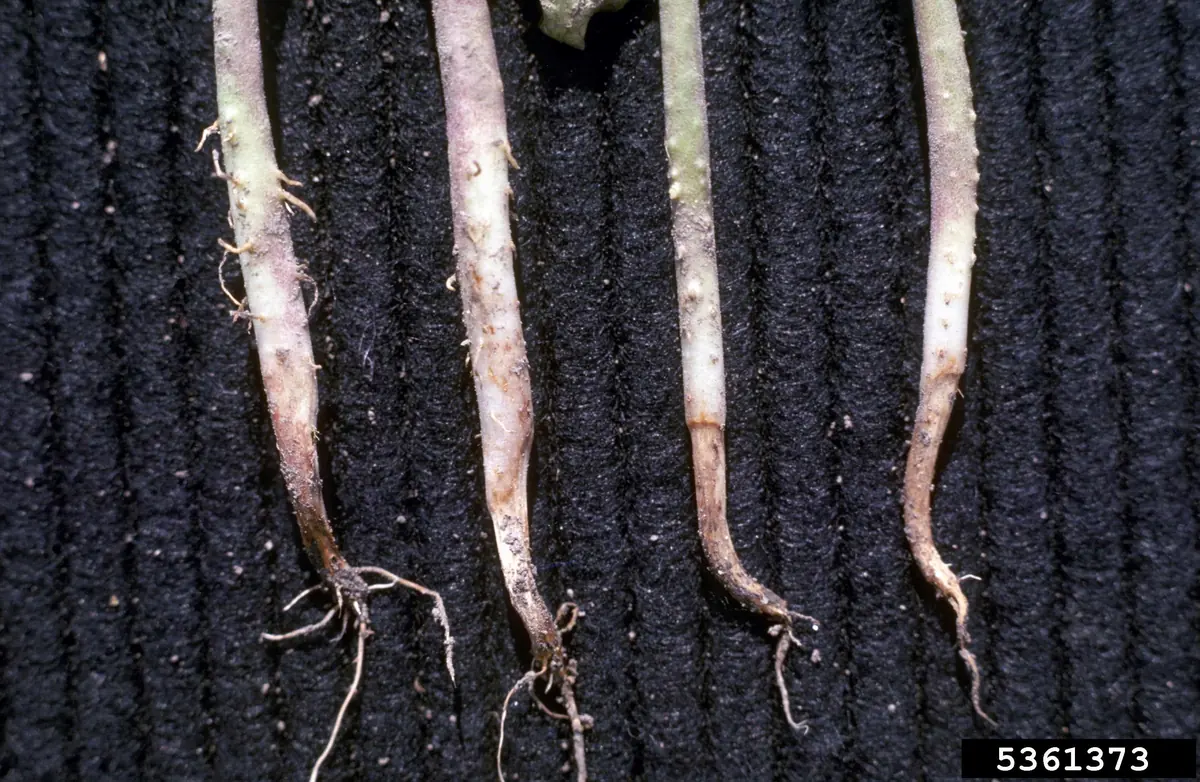
- The stem at or just above the soil line is water-soaked, brown and pinched thin like a thread.
- Dead seedlings occur in spreading patches rather than evenly across the tray.
- In humid trays of microgreens you may see fine white cottony growth on the mix and stems at the base of collapsed plants.
- Roots of affected seedlings are brown and few, and the outer layer slips off easily.

What it is often confused with
Root hairs on microgreens
Radish, broccoli and other microgreens grow fuzzy white root hairs on the root just above the mix. Root hairs are evenly spread on healthy, upright seedlings, while mold covers the mix and collapsing stems.
Fertilizer or heat injury
Too much fertilizer, salts or heat damage leaves and stems on nearly every seedling at once, while damping off starts in patches and spreads.
Fungus gnats
Fungus gnat larvae live in wet mix and can wound roots, but you will see the small dark flies around the tray. Their presence is a sign the mix is too wet, which also favors damping off.
When and where it is worst
Damping off happens wherever seeds are started. Pythium and Phytophthora favor cool, wet mix, so indoor seed starting in late winter and direct sowing into cold spring soil in the Northeast, Midwest and Pacific Northwest are classic times. Rhizoctonia and Fusarium cause more trouble in warm conditions, which is why summer sowings in the South and warm, humid microgreen setups also suffer.
Overwatering, poor drainage, low light, crowded sowing, poor air movement and reused trays or garden soil all raise the risk. Seedlings grow out of danger once they develop true leaves and their stems harden.
Plants it affects
These plants in our library list it as a problem to watch for.
How to prevent it
- Use a fresh, sterile seed-starting mix rather than garden soil, and do not reuse mix from failed trays.
- Wash trays, pots and tools in hot soapy water and a dilute bleach rinse before reuse.
- Sow thinly at the depth on the seed packet, especially for microgreens such as pea shoots and sunflower, so air reaches the stems.
- Water from below and let the surface dry slightly between waterings, and empty saucers so trays never sit in water.
- Give seedlings bright light and a small fan for gentle air movement, and keep the mix at the right temperature for the crop so seeds germinate quickly.
- Wait until soil has warmed before direct sowing beans, squash and other warm season crops outdoors.
Organic control, step by step
- Remove collapsed seedlings and the mix around them at once, and move the tray away from healthy ones.
- Let the mix dry out more between waterings and increase air flow to slow the spread.
- Biological products containing Trichoderma or Streptomyces that are labeled for seedling diseases can be mixed into the potting mix or applied as a drench at sowing to protect roots.
- Discard badly affected microgreen trays entirely rather than trying to save them, and clean the tray before resowing.
Conventional control
- Buy fungicide-treated seed for vegetables you sow directly into cold spring soil, such as peas, beans and corn, but never use treated seed for microgreens or sprouts.
- Captan and other fungicide drenches are labeled for some seedling uses, but they cannot rescue stems that have already collapsed and are not suitable for crops eaten as microgreens.
- Always read the label, check that your crop is listed and keep to the pre-harvest interval before you pick.
Frequently asked questions
Does cinnamon or chamomile tea stop damping off?
These kitchen remedies are often recommended, but there is little research showing they work reliably. A sterile mix, clean trays, careful watering and good air flow do far more to protect seedlings.
Can I save seedlings that have started to fall over?
Seedlings with pinched, collapsed stems will not recover. Remove them and the mix around them, dry the tray out a little and improve airflow to protect the rest.
Why do only my microgreens get damping off?
Microgreens are sown very densely and kept moist and warm, which gives the fungi ideal conditions. Thinner sowing, bottom watering and a fan usually solve the problem.
Is the white fuzz on my microgreen roots mold?
Not always. Even fuzz on the roots of upright, healthy seedlings is usually root hairs. Mold looks cobwebby, spreads over the mix and comes with collapsing, discolored stems.
Related problems
Sources: NC State Extension, Damping-off in flower and vegetable seedlings; UMass Amherst Extension, Damping off. Identification and control follow these sources. Always read and follow the product label.