
Crown rot: identify, prevent, control
Updated October 2026
Worst in warm, wet weather in poorly drained beds, often in fall after planting and in spring after heavy rain.
Crown rot is the decay of the crown, the short thick stem where the roots meet the leaves, in perennial crops such as strawberry, asparagus, rhubarb and globe artichoke. Several organisms cause it, mainly Phytophthora in wet soil, Colletotrichum in Southeast strawberries and Fusarium in asparagus. Because the crown feeds the whole plant, a rotted crown usually means a dead plant.
Phytophthora cactorum, Colletotrichum, Fusarium oxysporum f. sp. asparagi and related species
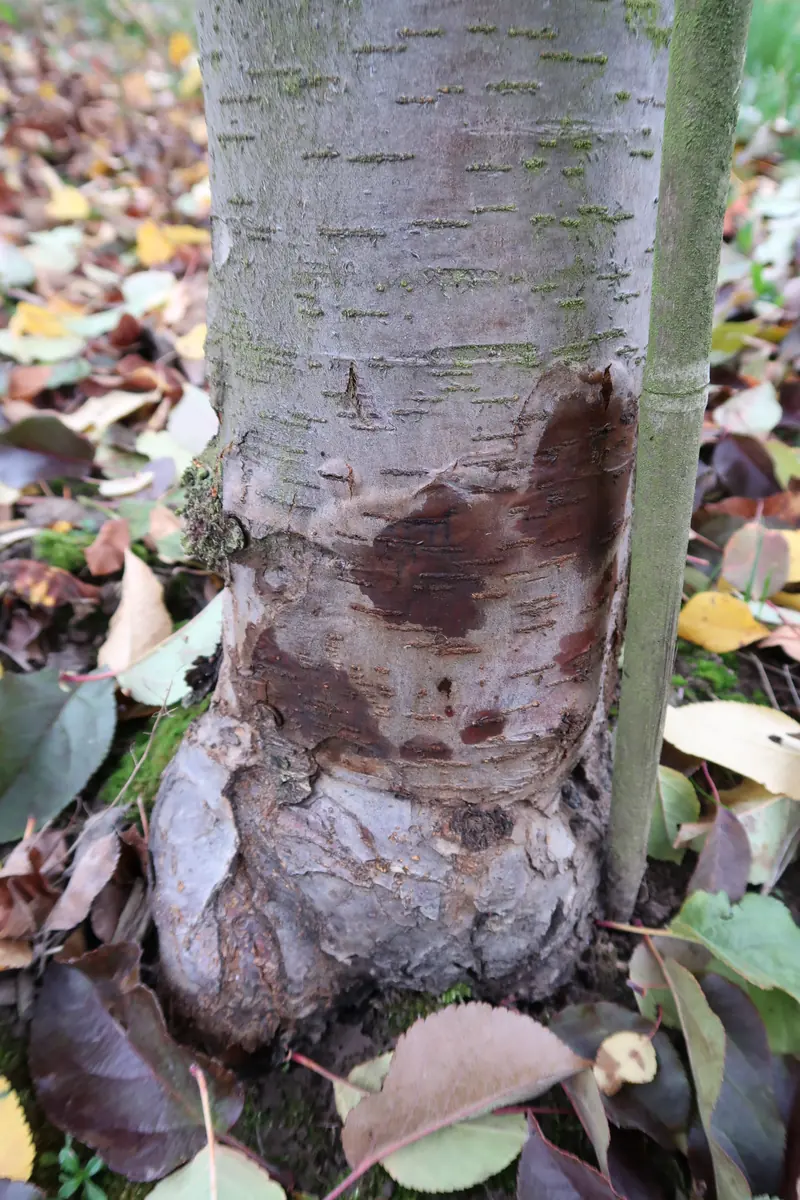

How to identify it
- The first sign is usually one plant that wilts in the heat of the day while its neighbors look fine, often after rain or heavy watering.
- Young leaves on strawberries may wilt or turn bluish green, and within days the whole plant collapses.
- Slice a strawberry crown lengthwise: a healthy crown is white, while a rotted one has firm, reddish brown to dark brown streaks or patches.
- On rhubarb, slightly sunken soft lesions at the base of the stalks spread quickly, the stalks collapse and the crown turns brown or black and breaks down.
- In asparagus beds, plants produce fewer and thinner spears, some ferns turn yellow and stunted in summer, and cut crowns show reddish brown flecks.
- Gaps appear in the bed over a season or two as plants die out, usually in the wettest part of the bed.
What it is often confused with
Root rot
Root rot shows dark, rotted roots and often a slower decline. Crown rot shows brown tissue inside the crown itself and a faster collapse.
Botrytis gray mold
Gray mold rots fruit, flowers and leaves with gray fuzz. It rarely kills a strawberry plant outright the way crown rot does.
Verticillium wilt
Verticillium wilt makes outer strawberry leaves brown and dry while the crown inside stays mostly firm, often with streaks in the vascular tissue.
When and where it is worst
Phytophthora crown rot needs warm temperatures and long periods of wet soil. In North Carolina and the Southeast, NC State notes plants can collapse in fall within a month of planting and again in spring, and anthracnose crown rot from Colletotrichum is a summer and fall problem in Southeast and Florida strawberry plantings. In California and the Pacific Northwest, wet winters on heavy soil bring crown and root rots in strawberries and rhubarb, and Oregon State lists Phytophthora crown rot as one of the two most serious rhubarb diseases west of the Cascades.
Fusarium crown and root rot of asparagus is found wherever asparagus grows and builds up in older beds. Stress from overharvesting, drought, weeds, acidic soil and asparagus beetles makes it worse.
Plants it affects
These plants in our library list it as a problem to watch for.
How to prevent it
- Buy certified disease-free strawberry plants, asparagus crowns and rhubarb divisions from a reputable nursery, and look for firm, white crowns.
- Plant in raised beds or ridges in well-drained soil, and never in low spots where water stands after rain.
- Set strawberry crowns with the top at soil level, not buried, and keep mulch from piling against crowns.
- Water with drip and avoid keeping beds soggy, especially in warm weather.
- Do not plant asparagus where asparagus grew before, keep soil pH near 6.5 to 7, and stop cutting spears early enough each season so the ferns can rebuild the crowns.
- Space rhubarb 3 to 4 feet apart and, when you divide old clumps, discard any crown pieces that are brown or soft in the center.
Organic control, step by step
- Dig out and dispose of collapsed plants with the soil around their crowns as soon as you see them, so the infection does not spread down the row.
- Improve drainage around affected beds before replanting, or move the crop to a new raised bed.
- Renew strawberry beds every three to four years and replant in a new spot with fresh, certified plants.
- Keep asparagus beds weeded, fed and watered in drought so the crowns stay vigorous.
Conventional control
- Phosphorous acid (potassium phosphite) products are labeled for Phytophthora on some fruit crops in home garden sizes; check whether strawberries are on the label you buy.
- Captan is labeled for some strawberry fruit rots in home products but does little against crown rot once plants are infected.
- No home garden fungicide cures crown rot, so treat sprays as a supplement to drainage and clean planting stock.
- Read the label, check that your crop is listed, and keep to the pre-harvest interval shown for that crop.
Frequently asked questions
Can a strawberry plant with crown rot be saved?
No. Once the crown is brown inside the plant cannot recover. Remove it with the surrounding soil and check that the bed drains well before planting again.
Why are my asparagus spears getting thinner every year?
Fusarium crown and root rot is a common cause in older beds, often made worse by cutting too long, drought, acidic soil and weeds. Shorten the harvest, feed and weed the bed, and when it fails, start a new bed in a different place with fresh crowns.
Is it safe to eat rhubarb from a plant with crown rot?
Stalks that are firm and healthy are fine to eat. The plant will keep declining, so harvest the good stalks, then dig out the plant and replant healthy divisions in a new, well-drained spot.
Related problems
Sources: NC State Extension, Phytophthora Crown Rot of Strawberry; UC IPM, Phytophthora Root and Crown Rot (Red Stele) on Strawberries; Michigan State University Extension, Asparagus in the Home Garden; Oregon State University Extension, Grow your own rhubarb. Identification and control follow these sources. Always read and follow the product label.