
Fusarium wilt: identify, prevent, control
Updated October 2026
Worst in hot weather, with soil around 80°F, through midsummer in the South, Texas and California and in hot spells further north.
Fusarium wilt is caused by forms of the soil fungus Fusarium oxysporum that enter the roots and block the plant's water-conducting tissue. Each form attacks only one crop or crop group, so the tomato strain does not infect basil, okra or peas. Once it is in the soil it can survive for many years, so resistant varieties and keeping it out of clean ground are the best defenses.
Fusarium oxysporum (crop-specific forms)

How to identify it
- Lower leaves turn yellow first, often on one side of the plant or even on one half of a single leaf.
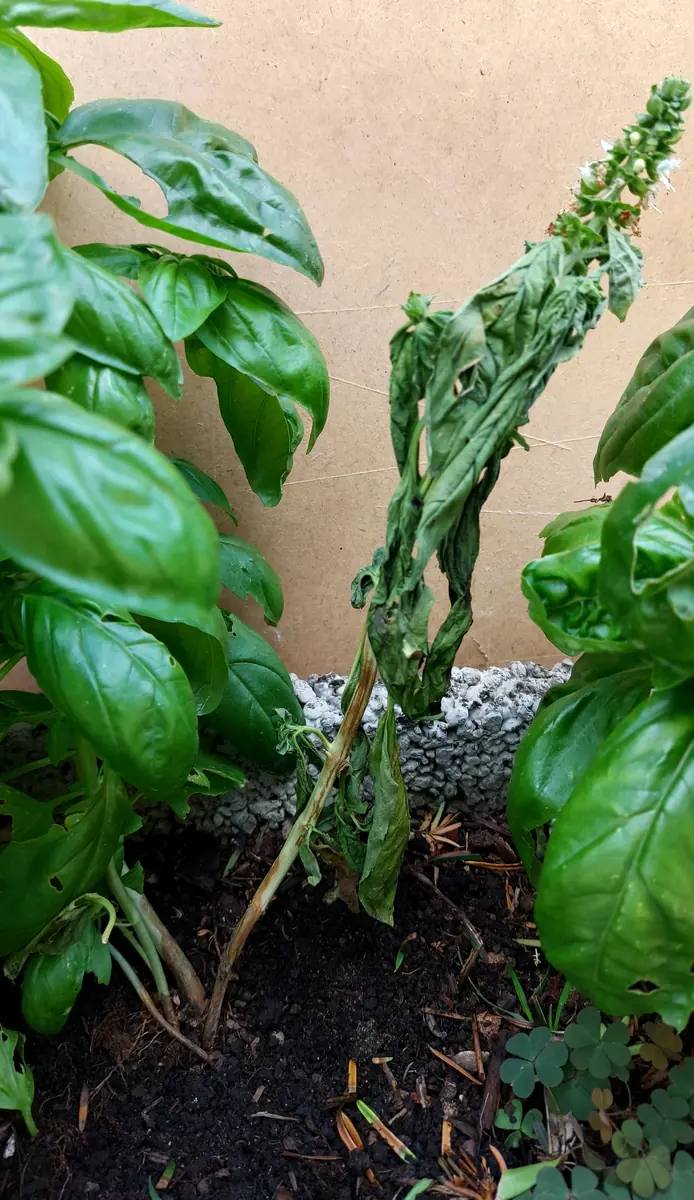
- The plant wilts in the heat of the day and recovers overnight at first, then stays wilted as the disease progresses.
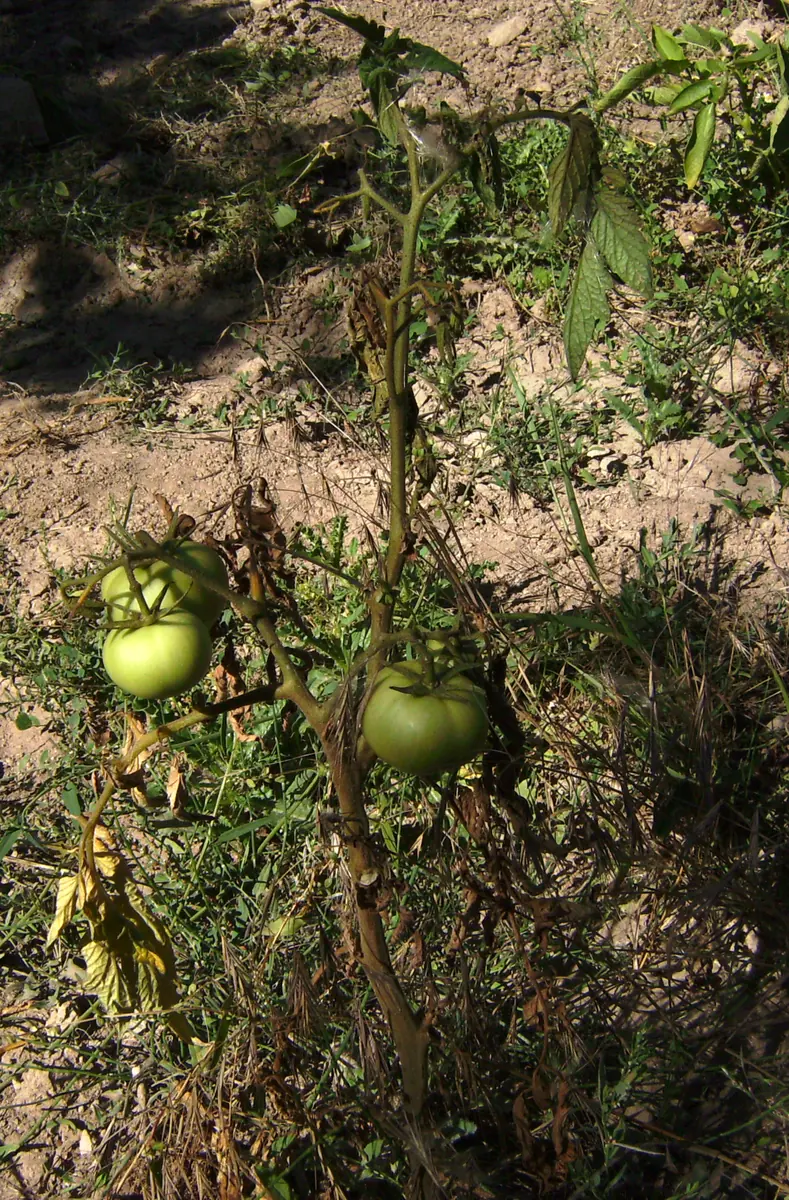
- Yellowing works its way up the plant, leaves brown and die but often stay attached, and the plant is stunted.
- If you peel back the outer layer of the lower stem or cut it lengthwise, the water-conducting tissue inside is streaked dark brown or reddish brown.
- On basil, the stem may show brown streaks and the plant suddenly droops and bends over, sometimes while it is still young.
- Only a few plants in a row may be affected at first, often in a patch that grows year after year.

What it is often confused with
Verticillium wilt
Verticillium wilt prefers cooler weather and makes V-shaped yellow patches at leaf edges, with lighter tan streaking in the stem. A lab test is the only way to be sure, and your county Extension office can arrange one.
Bacterial wilt
Bacterial wilt of tomato collapses the whole plant quickly while leaves are still green. A cut stem placed in a glass of water streams milky threads, which Fusarium does not.
Root-knot nematodes
Nematodes make galls on the roots and stunt the plant. They can also open wounds that let Fusarium in, so the two problems often occur together.
When and where it is worst
Fusarium wilt likes warm soil, with an optimum around 82°F, and it is more severe in sandy, acidic soil. That makes it a major tomato problem in Florida, the Southeast, Texas and the South, and in California's warm valleys, while northern gardens see it mostly in hot summers. Okra wilt is common in the South and Texas, and sweet potato wilt, also called stem rot, appears in warm southern soils.
Basil Fusarium wilt is often seed-borne and appears wherever basil is grown, peas get their own Fusarium wilt in cooler weather, and watermelons have a separate form that persists in soil across the South. The fungus enters through roots, especially roots wounded by cultivation or nematodes, and spreads in infested soil on tools, shoes, transplants and water. It survives as resting spores in soil and debris for many years.
Plants it affects
These plants in our library list it as a problem to watch for.
How to prevent it
- Grow resistant varieties, which seed catalogs mark with F, F1, F2 or F3 for tomatoes depending on which races they resist, and look for Fusarium resistant basil and pea varieties.
- Buy clean seed and healthy transplants from a reliable supplier, and do not move soil from an infected bed into clean areas.
- Rotate tomatoes, peppers and eggplants away from infested beds for three to five years or more, and keep weeds out during that time.
- In acidic soils, raising the pH toward 7 with lime helps reduce Fusarium wilt.
- Avoid excessive nitrogen, and control root-knot nematodes, which open wounds for the fungus.
- Grow tomatoes in containers or raised beds of fresh mix if your garden soil is known to carry the disease.
Organic control, step by step
- Remove wilted plants with as much of the root system as you can and bag them, rather than composting.
- Solarize infested beds by covering moist soil with clear plastic for four to six weeks in the hottest part of summer, which works best in the South, Texas and California.
- Clean soil off tools, stakes and cages with soapy water before using them in another bed.
- Graft favorite heirloom tomatoes onto disease resistant rootstocks if you want to keep growing them in infested soil.
Conventional control
- No fungicides control Fusarium wilt once a plant is infected, and University of Minnesota Extension lists no chemical options for home gardens.
- Fungicide-treated seed protects seedlings only from early infection and does not make susceptible varieties resistant.
- Always read the label, check that your crop is listed and keep to the pre-harvest interval before you pick.
Frequently asked questions
Can I eat tomatoes from a plant with Fusarium wilt?
Yes. The fruit is safe, though it may be small and poorly flavored if the plant is badly affected. Pull the plant once it stops producing.
What do the letters V, F and N on tomato labels mean?
They show resistance: V for Verticillium wilt, F for Fusarium wilt and N for root-knot nematodes. FF or F2 means resistance to two races of Fusarium, and F3 means resistance to race 3 as well.
Will Fusarium wilt from my tomatoes infect my basil?
No. The tomato form and the basil form are different and only attack their own host. Each still survives in the soil for years, so keep both crops out of beds where they wilted.
Does a resistant variety mean I can plant in the same bed every year?
Resistant plants can still carry the fungus without showing symptoms, so University of Minnesota Extension advises not to treat resistant varieties as a rotation.
Related problems
Sources: University of Minnesota Extension, Fusarium wilt; UC IPM, Verticillium wilt (home gardens). Identification and control follow these sources. Always read and follow the product label.