
Mexican bean beetle: identify, prevent, control
Updated October 2026
Worst from early summer to early fall, especially in the East, with one to three generations a year.
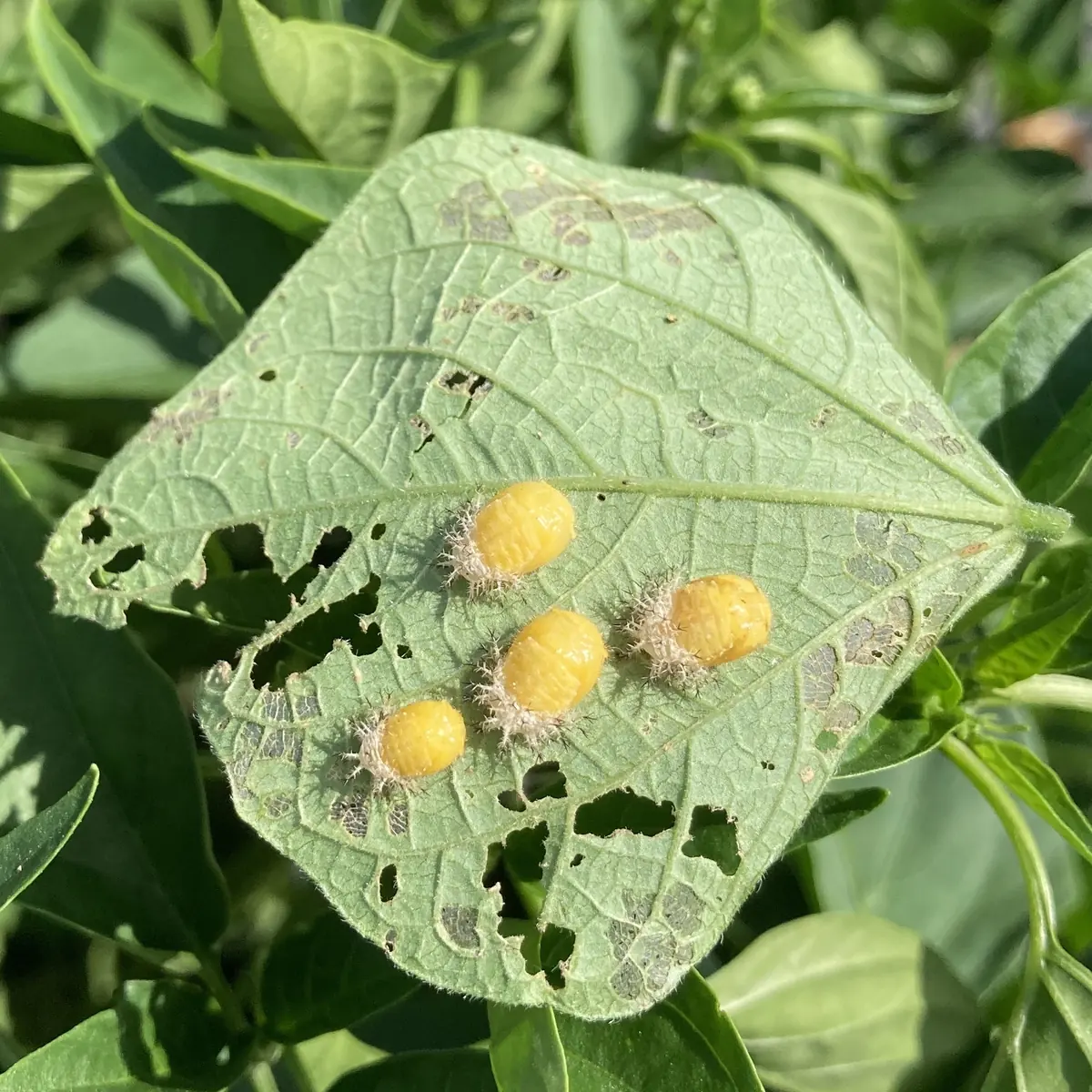
The Mexican bean beetle is one of the few lady beetles that eat plants rather than pests. Adults and their spiny yellow larvae feed on the undersides of bean leaves, leaving them lacy and see-through. Snap beans, lima beans, edamame and runner beans can lose so much leaf that pods fail to fill.
Epilachna varivestis
How to identify it
- You usually notice leaves that look like lace, with the tissue between the veins eaten away from below and the papery upper skin left behind, which later dries and falls out.
- Turn the leaves over and you will find bright yellow, soft, oval larvae covered in branched black-tipped spines.
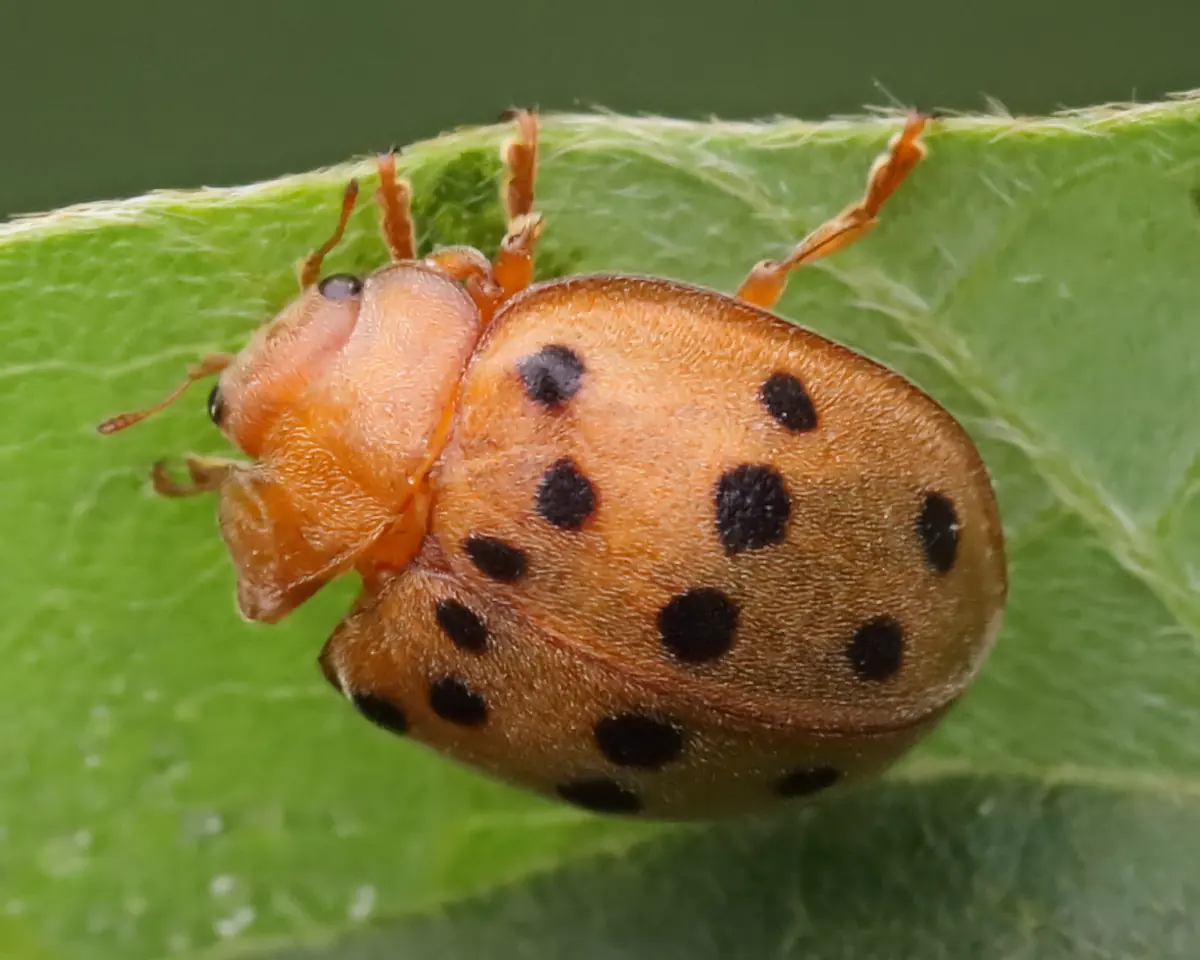
- The adults are rounded like lady beetles, about 1/3 inch long, orange to copper colored, with 16 black spots in three rows.
- Clusters of 40 to 60 bright yellow eggs stand on end on the undersides of leaves.
- Yellow pupae fixed to the underside of leaves, with the old spiny skin bunched at one end, show the next generation is on its way.
- In heavy infestations adults also feed on flowers, pods and stems.
What it is often confused with
Beneficial lady beetles
Most lady beetles are red or orange with a white and black area behind the head and eat aphids. The Mexican bean beetle is copper colored with no white markings, and you will find it chewing bean leaves rather than hunting insects.
Spotted cucumber beetle
The spotted cucumber beetle is longer, narrower and yellow green with a black head, and it feeds mainly on cucurbits.
When and where it is worst
Mexican bean beetle is most damaging in the eastern United States, from New England and the Mid-Atlantic through the Southeast and into the Midwest. It is also found in parts of the West, including Colorado, Utah and Arizona. Adults spend the winter under leaf litter and plant debris, often in wooded edges, and fly to beans in late spring.
Eggs hatch within two weeks of being laid and larvae join the adults on the leaves. There are one to three generations a year, more in warm regions, so late plantings of bush beans in the Southeast and Mid-Atlantic often suffer the worst. Lima and snap beans are favorites, followed by cowpeas and soybeans, including edamame.
Plants it attacks
These plants in our library list it as a problem to watch for.
How to prevent it
- Cover rows of beans with floating row cover after sowing, which you can leave on until harvest because beans pollinate themselves.
- Check the undersides of leaves from early summer for yellow egg clusters and crush them.
- Sow a small early patch of beans in spring as a trap crop, then pull the plants once overwintered beetles have gathered on them and seal them in a plastic bag.
- Plant bush beans early so they crop before beetle numbers build up in midsummer.
- Pull and bag bean plants straight after the final harvest to kill eggs, larvae and pupae still on the leaves.
Organic control, step by step
- Handpick adults and larvae into soapy water and crush egg clusters, which works well in small plantings.
- Release the small parasitic wasp Pediobius foveolatus when you first see larvae; it is sold commercially, works best in larger or community gardens and needs to be bought again each year because it cannot survive cold winters.
- Spray neem (azadirachtin) on the undersides of leaves to slow young larvae.
- Use spinosad or pyrethrins for heavy infestations, aiming at the undersides of the leaves where larvae feed.
- Seal badly infested plants in a plastic bag for a week before composting them.
Conventional control
- Act when you see larvae and defoliation is climbing, because beans can lose up to about 20 percent of their leaf area before yield falls.
- Carbaryl, permethrin and bifenthrin are sold in home garden products labeled for bean beetles on snap and lima beans; check that edamame or runner beans are covered before using them on those crops.
- Spray the undersides of the leaves, where larvae and adults feed, and avoid spraying open flowers.
- Read the label every time, check that the crop you are treating is listed, and keep to the pre-harvest interval before you pick.
Frequently asked questions
Is the Mexican bean beetle a lady beetle?
Yes. It belongs to the lady beetle family, but unlike most of its relatives it eats plants, not aphids. The squash beetle is the only other common plant feeding member in the United States.
What are the spiny yellow bugs under my bean leaves?
Those are almost certainly Mexican bean beetle larvae. They feed on the undersides of leaves and do more damage than the adults, so remove them as soon as you see them.
Do Mexican bean beetles attack peas?
Garden peas are not a favored host. The beetle sticks mainly to snap beans, lima beans, cowpeas and soybeans, with fava beans, lentils and mung beans less preferred.
Related problems
Sources: University of Maryland Extension, Mexican bean beetle on vegetables; UMass Extension, Mexican bean beetle; Clemson Cooperative Extension HGIC, Cucumber, squash, melon and other cucurbit insect pests (squash beetle and Mexican bean beetle note). Identification and control follow these sources. Always read and follow the product label.