Rust: identify, prevent, control
Updated October 2026
Most active in mild, humid weather with long dew periods, from late spring through fall, and through winter on figs and lemongrass in the Deep South.
Rusts are fungi that produce powdery, rust-colored spores in small raised pustules on leaves and stems. There are thousands of species and most attack only one crop or a few close relatives, so bean rust stays on beans and garlic rust on onions, garlic, leeks and chives. Light infections are mostly cosmetic, but heavy rust strips leaves early and cuts yields, and on asparagus and blackberries it weakens plants for following years.
Puccinia, Uromyces, Phragmidium and related rust fungi
.jpg)
How to identify it
- Start by looking for small pale or yellow flecks on the upper side of leaves.
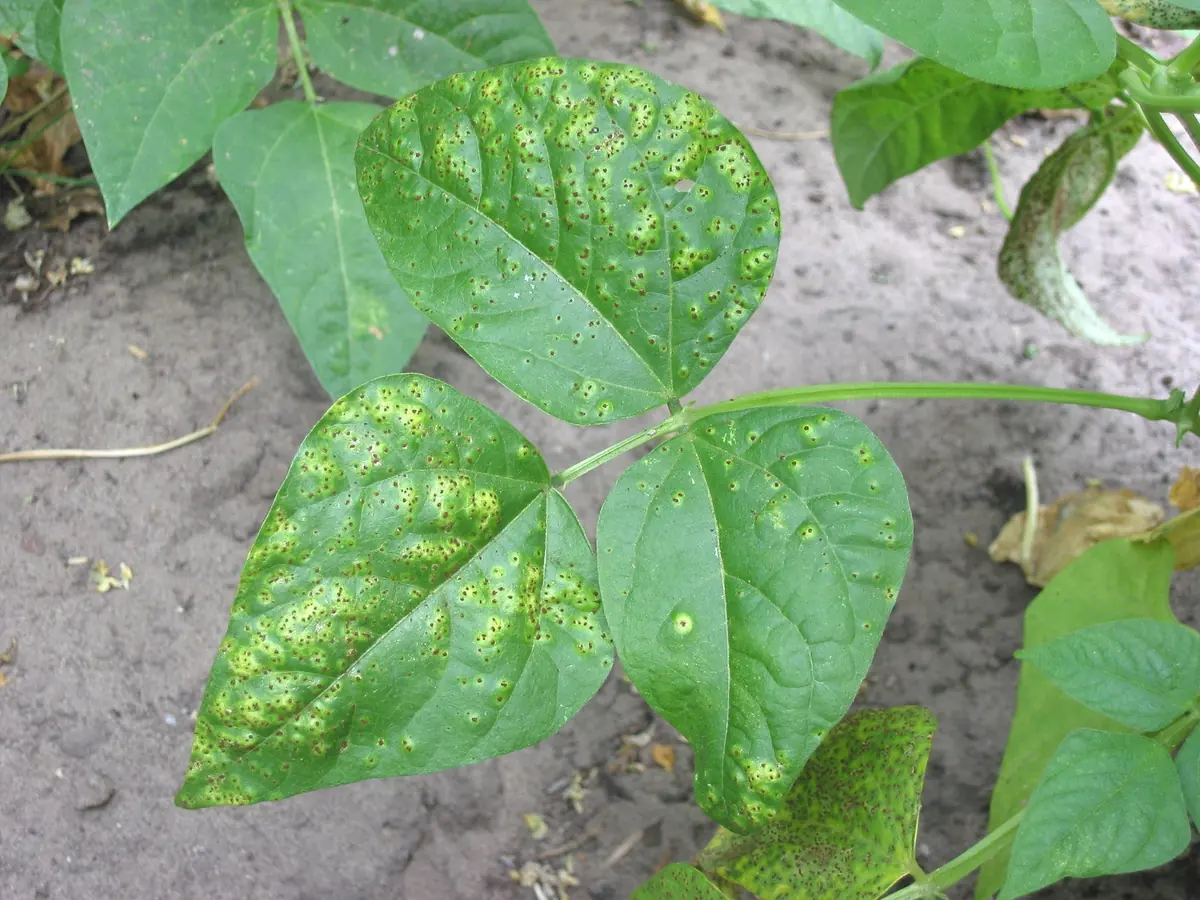
- Under or around those flecks, tiny raised pustules break open to release powdery orange, cinnamon or red-brown spores that rub off on your fingers or a tissue.
- Bean rust shows round reddish-brown pustules, often with a yellow halo, mostly on the leaf undersides.
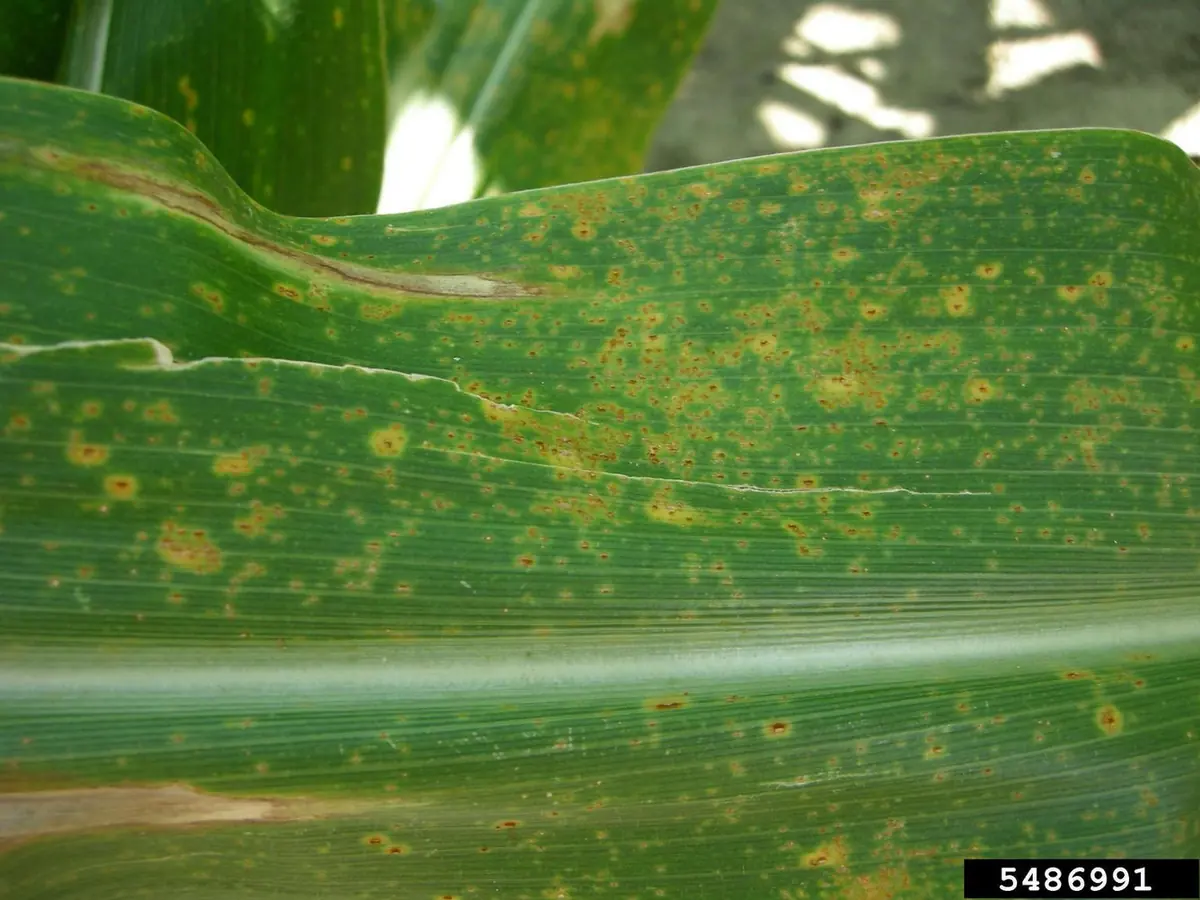
- On corn the pustules are elongated, cinnamon brown and on both leaf surfaces; garlic, leek and chive rust shows bright orange flecks along the leaves; asparagus ferns turn rusty orange and drop.
- Late in the season many rusts switch to dark brown or black pustules, which are the overwintering spores.
- Badly rusted leaves yellow, dry out and fall early, leaving plants thin and fruit or pods undersized.
.jpg)
What it is often confused with
Leaf spot
Fungal leaf spots are flat and do not release powder. Rub a suspect spot with a white tissue: rust leaves an orange or brown smear.
Anthracnose
Anthracnose makes sunken dark spots and cankers, often on fruit and stems, not powdery raised pustules.
When and where it is worst
Rust spores need several hours of leaf wetness from dew, fog or rain to infect, and most rusts like mild temperatures. Common rust of corn is favored by cool, moist weather around 61 to 77°F with long dew periods, and its spores blow north from the southern US and Mexico each summer. Bean rust and asparagus rust are worst in warm, humid weather with heavy dews from midsummer onward.
In the Southeast, Florida and Texas, fig rust can strip trees from late summer into fall, and lemongrass rust has been reported in Florida, Hawaii and California. Orange rust of blackberries and black raspberries shows up in spring across the East and Midwest. Western North America and the Northeast also have white pine blister rust, which uses currants and gooseberries as an alternate host.
Plants it affects
These plants in our library list it as a problem to watch for.
How to prevent it
- Plant rust-resistant varieties where they exist, especially for sweet corn, popcorn, beans, asparagus and snapdragons.
- Space plants for air movement and water at the base in the morning so leaves dry quickly.
- Rotate beans, corn and the onion family to a new bed each year, and clean up and remove plant debris at the end of the season.
- In asparagus, cut spears below the soil line during harvest, remove old ferns in late fall or early spring, and destroy wild asparagus close by.
- Dig out blackberry or black raspberry canes with orange rust, roots included, because the infection is systemic and never cures.
- Before planting currants or gooseberries, check with your state or county Extension office, since some areas restrict them near white pines because of blister rust.
Organic control, step by step
- Remove the first rusted leaves on beans, mint, garlic and roses and bag them, rather than composting them.
- Cut mint and chives right back to the ground after a rust outbreak so they regrow clean foliage.
- Sulfur products labeled for rust on beans and other listed crops protect new growth when applied before the disease spreads, but do not apply above 90°F.
- Copper products give some protection on listed crops such as figs and some vegetables when started early and repeated.
Conventional control
- Chlorothalonil is labeled for rust on beans and several other vegetables in home garden products; begin when the first pustules appear.
- Myclobutanil is labeled for rust on roses, snapdragons and some fruit crops in home products and works best as a protectant.
- Fungicides rarely pay for themselves on sweet corn in home gardens, where resistant varieties are the better answer.
- Read the label, check that your crop is listed, and keep to the pre-harvest interval shown for that crop.
Frequently asked questions
Can rust spread from my beans to my roses or corn?
No. Most rust fungi are very host specific. Bean rust infects beans, corn rust infects corn, and rose rust infects roses, so an outbreak on one crop does not threaten unrelated plants.
Is corn with rust safe to eat?
Yes. Rust affects the leaves and does not make the ears unsafe. Heavy early rust can reduce ear size and quality, which is why resistant varieties matter in areas where rust is common.
Should I compost rusty leaves?
It is safer to bag them or burn them where allowed. Home compost piles often do not get hot enough to kill rust spores reliably.
Why does my fig drop all its leaves in fall?
In the Southeast, Florida and Texas, fig rust often causes heavy leaf drop from late summer. Rake up fallen leaves, and if it happens every year a copper spray program started in early summer can help.
Related problems
Sources: University of Illinois Extension, Rust in Vegetables; UC IPM, Common Rust on Corn; NC State Extension, Corn Rusts: Common and Southern Rust; UMass Extension, Asparagus Rust. Identification and control follow these sources. Always read and follow the product label.