Squash bug: identify, prevent, control
Updated October 2026
Active from early summer, when vines start to run, through fall, when bugs cluster on the fruit.
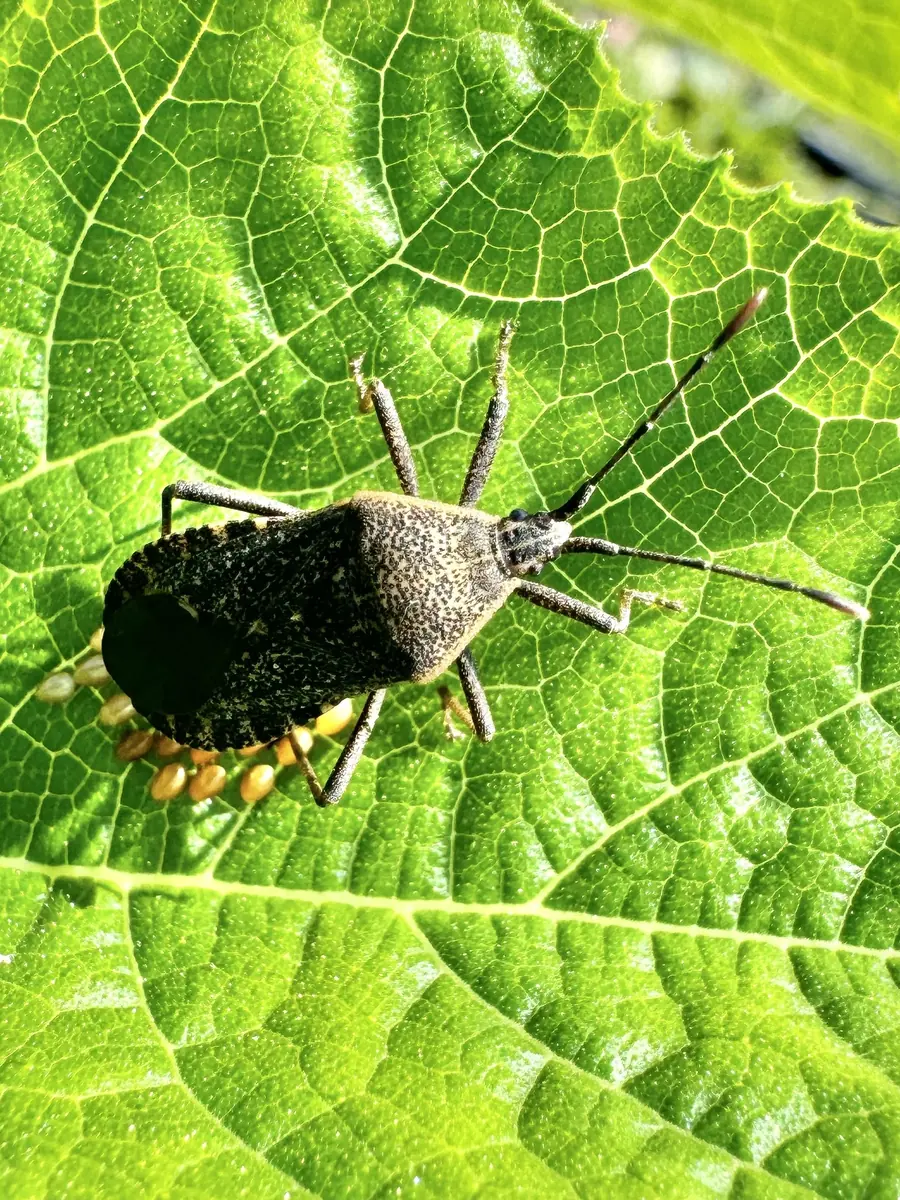
The squash bug is a flat, dark gray to brown true bug about 5/8 inch long that sucks sap from squash, zucchini, pumpkins and other cucurbits. Feeding causes yellow spots that turn brown, and heavy numbers can wilt young plants or kill them. Squash bugs also spread cucurbit yellow vine disease in some regions.
Anasa tristis
How to identify it
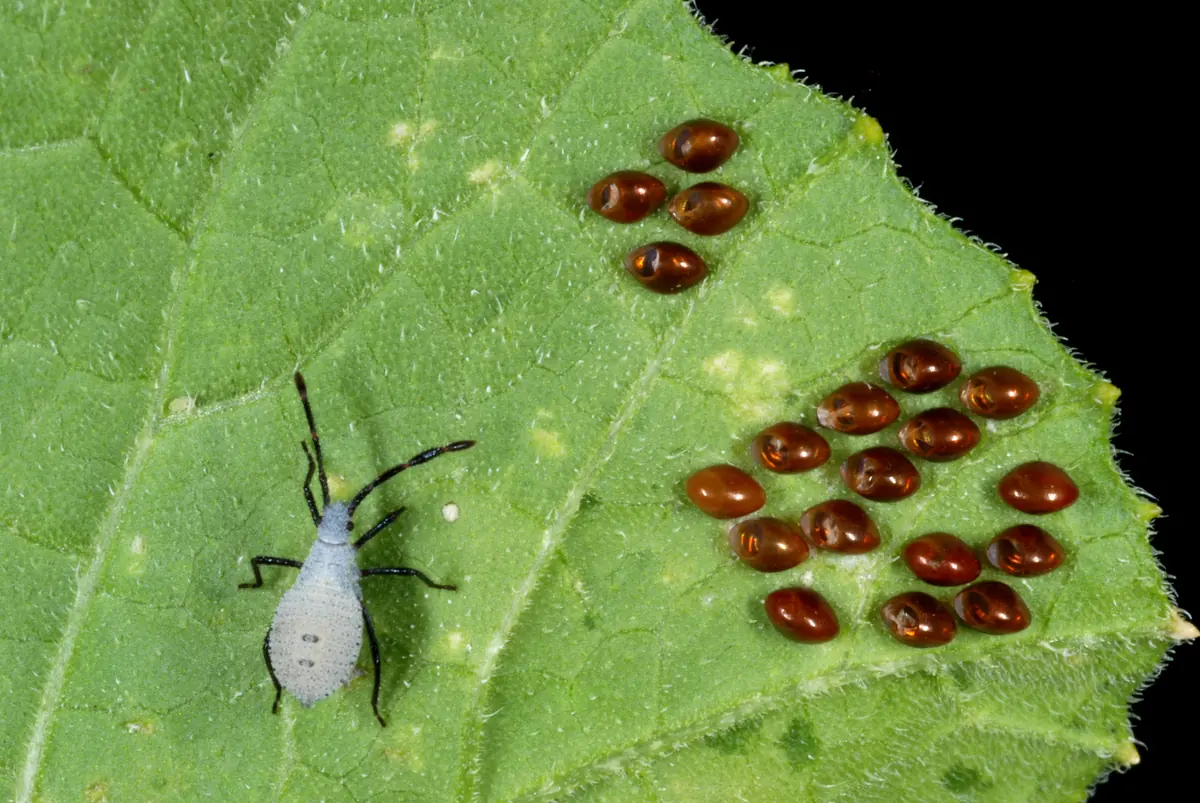
- The first sign is often clusters of shiny, bronze to brick red eggs on the undersides of leaves, usually tucked into the V between two veins.
- Pale gray green nymphs with black legs hatch in groups and later turn gray, scattering under leaves when you lift them.
- Adults are flat, about 5/8 inch long and dark gray brown, with orange and brown stripes along the edge of the abdomen, and they smell unpleasant if crushed.
- Leaves show yellow speckles that turn brown, and badly attacked leaves wilt, go crisp and die back.
- Late in the season adults and nymphs gather on pumpkins and winter squash and around the crown of the plant.
What it is often confused with
Stink bugs
Stink bugs are shield shaped and broader across the shoulders, and they feed on many crops. Squash bugs are longer and flatter and stay almost entirely on squash and pumpkins.
Squash vine borer
Both cause wilting, but a squash vine borer leaves a hole and orange frass at the stem base. Squash bug wilt comes with bugs, eggs and yellow brown speckling on the leaves.
When and where it is worst
Squash bugs occur throughout the United States. Adults spend the winter under plant debris, boards and rocks, then fly to squash as the vines begin to grow, usually from late May in the South to early June in the North. Females lay eggs into midsummer, eggs hatch in about 10 days, and nymphs take four to six weeks to become adults, so all stages are present together by July.
There is one generation a year in most regions, with a partial second in long, warm summers. Winter squash such as Hubbard and marrows are among the hardest hit, while butternut and buttercup types tolerate feeding better. In the fall bugs cluster on fruit and then move to shelter for the winter.
Plants it attacks
These plants in our library list it as a problem to watch for.
How to prevent it
- Start checking the undersides of squash, zucchini and pumpkin leaves for egg clusters as soon as vines begin to run, and scrape off or crush every cluster you find.
- Grow butternut or buttercup squash if squash bugs have been a problem, since they tolerate feeding better than Hubbard types.
- Keep plants well watered and fed so they can outgrow light feeding.
- Avoid straw mulch around squash if bugs are a regular problem, because it gives them shelter at night.
- Pull up and destroy vines and leftover fruit after harvest to remove overwintering sites.
Organic control, step by step
- Lay boards or folded newspaper beside the plants, then lift them in the morning and destroy the bugs that gathered underneath overnight.
- Knock nymphs and adults into a bucket of soapy water while they are still few.
- Cover young plants with floating row cover until flowering, then remove it so bees can pollinate.
- Spray insecticidal soap or neem on young nymphs right after eggs hatch, covering the undersides of leaves, because these products do little against adults.
- Use spinosad, which Clemson reports gives some control, aimed at newly hatched nymphs.
Conventional control
- Time any spray for just after the first eggs hatch, because small nymphs are far easier to kill than adults.
- Bifenthrin, carbaryl, cyfluthrin and permethrin are sold in home garden products labeled for squash bugs on cucurbits.
- Spray late in the day when squash flowers have closed, because these products are toxic to bees.
- Read the label every time, check that the crop you are treating is listed, and keep to the pre-harvest interval before you pick.
Frequently asked questions
What do squash bug eggs look like?
They are small, oval and shiny, yellowish bronze turning brick red, laid in neat clusters of about 20 on the undersides of leaves, often between two veins. Crushing them is the most effective control you have.
Why are squash bugs so hard to kill?
Adults have a tough body that many sprays struggle to get through, and they hide under leaves and at the base of the plant. Aim your effort at eggs and young nymphs instead.
Will squash bugs attack my cucumbers and melons?
They can, but they strongly prefer squash and pumpkins. You will usually find far fewer on cucumbers and melons.
Can I put squash bug infested plants in the compost?
It is safer not to, because adults can hide and overwinter in plant debris. Bag or burn badly infested vines, or bury them deeply, where local rules allow.
Related problems
Sources: University of Minnesota Extension, Squash bugs; Clemson Cooperative Extension HGIC, Cucumber, squash, melon and other cucurbit insect pests. Identification and control follow these sources. Always read and follow the product label.