
Squash vine borer: identify, prevent, control
Updated October 2026
Moths fly from late spring to midsummer east of the Rocky Mountains, and wilting shows from late June to August.
The squash vine borer is a clearwing moth that looks like an orange and black wasp. Its larvae tunnel inside the stems and crowns of zucchini, summer squash, winter squash and pumpkins, blocking water flow until the plant wilts and dies. A bad year can wipe out every zucchini in a home garden.
Melittia cucurbitae (also listed as Eichlinia cucurbitae)
.jpg)
How to identify it
- The first sign most gardeners see is a healthy looking zucchini or squash plant that wilts in the midday sun even though the soil is moist.
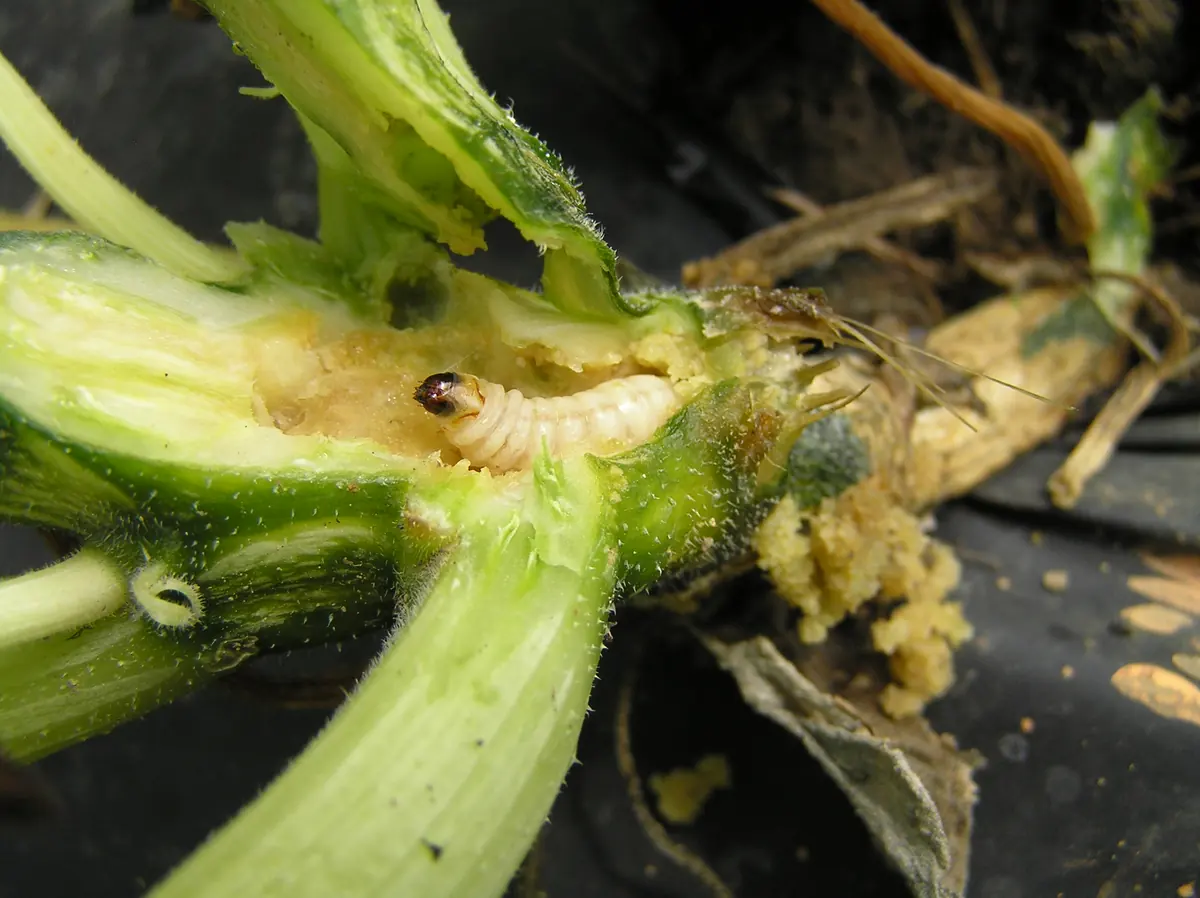
- Look at the base of the stem near the soil and you will find one or more holes oozing moist, green to orange material that looks like sawdust.
- Over the following days the base of the stem goes soft and mushy, and the plant collapses.
- If you slit the stem lengthwise you will find fat, cream colored larvae with brown heads, up to about 1 inch long.
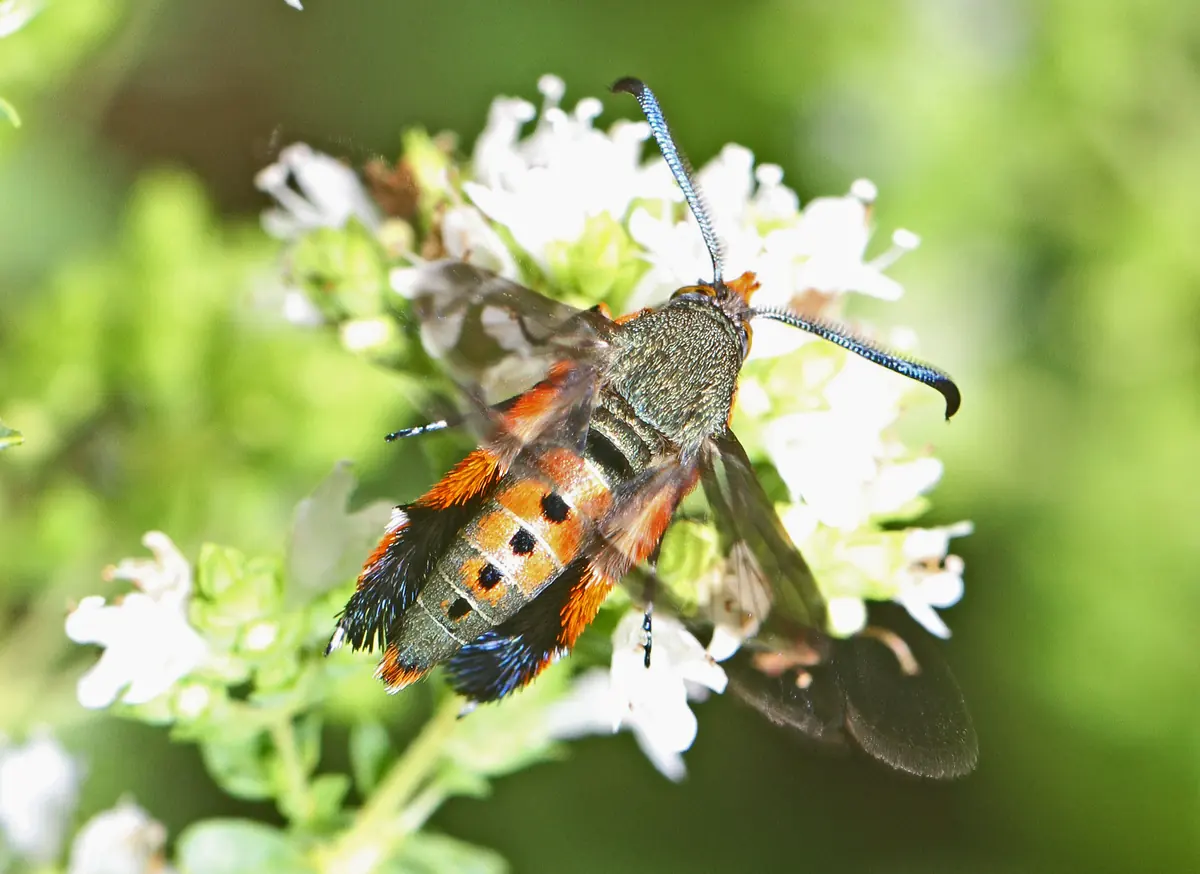
- In early summer you may also see the adult moth, about 1/2 inch long with metallic green forewings, clear hindwings and an orange abdomen with black dots, buzzing around the plants in daylight.
- The tiny flat brown eggs are laid singly on stems and leaf stalks near the base of the plant.

What it is often confused with
Cucumber beetles and bacterial wilt
Bacterial wilt, spread by cucumber beetles, also wilts vines, but the stem stays firm and has no entry hole or frass. It mainly affects cucumbers and melons rather than zucchini.
Squash bug
Heavy squash bug feeding can wilt plants too, but you will find the bugs and their eggs on the leaves, and the stem base is not tunneled.
Fusarium wilt
Fusarium and other root diseases cause wilting with browned tissue inside the stem but no larvae or sawdust-like frass at the base.
When and where it is worst
Squash vine borer is a native pest east of the Rocky Mountains, from the Northeast and Midwest through the Southeast and Texas. It is rarely a problem in California, the Pacific Northwest or the Southwest deserts. The larvae spend the winter in cocoons 1 to 2 inches deep in the soil, and the moths emerge in late spring in the South and in late June or early July in the upper Midwest.
Eggs hatch in about a week, larvae feed inside the stems for four to six weeks, then leave to pupate in the soil. There is one generation a year in the North. In the far South the moths start earlier and a partial second generation can occur, so late plantings there are not as safe as they are farther north.
Plants it attacks
These plants in our library list it as a problem to watch for.
How to prevent it
- Grow butternut squash or tromboncino, whose solid stems the larvae rarely attack, along with cucumbers, melons and watermelons, which are seldom bothered.
- Cover zucchini and squash with floating row cover from planting until female flowers appear, and seal the edges, but only in a bed where you did not grow squash last year, or moths emerging from the soil will be trapped inside.
- Rotate squash to a different part of the garden each year so moths emerging from the soil have to find your plants.
- In the North, sow a second batch of summer squash in early July so it grows after most egg laying is over.
- Set a yellow bowl of soapy water near the squash from late June to catch moths, which are drawn to yellow, so you know when they are flying.
- Pull and destroy killed plants promptly, and till or dig the bed in fall or late winter to expose cocoons in the soil.
Organic control, step by step
- Some gardeners wrap the lower few inches of each stem in a strip of aluminum foil or nylon stocking to make egg laying and entry harder; it is cheap to try, although it has not been well tested.
- Check stem bases every few days once moths are flying, and scrape off any eggs you find.
- As soon as a plant wilts, slit the stem lengthwise with a sharp knife, kill the larvae, then mound moist soil over the cut and keep it watered so new roots can form.
- Bury a few leaf nodes along each vine of running squash and pumpkins so they root, giving the plant a backup if the main stem is damaged.
- Do not rely on Bacillus thuringiensis sprayed on the leaves, because the larvae are protected once inside the stem.
Conventional control
- Spray or dust the base of the stems with an insecticide when vines start to run or as soon as you catch the first moth, then repeat every 7 to 10 days until the end of July, as University of Minnesota Extension advises.
- Carbaryl, permethrin, bifenthrin and esfenvalerate are the active ingredients extension services name for this pest, sold in home garden products labeled for squash.
- Spray only the stem bases and do it in the evening when flowers are closed, because these products are toxic to bees.
- Read the label every time, check that the crop you are treating is listed, and keep to the pre-harvest interval before you pick.
Frequently asked questions
Can I save a zucchini plant that has squash vine borer?
Sometimes. Cut the stem open, remove or kill the larvae, then cover the wound with moist soil and water well. If the base has already turned to mush, pull the plant and replant.
Why does only my zucchini get squash vine borer?
Zucchini, pattypan and Hubbard squash have hollow, fleshy stems that the larvae love. Butternut and other moschata squash have solid stems and are rarely attacked, and cucumbers and melons are seldom bothered.
When should I look for the moths?
Watch from late spring in the South and from the last week of June in the North. The moths fly in daylight, make a loud buzz, and are easy to spot because of their orange and black color.
Related problems
Sources: University of Minnesota Extension, Squash vine borers; Clemson Cooperative Extension HGIC, Cucumber, squash, melon and other cucurbit insect pests. Identification and control follow these sources. Always read and follow the product label.