
Thrips: identify, prevent, control
Updated October 2026
Worst in hot, dry weather from late spring through summer, and through the cool season in Florida, South Texas and the Southwest deserts.
Thrips are tiny, slender insects that scrape plant surfaces and suck out the contents of the cells. Onion thrips silver the leaves of onions, leeks and scallions, western flower thrips scar flowers and fruit and spread tomato spotted wilt virus, and chilli thrips curl the new growth of peppers. They are easy to overlook because the damage shows long before you see the insects.
Thysanoptera (including Thrips tabaci, Frankliniella occidentalis and Scirtothrips dorsalis)
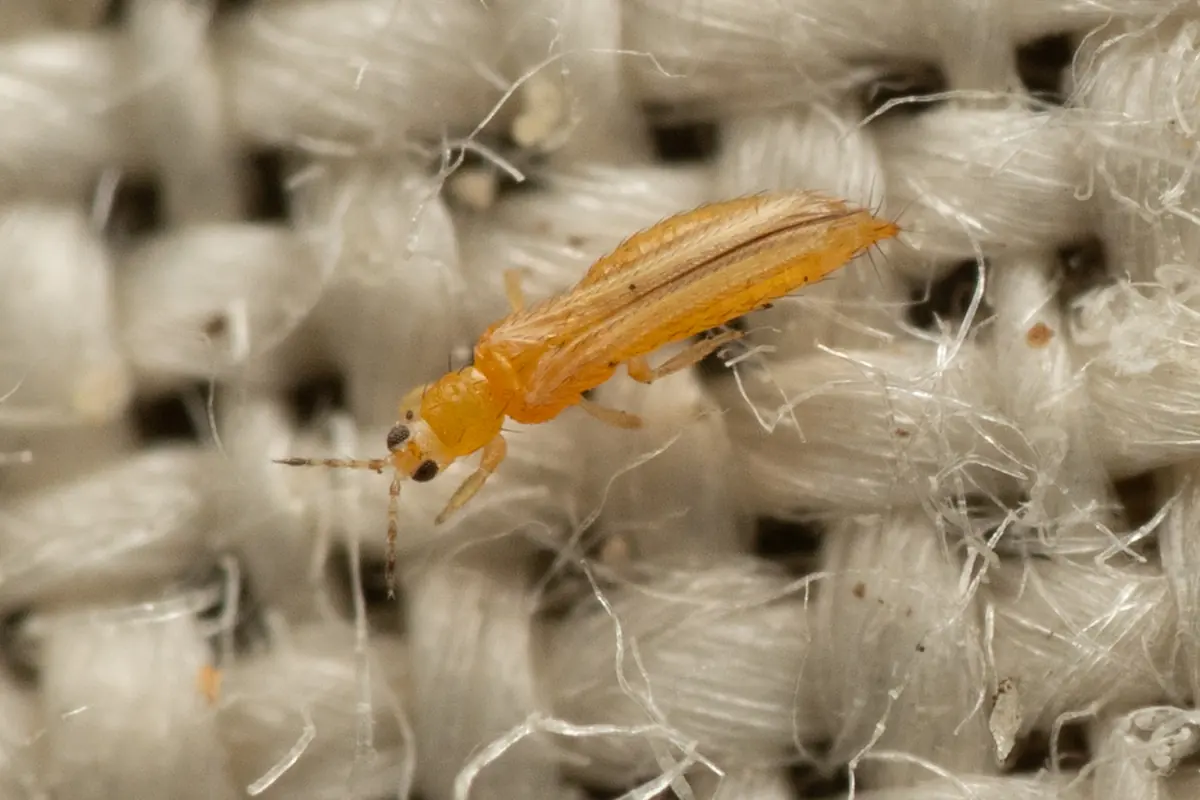
How to identify it
- You usually notice silvery or bleached streaks and patches on onion and leek leaves, or pale stippled spots on pepper, peanut and cosmos foliage.
- Look closely at the damaged areas for tiny black specks, which are thrips droppings.
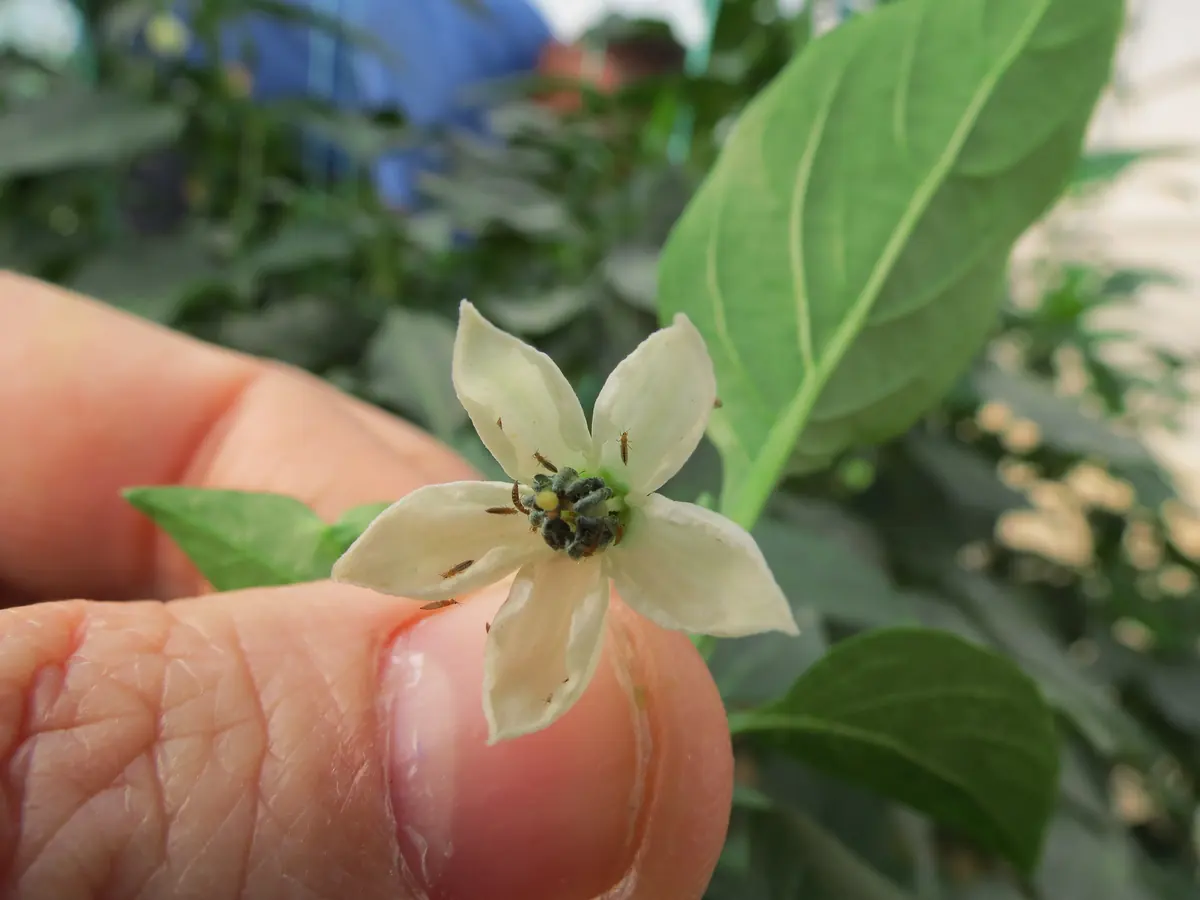
- Tap a flower or leaf over white paper and you will see slender insects under 1/20 inch long, pale yellow to brown, that run or fly off quickly.
- Flowers may have brown streaks, distorted petals or buds that fail to open, and fruit such as peppers and avocados may show corky, scarred patches.
- New growth of peppers and other plants that is cupped, curled and bronzed along the veins can point to chilli thrips in the South.
- Tomatoes and peppers with bronzed, ringspotted leaves and fruit with yellow rings may have tomato spotted wilt virus, which thrips carry.

What it is often confused with
Spider mites
Spider mites also stipple leaves, but they leave fine webbing and no black droppings, and you need a hand lens to see the round eight-legged mites.
Leaf miners
Leaf miners make winding tunnels or blotches inside the leaf, while thrips damage is on the surface and looks silvery and speckled.
When and where it is worst
Onion thrips are found across the country and are worst on onions, leeks and garlic in hot, dry summers from June to August in the Northeast, Midwest, Mountain West and California, and through spring in Texas and the South. Western flower thrips are common in the West and in greenhouses, and chilli thrips are established in Florida, Texas and the Gulf states, where they attack peppers year round.
Avocado thrips scar fruit in coastal Southern California in spring. Populations rise quickly in warm, dry weather and drop after heavy rain or overhead irrigation.
Plants it attacks
These plants in our library list it as a problem to watch for.
How to prevent it
- Check onions, leeks and peppers weekly in warm weather by looking at the inner leaves and shaking plants over white paper.
- Keep weeds down around the garden, since thrips breed on them and move to crops when weeds dry out.
- Water regularly so plants are not drought stressed, and use overhead sprinklers occasionally on onions, which washes many thrips off.
- Use silver reflective mulch around peppers and tomatoes to reduce thrips landing on young plants.
- Choose onion varieties with glossy, open leaves where you can, as these are usually less damaged than tight, waxy ones.
- Clean up and destroy crop debris after harvest, especially onion and leek tops.
Organic control, step by step
- Hose plants with a strong spray of water to knock thrips off, and prune off badly damaged flowers and shoot tips.
- Encourage minute pirate bugs, predatory thrips, lacewings and predatory mites by growing flowers and avoiding broad-spectrum sprays.
- Spray insecticidal soap, neem oil or horticultural oil, which work only on contact, so aim into the leaf bases and flowers and repeat every 5 to 7 days.
- Use spinosad, which is allowed in organic growing and works better on thrips than soaps and oils, but keep it off plants in flower while bees are active.
Conventional control
- Spinosad is also the most useful conventional option for home gardeners and is labeled on onions, peppers and many other vegetables and ornamentals.
- Acetamiprid sprays sold for home gardens list thrips on some vegetables and ornamentals; avoid spraying open flowers.
- Avoid repeated pyrethroid and carbaryl sprays, which UC IPM warns kill natural enemies and can set off spider mite outbreaks.
- Read the label, check that your crop and thrips are listed, follow the rate exactly and keep to the pre-harvest interval stated on it.
Frequently asked questions
What does thrips damage look like on onions?
Onion leaves develop silvery white streaks and blotches dotted with tiny black specks, and the tips may brown and die back. Heavy damage reduces bulb size. Look into the tight center of the leaves, where the thrips hide.
Can I see thrips without a magnifier?
Just. Adults look like moving slivers of thread about 1/25 inch long. A hand lens makes them much easier to see, and shaking the plant over white paper is the simplest test.
Do thrips spread disease?
Yes. Western flower thrips and some others spread tomato spotted wilt virus to tomatoes, peppers, peanuts and many flowers. Infected plants cannot be cured, so pull and bag them and control thrips on the rest.
Related problems
Sources: UC IPM Pest Notes: Thrips; UC IPM Pest Notes: Spider Mites. Identification and control follow these sources. Always read and follow the product label.