Leaf miners: identify, prevent, control
Updated October 2026
Spinach leafminer peaks in spring and early summer, vegetable leafminers in warm months, and citrus leafminer on new flush from summer into fall.
Leaf miners are the larvae of small flies and moths that feed between the upper and lower surfaces of a leaf. On spinach, Swiss chard and beets they ruin the leaves you want to eat, while on citrus they mainly distort the new flush. Mature citrus trees tolerate the damage well, and natural enemies usually keep vegetable leafminers in check.
Pegomya hyoscyami (spinach leafminer), Liriomyza species (vegetable leafminers) and Phyllocnistis citrella (citrus leafminer)
.jpg)
How to identify it
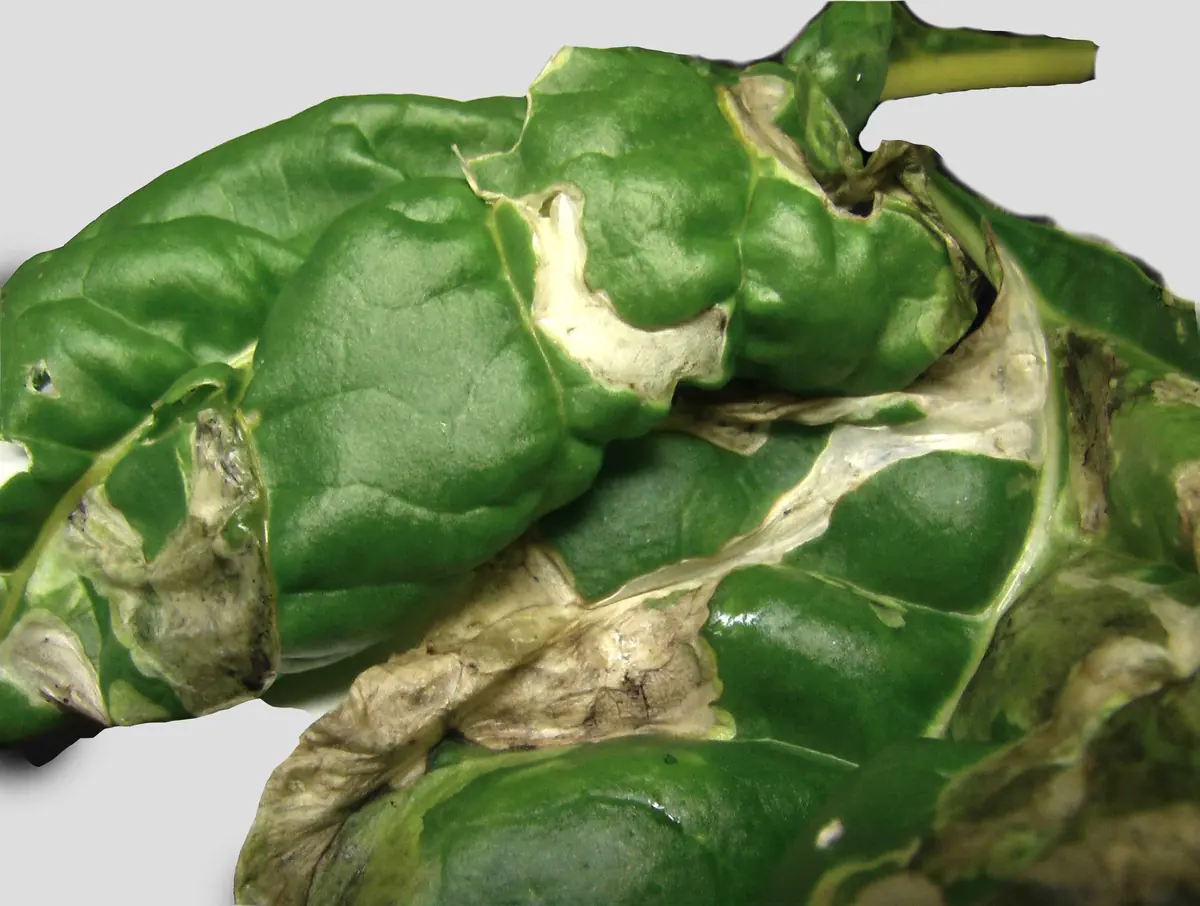
- On spinach, Swiss chard and beet leaves you first notice pale, papery blotches that turn brown, often with several blotches merging.
- Hold a blotched leaf up to the light and you may see one or more small, pale maggots inside, and clusters of tiny white eggs on the leaf underside.
- On many vegetables, herbs such as lovage, and flowers, Liriomyza leafminers make narrow, winding white tunnels that widen as the larva grows.
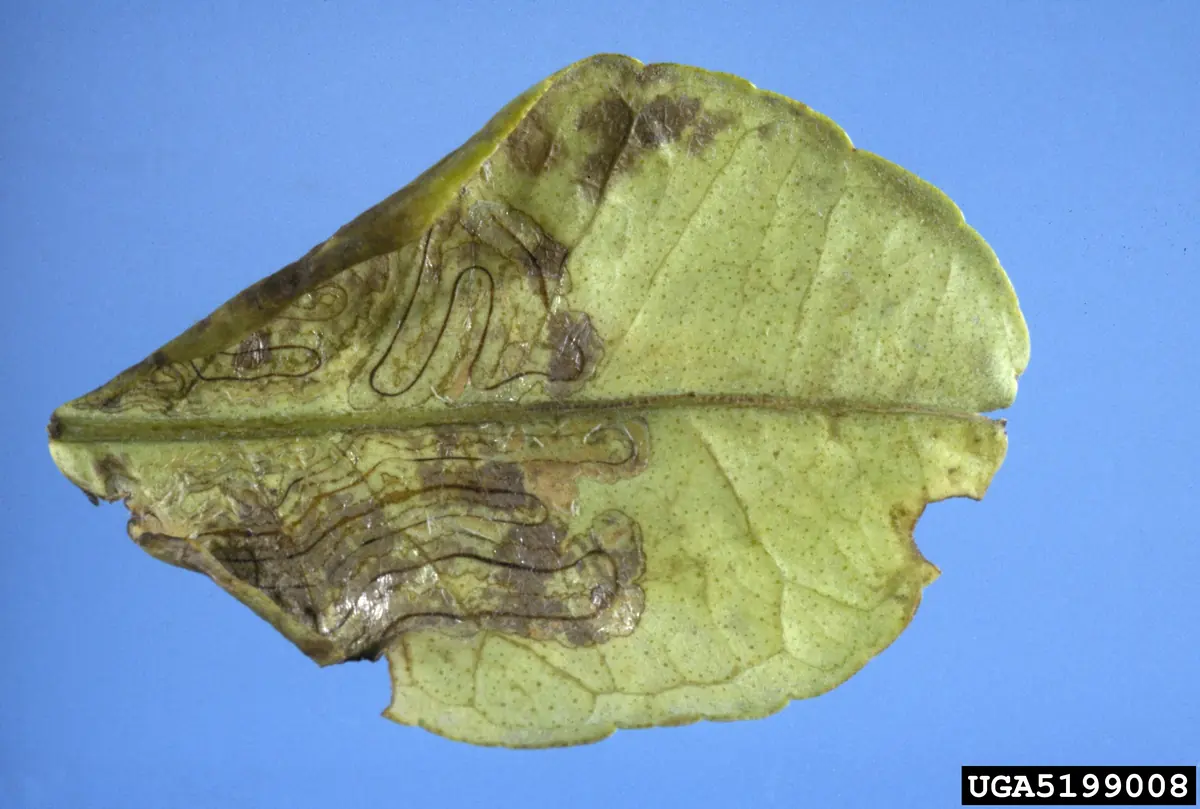
- On citrus, look for silvery, snaking trails on young, soft leaves, each with a thin dark line of droppings down the middle.
- Citrus leaves with leafminer often curl and twist, and the larva pupates in a rolled leaf edge.
- Tiny stipple-like pinpricks on leaves are feeding and egg-laying punctures made by adult Liriomyza flies.

What it is often confused with
Asian citrus psyllid
Psyllid feeding also twists new citrus leaves, but it leaves notched leaves and small insects with white waxy threads, not tunnels inside the leaf. Both can be on the same flush.
Thrips
Thrips scrape the leaf surface, leaving silvery patches with black specks, rather than tunnels you can see from both sides of the leaf.
When and where it is worst
Spinach leafminer attacks spinach, Swiss chard and beets across the Northeast, Midwest, Mountain West and Pacific Northwest, with the first generation in spring and more through summer. Vegetable leafminers have short life cycles and many generations a year in Florida, Texas, the Southwest and California. Leafminer damage on lovage and other herbs is mostly cosmetic.
Citrus leafminer is found wherever citrus grows outdoors, including Florida, the Gulf Coast, Texas, Arizona and California. It lays eggs only on tender new flush, so damage peaks from summer into fall when trees put on new growth, and spring flush often escapes.
Plants it attacks
These plants in our library list it as a problem to watch for.
How to prevent it
- Cover spinach, chard and beet seedlings with fine row cover from sowing, sealing the edges, so adult flies cannot lay eggs.
- Pick off and destroy mined leaves or squash the larvae inside the blotch as soon as you see them.
- Remove weeds such as lambsquarters and pigweed, which host the spinach leafminer.
- Turn under or remove old spinach and beet crops promptly, since pupae drop into the soil.
- On citrus, prune live branches no more than once a year so flushes are short and uniform, and avoid heavy late-summer feeding that triggers soft new growth.
- Do not cut off mined citrus leaves, because they still feed the tree and often hold parasitized larvae.
Organic control, step by step
- Hand-pick mined leaves on vegetables every few days and bag them rather than composting them.
- Leave parasitic wasps to work by avoiding broad-spectrum sprays; they usually keep vegetable leafminers in check.
- Spray spinosad on vegetables and citrus listed on the label when mines first appear, repeating at the interval the label gives, but never on open flowers.
- Neem oil or azadirachtin can reduce larvae in young mines on listed crops when applied every 7 to 14 days.
- On young citrus trees, protect the new flush with spinosad or horticultural oil while the leaves are expanding.
Conventional control
- UC IPM notes that insecticides are not very effective against vegetable leafminers and can make outbreaks worse by killing parasites, so most home gardens do best with cover and picking.
- On citrus, imidacloprid soil treatments applied once a year before the main flush protect young trees in many states; keep them away from bloom, and in California only licensed applicators may now use it on outdoor fruit trees.
- Read the label, check that the crop is listed, and keep to the pre-harvest interval.
Frequently asked questions
Can I still eat spinach or chard with leaf miner damage?
Yes. Cut away the mined parts and eat the rest of the leaf. The larvae are harmless, just unpleasant to find.
Will citrus leafminer kill my tree?
Not a mature tree. Trees older than about four years with a full canopy tolerate the damage with little effect on fruit. Young trees grow more slowly when every flush is mined, so they benefit most from protection.
Should I spray for leaf miners once I see the tunnels?
Usually not on vegetables, because the larva is protected inside the leaf and sprays kill the wasps that parasitize it. Picking off mined leaves and covering new sowings works better.
Related problems
Sources: UC IPM, Vegetable Leafminers (Pest Notes); UC IPM, Citrus Leafminer (Pest Notes); California Department of Pesticide Regulation, Neonicotinoid pesticides for non-agricultural outdoor use. Identification and control follow these sources. Always read and follow the product label.