
Whiteflies: identify, prevent, control
Updated October 2026
Builds through summer and fall, worst in late summer in Florida, Texas, the Gulf Coast, the Southwest deserts and California, and in greenhouses everywhere.
Whiteflies are tiny sap-sucking insects related to aphids and scale. Adults look like small white moths, while the flat, scale-like nymphs feed unseen on the undersides of leaves. Large populations yellow and weaken tomatoes, okra, cucumbers, basil and tomatillos, coat them in honeydew and, in the South, spread viruses such as tomato yellow leaf curl.
Aleyrodidae (Bemisia tabaci, Trialeurodes vaporariorum and others)
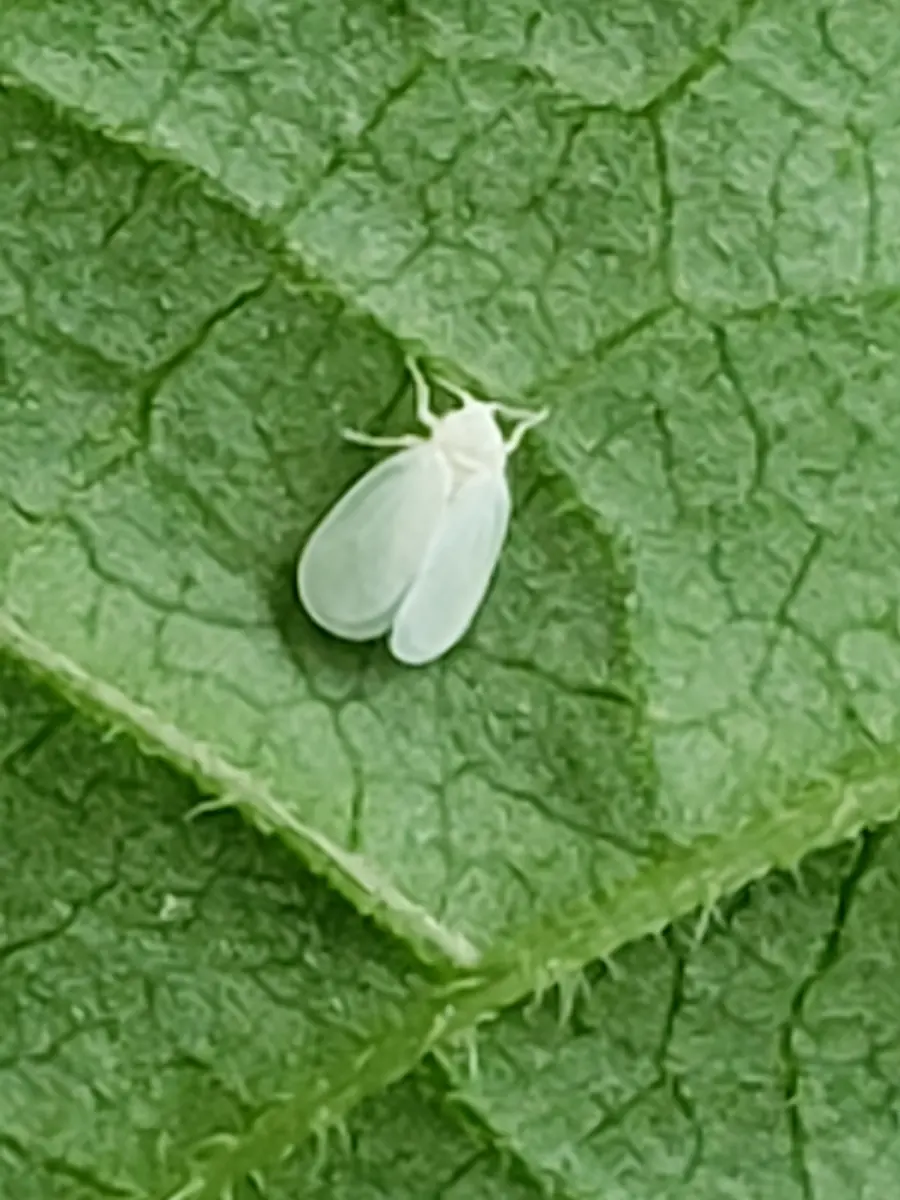
How to identify it
- You usually notice a cloud of tiny white insects rising from the plant when you brush past or shake a leaf.
- Adults are about 1/16 inch long with powdery white wings held flat or tent-like over a pale yellow body.
- Turn a leaf over to find the nymphs: flat, oval, legless, translucent green or yellow specks that do not move, often among tiny eggs.
- Leaves become sticky with honeydew and may turn black with sooty mold, and lower leaves yellow and drop.
- Silverleaf whitefly can cause silvering of squash leaves and uneven ripening of tomatoes, with fruit that stays partly green or yellow inside.
- Tomato plants that are stunted with small, upward-curled, yellow-edged leaves in Florida or the Gulf states may have tomato yellow leaf curl virus spread by whiteflies.
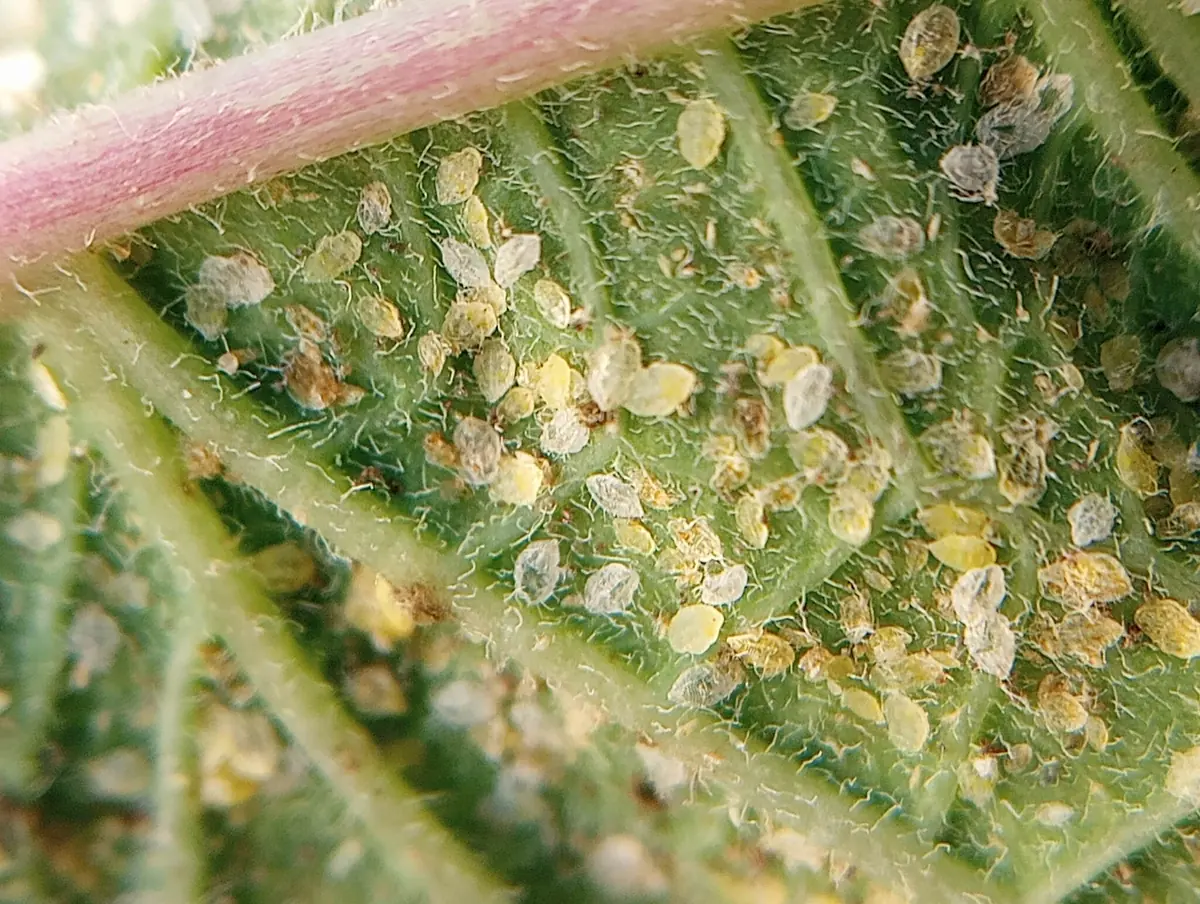
What it is often confused with
Aphids
Aphids are not white and do not fly up in a cloud; most sit in clusters on shoot tips and have two small tubes on the rear end.
Mealybugs
Mealybugs are larger, covered in fluffy white wax and crawl slowly, and they never fly.
Scale insects
Whitefly nymphs look like tiny scales, but scale insects are usually on twigs and leaf veins of woody plants and do not have flying white adults nearby.
When and where it is worst
Silverleaf whitefly (Bemisia tabaci) is the most damaging species in Florida, Texas, the Gulf Coast, the Southwest deserts and Southern California, where it breeds year round and peaks in late summer and fall. Greenhouse whitefly is the usual species in cooler regions, in greenhouses and on transplants, and it moves outdoors in the Northeast, Midwest and Pacific Northwest in summer.
Warm weather, dusty conditions and broad-spectrum insecticide sprays that kill their natural enemies favor outbreaks. Populations often explode on tomatoes, okra and cucumbers late in the season, after cotton, melons or other host crops nearby are harvested.
Plants it attacks
These plants in our library list it as a problem to watch for.
How to prevent it
- Inspect transplants, especially tomatoes and basil, for nymphs on the leaf undersides before you buy or plant them.
- Cover young plants with floating row cover until they flower, or longer for crops that do not need pollinating.
- Lay silver reflective mulch around tomatoes, squash and cucumbers, which UC IPM reports repels adults and delays infestation.
- Hang yellow sticky cards just above the plants to monitor adults and catch some of them.
- Pull out and bag finished crops quickly, especially old tomatoes and squash, so whiteflies do not breed on them and move to new plantings.
- In the South, choose tomato varieties listed as resistant or tolerant to tomato yellow leaf curl virus.
Organic control, step by step
- Pick off and bag heavily infested lower leaves, and hose the leaf undersides with water to knock adults and nymphs off.
- Vacuum adults from the foliage with a handheld vacuum early in the morning, when they are sluggish, and empty the bag into a sealed bag.
- Protect the tiny parasitic wasps (Encarsia and Eretmocerus species), lady beetles and lacewings by avoiding broad-spectrum insecticides.
- Spray insecticidal soap, neem oil or a horticultural oil on the undersides of leaves, where the nymphs are, and repeat every 5 to 7 days for a few weeks.
- Do not spray oils or soaps in temperatures above about 90°F or on wilted plants.
Conventional control
- Acetamiprid sprays sold for home fruit and vegetable gardens list whiteflies on tomatoes and other vegetables; spray leaf undersides and avoid plants in bloom where bees are working.
- Imidacloprid soil drenches are labeled for whiteflies on some vegetables and ornamentals, but silverleaf whitefly has developed resistance in places and the product can harm bees, so check the label and use it only once per season.
- Avoid repeated pyrethroid sprays such as bifenthrin, which kill natural enemies and often make whitefly and spider mite problems worse.
- Read the label, check that your crop and whiteflies are listed, follow the rate exactly and keep to the pre-harvest interval stated on it.
Frequently asked questions
Why do whiteflies come back after I spray?
Most sprays only kill the adults and the youngest nymphs they touch, and eggs and older nymphs keep hatching. Repeat soap or oil sprays every 5 to 7 days and aim at the leaf undersides. Broad-spectrum sprays can also kill the wasps that keep whiteflies in check.
Do yellow sticky traps get rid of whiteflies?
They catch adults and show you when numbers are rising, but on their own they rarely control a large outbreak outdoors. Use them alongside row covers, hosing and soap or oil sprays.
Can whiteflies kill my tomato plants?
A heavy infestation weakens plants and reduces the crop, but the bigger risk in Florida, Texas and the Southeast is tomato yellow leaf curl virus. Infected plants stop producing, cannot be cured and should be pulled and bagged.
Related problems
Sources: UC IPM Pest Notes: Whiteflies; UC IPM Pest Notes: Aphids (reflective mulches). Identification and control follow these sources. Always read and follow the product label.