
White rot: identify, prevent, control
Updated October 2026
Active in cool, moist soil in spring and fall, worst in garlic and onion areas of the Pacific Northwest, California, the Northeast and the upper Midwest.
White rot is the most serious disease of onions and garlic, and it attacks only the onion family. The fungus forms tiny black resting bodies that can survive in soil for twenty years or more without a host, so once a bed is infested it is effectively lost for onions and garlic. Prevention is everything, because no home garden treatment clears it.
Sclerotium cepivorum (Stromatinia cepivora)

How to identify it
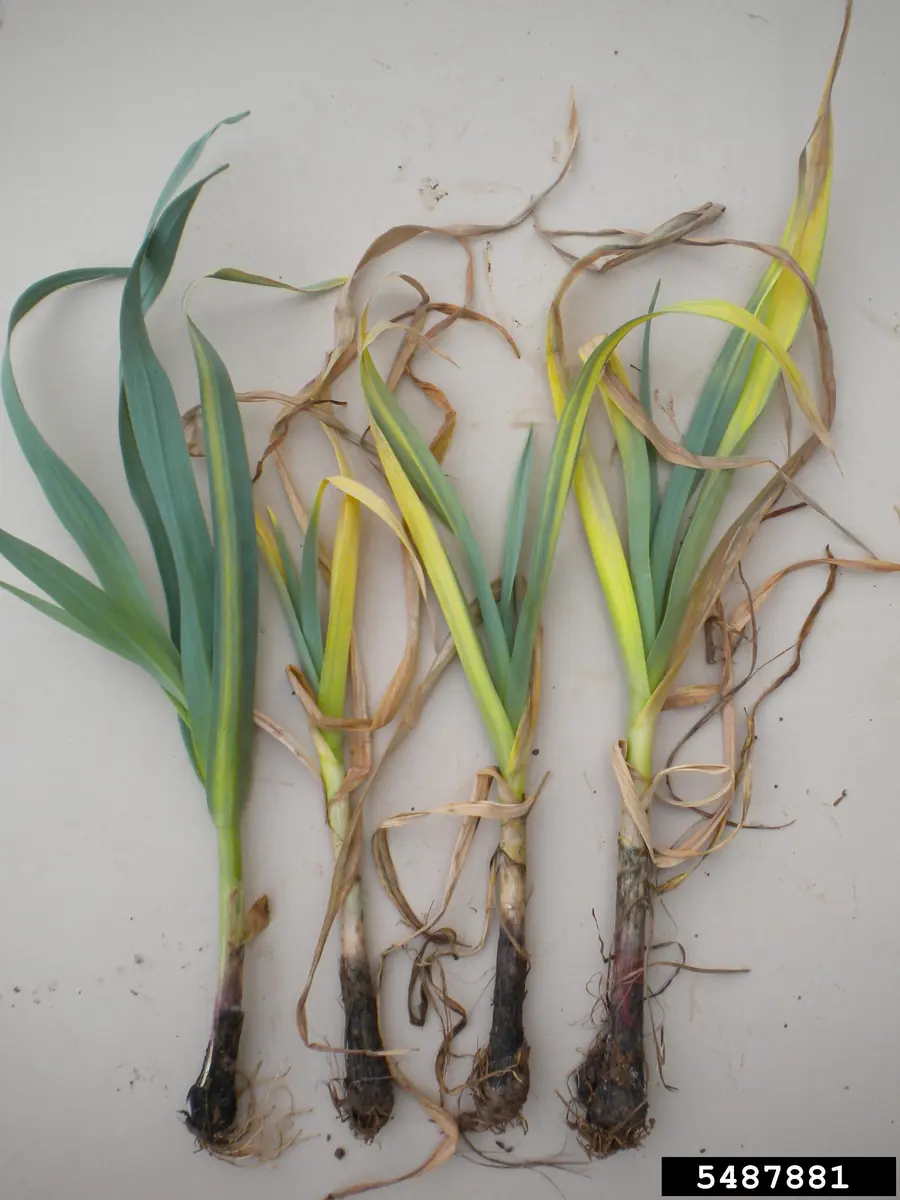
- Older leaves turn yellow from the tips and die back, and plants look stunted, often in patches or along a row.
- Plants wilt and topple, and an affected plant pulls out of the ground easily because most of its roots have rotted away.
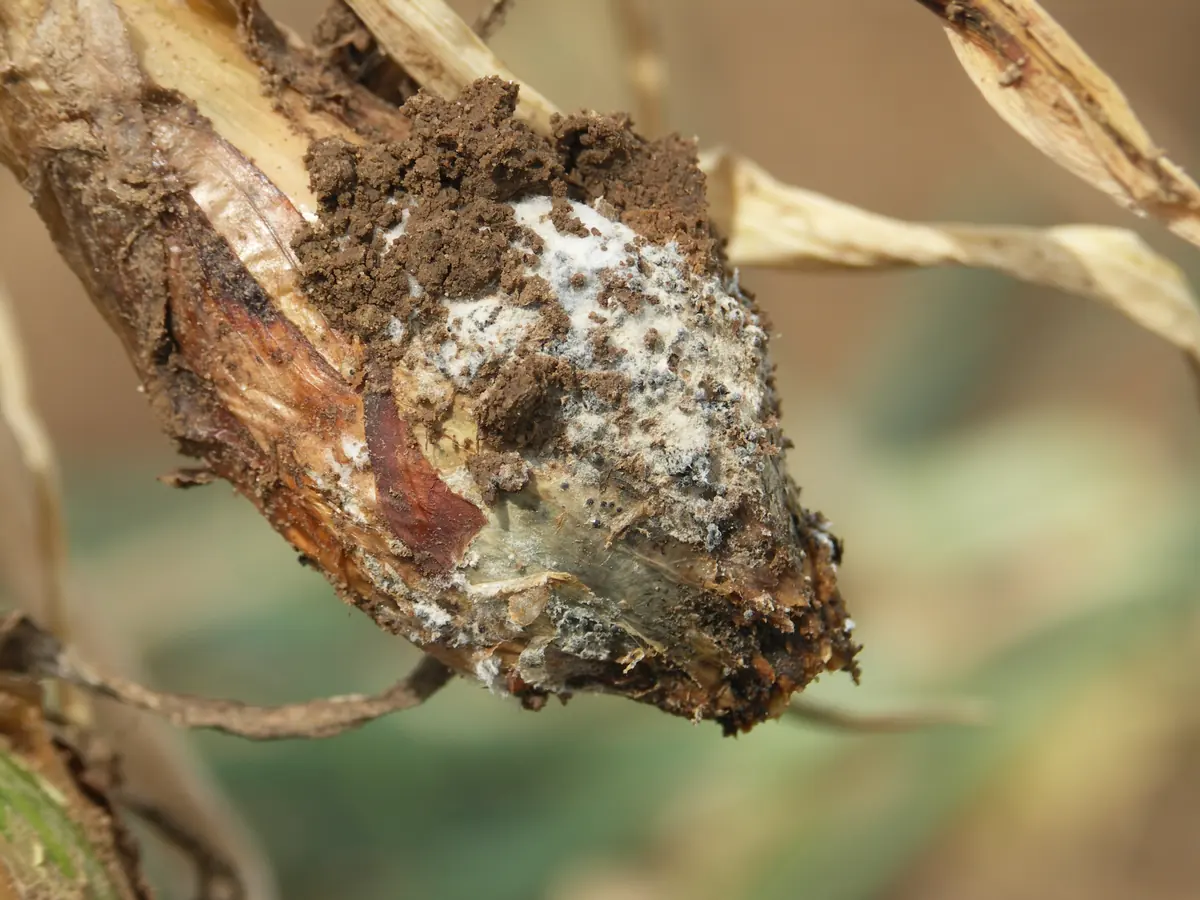
- A fluffy white mold covers the base of the bulb and the remaining roots, often matting soil onto the bulb.
- Within the white mold you will find many small, round, black specks about the size of a poppy seed, which are the resting bodies of the fungus.
- The bulb scales go soft and watery, and garlic cloves rot from the base upward, sometimes in storage.
_-_Elizabeth_Bush.jpg)
What it is often confused with
Fusarium basal rot
Fusarium basal rot also rots the base of onion and garlic bulbs, but it is favored by warm soil, the mold is sparse and white to pinkish, and you will not find the black poppy-seed specks.
Pink root
Pink root turns onion roots pink to purple and shriveled and stunts the plant, but the bulb itself does not rot under a white mold.
Onion maggot damage
Onion maggots also make plants yellow and wilt, but you will find small white maggots tunneling in the bulb and no white mold.
When and where it is worst
White rot occurs in onion and garlic growing areas across the country, and it is a well-known problem in the Pacific Northwest, California, the Northeast and parts of the Midwest. The fungus is active in cool, moist soil between about 50 and 75°F, with the most disease at 60 to 65°F, and it is held back when soil warms above about 78°F. That means fall-planted garlic and spring onions are at risk from fall through early summer, while hot summer soils slow it down.
The black resting bodies sprout only when they sense chemicals leaking from the roots of onion-family plants, which is why they can lie dormant for decades. They move to new gardens in soil on tools, boots and wheelbarrows, in irrigation water and runoff, and on infected garlic cloves, onion sets and transplants.
Plants it affects
These plants in our library list it as a problem to watch for.
How to prevent it
- Start with clean planting stock: buy garlic, onion sets and transplants from reputable suppliers, and never plant cloves from a crop that had white rot or from unknown sources.
- Inspect seed garlic before planting and throw out any clove with a soft or moldy base.
- Keep soil from an infested bed out of the rest of the garden by cleaning tools, boots and wheelbarrow tires after working in it.
- Do not move soil, compost or plants from a garden known to have white rot into yours.
- Rotate onion-family crops around the garden so a bed is not planted with onions, garlic, leeks, shallots or chives year after year.
- Water carefully so runoff from one bed does not wash soil into others, and use raised beds where you can.
Organic control, step by step
- As soon as you find a plant with white mold and black specks, dig it out with the soil around its roots, bag it and put it in the trash, never in the compost.
- Mark the spot and stop growing onions, garlic, leeks, shallots and chives in that bed, because the fungus will persist for many years.
- In hot inland areas, solarize the bed during the hottest six weeks of summer by covering moist soil tightly with clear plastic, which UC IPM says helps reduce the disease.
- Use the infested bed for crops outside the onion family, which the fungus cannot attack.
Conventional control
- No fungicide is registered to control white rot in home gardens, so management relies on keeping it out and avoiding infested soil.
- Fungicides used by commercial onion and garlic growers do not eliminate the fungus from soil and are not sold for home garden use.
- If a product for onion diseases is offered to you, read the label, check that white rot and your crop are listed, and keep to the pre-harvest interval.
Frequently asked questions
How long does white rot stay in the soil?
The black resting bodies can survive for twenty years or more without an onion-family crop. Their numbers fall slowly over time, but even a few per pound of soil can cause disease, so treat an infested bed as off limits for onions and garlic.
Can I eat garlic or onions from an infected bed?
Bulbs that look and feel sound are safe to eat right away, but they may rot in storage. Do not replant any of them or give them away as seed garlic.
Which plants get white rot?
Only members of the onion family, including onions, garlic, green onions, leeks, shallots and chives. Other vegetables and flowers are not affected, so you can still use the bed for them.
Will solarizing the soil get rid of white rot?
It reduces the number of resting bodies in the top few inches of soil when summers are hot, but it will not eliminate them. Use it as one step along with keeping onion-family crops out of that bed.
Related problems
Sources: UC IPM, White rot of onion and garlic in the garden; Pacific Northwest Plant Disease Management Handbook, Garlic white rot; University of Maryland Extension, White rot of onion and garlic. Identification and control follow these sources. Always read and follow the product label.