
When to Plant Beets in Zone 5
USDA zone 5 covers zones 5a and 5b, with winter lows of -20 to -10°F (-29 to -23°C).
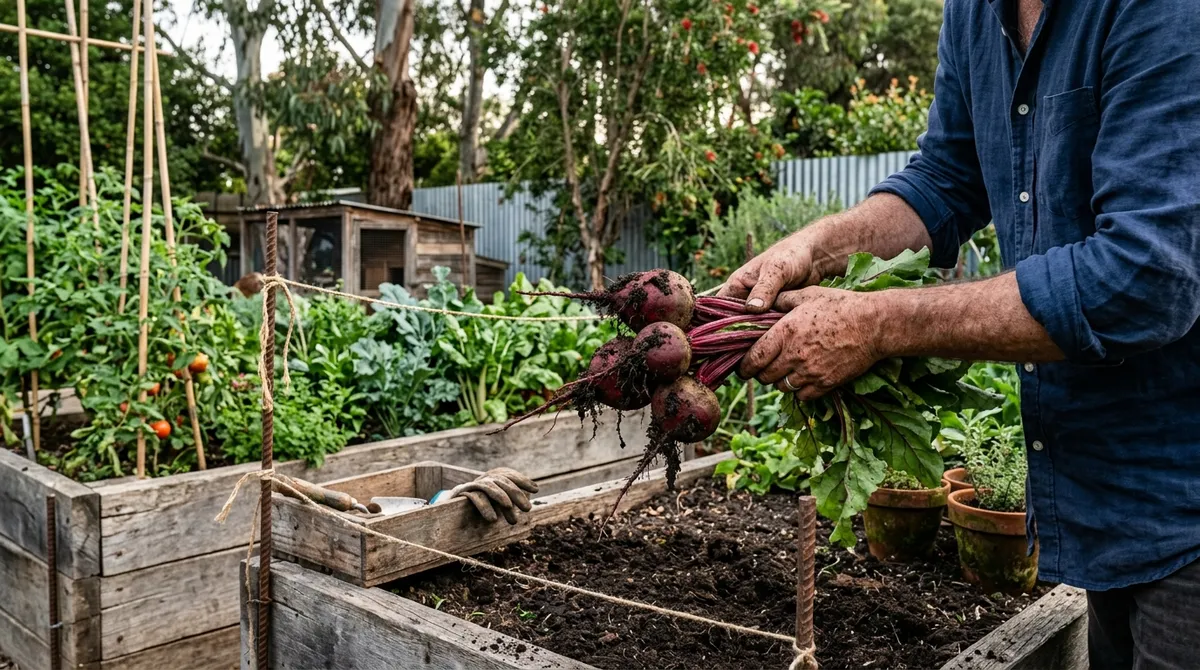
Beets are one of the few vegetables a zone 5 garden can sow while the soil is still cold. Our calendars open from March to May in the Northeast, in April and May in the Midwest and Mountain West, in April and May on the Northern Plains, and from February to April in Nebraska. Each region repeats the sowing later in the year, and the Midwest second run is from July to September.
Zone 5 beets planting months by region
| Planting region | Share of zone 5 | Sow beets | Last frost, zone 5 ZIP codes | First frost, zone 5 ZIP codes |
|---|---|---|---|---|
| Midwest & Great Lakes Continental, cold winters and warm summers | 43 percent | April and May, then July to September | April 28 | October 11 |
| Northeast & New England Cold winters, warm humid summers | 26 percent | March to May, then July to September | May 9 | October 4 |
| Upper Midwest & Northern Plains Cold continental, short season | 11 percent | April and May, then July and August | May 2 | October 4 |
| Mountain West High-elevation, dry, big day-night swings | 11 percent | April and May, then July to September | May 23 | September 24 |
| Southern Plains Hot summers, two planting seasons | 8 percent | February to April, then July to October | April 30 | October 10 |
Other regions (1 percent of the zone): Alaska.
How we built this table: we placed all 5,306 zone 5 ZIP codes (2023 USDA map) in our planting regions; the months are each region's own calendar and the frost dates are NOAA 1991 to 2020 medians for the zone's ZIP codes there.
Beets forgive a cold start and a short season
Seed germinates in soil as cool as 50°F and the young plants shrug off a light frost, so the planting date follows the thaw rather than the last frost, which typically falls around April 28 in the Midwest and May 23 in the Mountain West. Cold, soggy ground can still rot the seed, so squeeze a handful first: if it holds together as a sticky ball, wait a few days. Every beet seed is really a cluster of several seeds, which is why a row comes up thick. Thin to 4 inches (10 cm) apart, our spacing, while the seedlings are small, and eat the thinnings as greens.
The Mountain West has the shortest season in the zone, about 121 frost-free days against 165 in the Midwest. Beets need about 65 days to size up, our figure, so the early run there has time for a full crop. The later dates in the second run will not reach full size before the first frost, which arrives near September 24, so treat those sowings as baby beets and tender tops. Early Wonder Tall Top is a good pick for that job because its leaves are tasty and the roots round up quickly.
Fall roots are the reward. Beets that mature in cooling weather are sweeter, and a few frosts push the sugars higher still. Dig them before the ground freezes hard, trim the tops to an inch, and pack the roots in damp sand or sawdust in a cold cellar, where they last through winter. Red Ace is a dependable red beet, golden types will not stain your hands, and Cylindra gives long, even slices for pickling. Nebraska and the Northern Plains can see hot, dry spells that turn roots woody, so water deeply once a week and mulch the row with straw.
Zone 5 beets questions
Can zone 5 gardeners sow beets before the last frost?
Yes, beets are among the few crops that can be. The seed germinates in cool soil and seedlings tolerate a light frost, which is why our zone 5 calendars open as early as February. A hard freeze well below 25°F can still set small plants back, so cover them if one is forecast.
How do I keep beets from cracking or turning woody?
Water evenly. Roots that dry out and are then flooded split, and roots held in hot, dry weather turn tough. A layer of straw keeps the soil steady, and the second sowing, which matures in cooler weather, usually gives the best texture.
Growing advice follows published guidance from Iowa State University Extension and Colorado State University Extension, beet guidance.
Keep planning
- How to grow beets: the full guide
- Beets planting calendar for every region
- Zone 5a planting calendar and zone 5b planting calendar
- All USDA zones and the Frost Lookup by ZIP code
- When to plant beets in zone 6
- When to plant carrots in zone 5
- When to plant lettuce in zone 5
- When to plant onions in zone 5
- When to plant strawberries in zone 5
- When to plant tomatoes in zone 5
- When to plant garlic in zone 5
- When to plant peas in zone 5