
When to Plant Shallots in Zone 5
USDA zone 5 covers zones 5a and 5b, with winter lows of -20 to -10°F (-29 to -23°C).
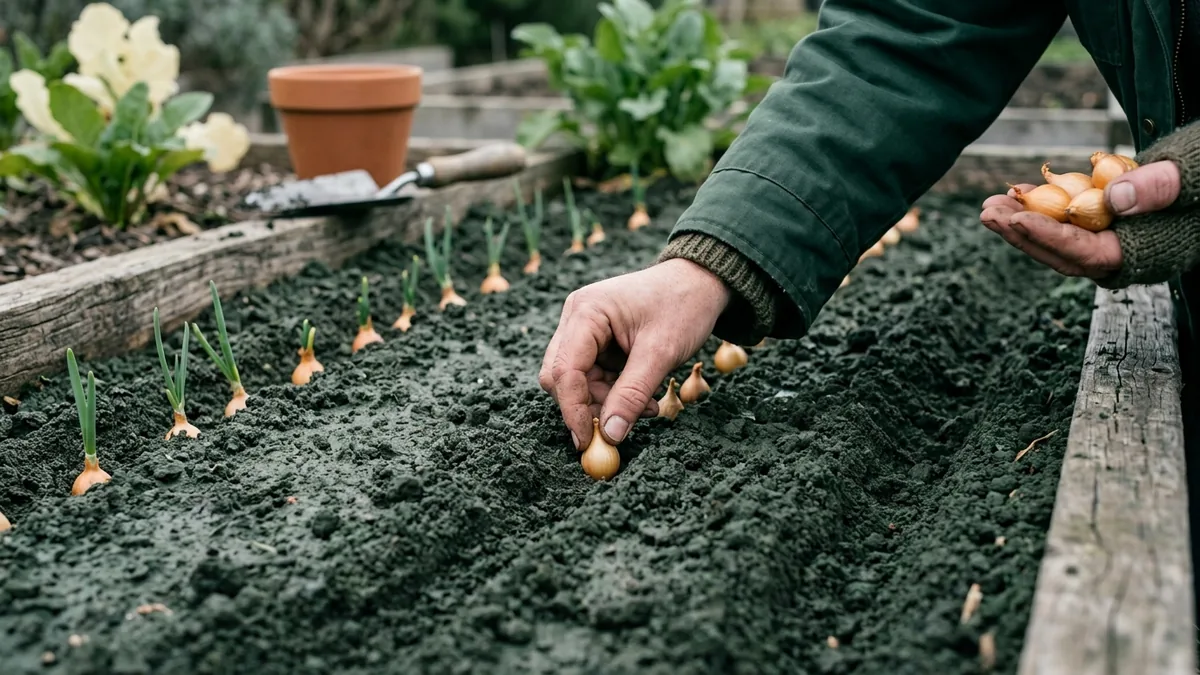
Shallots multiply in the soil, so a handful of sets in zone 5 turns into several pounds of mild, long keeping bulbs by midsummer. The Midwest and Northeast plant in April and May and again in October, the Southern Plains in March and April and in October, and the Northern Plains and Mountain West in April and May only.
Zone 5 shallots planting months by region
| Planting region | Share of zone 5 | Plant shallots | Last frost, zone 5 ZIP codes | First frost, zone 5 ZIP codes |
|---|---|---|---|---|
| Midwest & Great Lakes Continental, cold winters and warm summers | 43 percent | April and May, then October | April 28 | October 11 |
| Northeast & New England Cold winters, warm humid summers | 26 percent | April and May, then October | May 9 | October 4 |
| Upper Midwest & Northern Plains Cold continental, short season | 11 percent | April and May | May 2 | October 4 |
| Mountain West High-elevation, dry, big day-night swings | 11 percent | April and May | May 23 | September 24 |
| Southern Plains Hot summers, two planting seasons | 8 percent | March and April, then October | April 30 | October 10 |
Other regions (1 percent of the zone): Alaska.
How we built this table: we placed all 5,306 zone 5 ZIP codes (2023 USDA map) in our planting regions; the months are each region's own calendar and the frost dates are NOAA 1991 to 2020 medians for the zone's ZIP codes there.
One set becomes a cluster, so plant fewer than you expect to need
Buy sets or small bulbs rather than seed. Push each set into loose, well drained soil with the pointed tip just showing, 6 inches (15 cm) apart, our spacing, and it splits into a cluster of five to ten bulbs. Spring sets go in as soon as the ground can be worked, ahead of the typical last frost of April 28 in the Midwest and May 9 in the Northeast, because the green shoots shrug off a light freeze.
Fall planting works much as it does for garlic. Set the bulbs about four weeks before the ground freezes, cover them with 4 inches of straw, and the clumps wake early in spring and ripen sooner than spring sets. The Midwest has a typical first frost near October 11, but heavy clay holds water over winter and rots sets, so raise the row. Dutch Yellow is the dependable all-rounder, and French Red adds a deeper flavor in the kitchen.
A crop needs about 110 days, our figure, and is ready when the tops yellow and flop over. Lift clumps with a fork on a dry day, cure them for two or three weeks in a shaded, airy spot, trim the tops, and a well cured shallot stores for most of a year in a cool, dark room. The Mountain West has only about 121 frost-free days, so plant there at the first chance and water steadily through bulbing. Keep shallots off ground that held onions in the past two years, since onion maggots and white rot stay in the soil.
Zone 5 shallots questions
Should I plant shallots in fall or spring in zone 5?
Either works in the Midwest, Northeast and Southern Plains, and fall plantings ripen earlier. Our calendars list only a spring planting for the Northern Plains and Mountain West, so use spring sets there.
Why did my shallots bolt?
A cold snap just after planting, or sets that were large to begin with, can trigger flower stalks. Cut the stalk off at once and use that bulb first, because it will not store well.
Growing advice follows published guidance from University of Minnesota Extension and Cornell Cooperative Extension, shallot guidance.
Keep planning
- How to grow shallots: the full guide
- Shallots planting calendar for every region
- Zone 5a planting calendar and zone 5b planting calendar
- All USDA zones and the Frost Lookup by ZIP code
- When to plant shallots in zone 6
- When to plant beets in zone 5
- When to plant carrots in zone 5
- When to plant lettuce in zone 5
- When to plant onions in zone 5
- When to plant peas in zone 5
- When to plant potatoes in zone 5
- When to plant strawberries in zone 5