
When to Plant Shallots in Zone 6
USDA zone 6 covers zones 6a and 6b, with winter lows of -10 to 0°F (-23 to -18°C).
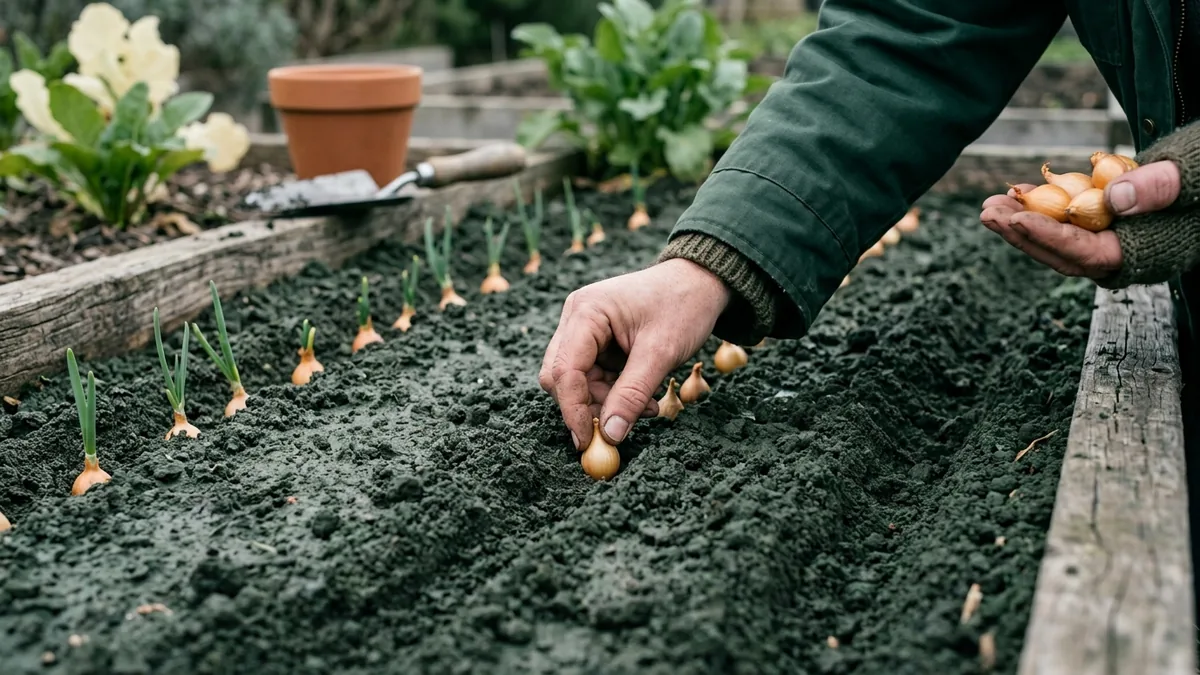
Zone 6 is a comfortable fit for shallots, mild enough to plant in fall and long enough in spring to ripen a full crop before summer turns hot. Fall sets go in in October in the Midwest and Northeast and in October in Missouri and Kansas, and spring plantings follow in April and May in the Midwest and Northeast and in March and April in Missouri and Kansas. The Mountain West plants in April and May only.
Zone 6 shallots planting months by region
| Planting region | Share of zone 6 | Plant shallots | Last frost, zone 6 ZIP codes | First frost, zone 6 ZIP codes |
|---|---|---|---|---|
| Midwest & Great Lakes Continental, cold winters and warm summers | 38 percent | April and May, then October | April 23 | October 21 |
| Northeast & New England Cold winters, warm humid summers | 30 percent | April and May, then October | April 30 | October 17 |
| Southern Plains Hot summers, two planting seasons | 15 percent | March and April, then October | April 16 | October 21 |
| Mountain West High-elevation, dry, big day-night swings | 7 percent | April and May | May 10 | October 5 |
Other regions (9 percent of the zone): Mid-Atlantic, Mid-South, Pacific Northwest.
How we built this table: we placed all 10,458 zone 6 ZIP codes (2023 USDA map) in our planting regions; the months are each region's own calendar and the frost dates are NOAA 1991 to 2020 medians for the zone's ZIP codes there.
Early planting makes bigger bulbs, and humid summers need care
Bulbs form as days lengthen, and the plant can only make as much bulb as it made leaf by then. A set planted early has weeks of extra growth, so earlier planting is the one lever a gardener holds. Aim for the soil to be workable before the typical last frost, April 16 in the Southern Plains and April 23 in the Midwest, and cover the bed with a light mulch of shredded leaves.
Humid summers are the hazard in the east of the zone. The Midwest and Northeast have about 180 and 170 frost-free days and weather that invites downy mildew and botrytis, so leave 6 inches (15 cm) between clusters, our spacing, and water at the base. Missouri and Kansas bake in early summer, and heat helps the bulbs ripen. Stop watering when the tops begin to fall, and pull the clumps before a spell of rain can soak the bulbs.
Rotate. Shallots share pests with onions, garlic and leeks, so leave three years between plantings in the same bed. Dutch Yellow sets are reliable, French Red has a rich flavor, and Conservor, grown from seed, keeps longer than most. Curing takes two or three weeks in the shade, after which the tops are trimmed to an inch and the bulbs go into mesh bags. In the Mountain West, with a first frost near October 5, a spring set has just enough time to mature if it goes in early.
Zone 6 shallots questions
Can I plant shallots from the grocery store in zone 6?
You can, but they are often treated to stop sprouting and may carry disease. Sets from a garden supplier are cleaner and more reliable, and they cost little for a first bed.
How deep do I plant shallot sets?
Barely cover them: the pointed tip should just show above the soil. Planting deeper delays emergence and gives longer, thinner necks that store badly.
Growing advice follows published guidance from Penn State Extension and University of Missouri Extension, shallot guidance.
Keep planning
- How to grow shallots: the full guide
- Shallots planting calendar for every region
- Zone 6a planting calendar and zone 6b planting calendar
- All USDA zones and the Frost Lookup by ZIP code
- When to plant shallots in zone 5
- When to plant beans in zone 6
- When to plant beets in zone 6
- When to plant broccoli in zone 6
- When to plant cabbage in zone 6
- When to plant carrots in zone 6
- When to plant sweet corn in zone 6
- When to plant cucumbers in zone 6