
When to Plant Peas in Zone 7
USDA zone 7 covers zones 7a and 7b, with winter lows of 0 to 10°F (-18 to -12°C).
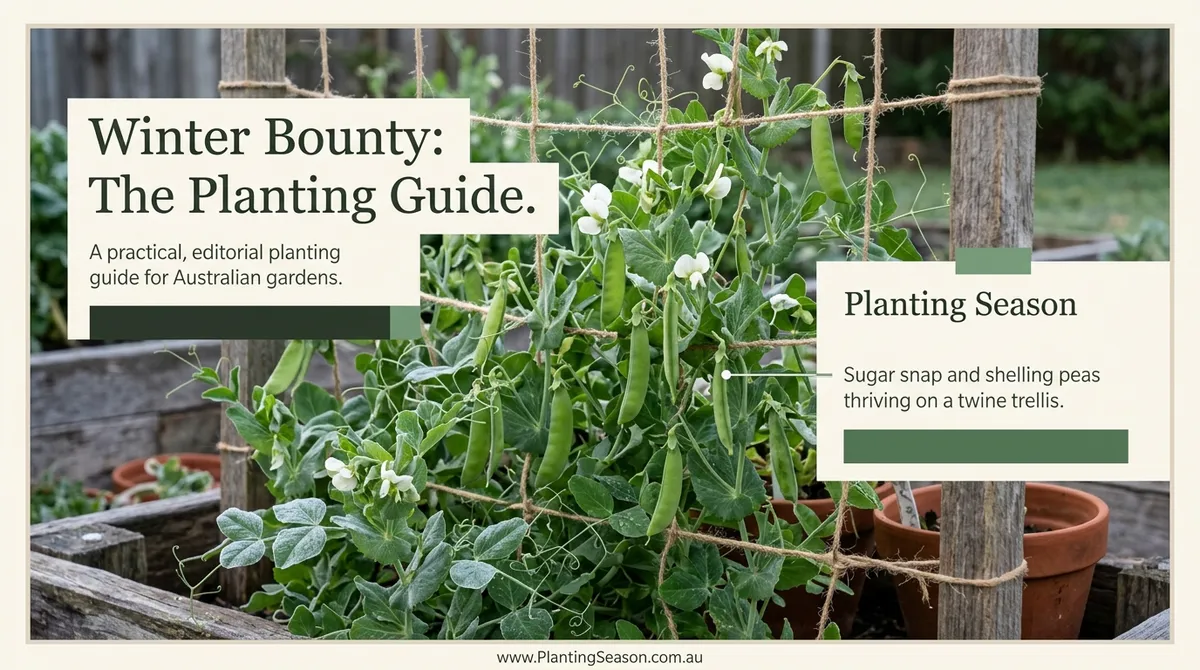
February is pea month across most of zone 7. Our calendars open then in the Mid-Atlantic, the Mid-South and the Southern Plains, which together cover Virginia, Maryland, Kentucky, Tennessee, North Carolina, Arkansas and Oklahoma, and in March in the zone 7 part of the Northeast. A second sowing in late summer gives a fall crop.
Zone 7 peas planting months by region
| Planting region | Share of zone 7 | Plant peas | Last frost, zone 7 ZIP codes | First frost, zone 7 ZIP codes |
|---|---|---|---|---|
| Northeast & New England Cold winters, warm humid summers | 27 percent | March to May, then July to September | April 13 | October 31 |
| Mid-Atlantic Humid subtropical, four seasons | 22 percent | February to April, then August to October | April 12 | October 29 |
| Mid-South Warm temperate | 22 percent | February and March, then August and September | April 10 | October 28 |
| Southern Plains Hot summers, two planting seasons | 13 percent | February to April, then August to October | April 6 | October 31 |
| Mountain West High-elevation, dry, big day-night swings | 5 percent | April and May, then July to September | April 26 | October 19 |
Other regions (11 percent of the zone): Midwest & Great Lakes, Pacific Northwest, Texas, Gulf South, Desert Southwest, Northern California & Central Valley.
How we built this table: we placed all 8,732 zone 7 ZIP codes (2023 USDA map) in our planting regions; the months are each region's own calendar and the frost dates are NOAA 1991 to 2020 medians for the zone's ZIP codes there.
A short spring for peas in zone 7
Zone 7 spring is short for peas. The plants need cool weather from sowing right through to picking, and by late May in Tennessee or Oklahoma the heat has usually stopped them flowering. Working back from that, the sowing has to happen in February or March, around six weeks before the typical last frost of April 6 to April 13. Peas take light frost without harm, and a seedling nipped by a hard freeze usually regrows from below.
Our Mid-Atlantic and Southern Plains calendars hold the fall sowing back until August, because July heat stunts young plants and stops them flowering. Even in August the soil is warm, so soak the seed for a few hours, sow it a little deeper than in spring, about 1.5 inches, and water the row every day or two until the shoots are through. Fall peas have one advantage over spring ones: they ripen as the weather cools, so the pods stay sweet on the vine for longer.
Snap peas and snow peas suit a short season well, since the whole pod is eaten and a few plants give a lot of food; see our guides to sugar snap peas and snow peas. Dwarf varieties need only a short fence, while tall ones want a 6-foot trellis. In the zone 7 part of the Mountain West our calendar starts in April and May, and dry air is a bigger issue than heat, so mulch the row once the plants are up.
Zone 7 peas questions
Can I plant peas in January in zone 7?
None of our zone 7 calendars sows peas in January; the earliest month is February, in the Mid-Atlantic, the Mid-South and the Southern Plains. January soil in most of the zone is too cold for the seed to sprout, and seed that sits for weeks in cold, wet ground rots.
When should I plant fall peas in zone 7?
From August in the Mid-Atlantic, the Mid-South and the Southern Plains, and from July in the zone 7 part of the Northeast. At about 75 days to harvest, a mid-August sowing is ready around the end of October, close to the typical first frost, so sow early in the window.
Keep planning
- How to grow peas: the full guide
- Peas planting calendar for every region
- Zone 7a planting calendar and zone 7b planting calendar
- All USDA zones and the Frost Lookup by ZIP code
- When to plant broccoli in zone 7
- When to plant carrots in zone 7
- When to plant sweet corn in zone 7
- When to plant garlic in zone 7
- When to plant onions in zone 7
- When to plant potatoes in zone 7
- When to plant strawberries in zone 7