
When to Plant Garlic in Zone 7
USDA zone 7 covers zones 7a and 7b, with winter lows of 0 to 10°F (-18 to -12°C).
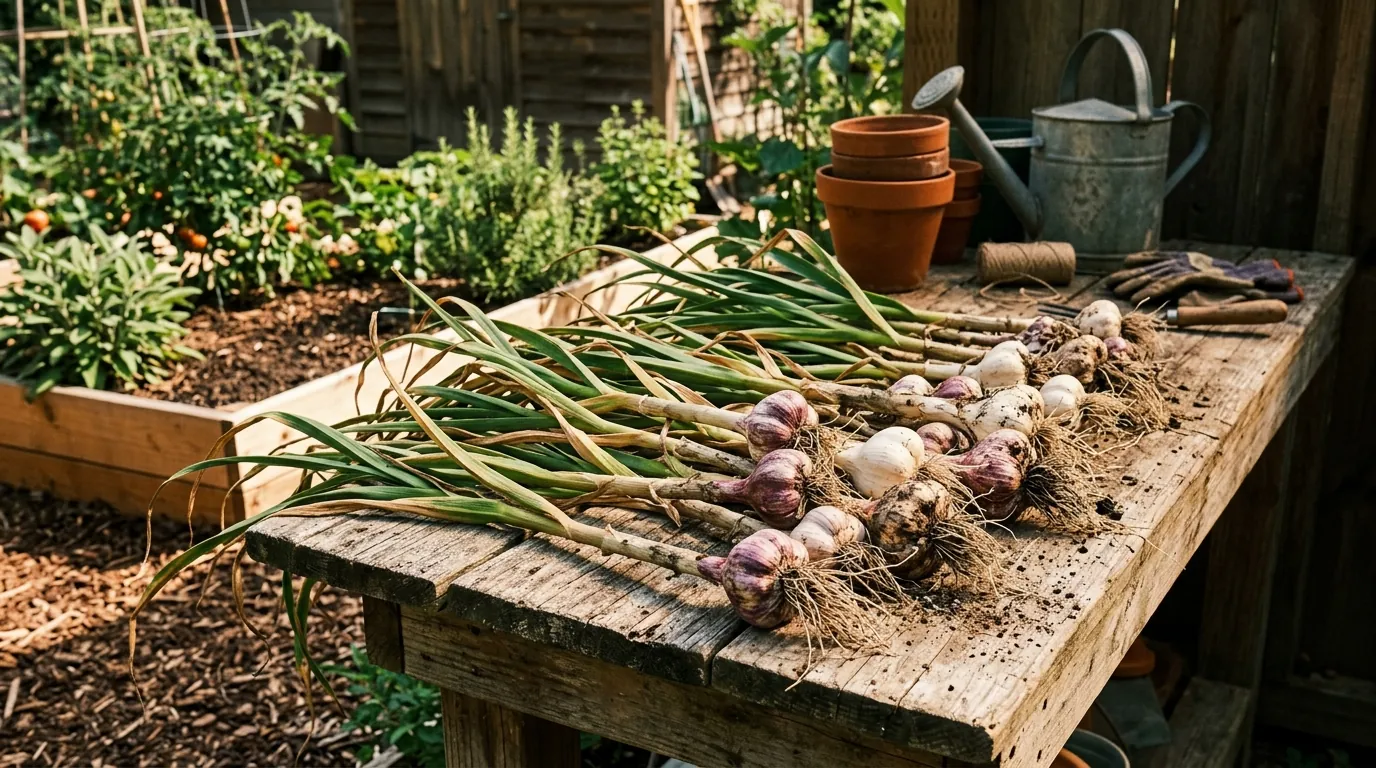
October and November are the garlic months for most of zone 7. That is our calendar for Virginia and Maryland, for Kentucky, Tennessee, North Carolina and Arkansas, and for Oklahoma and southern Missouri. The zone 7 part of the Northeast, around Philadelphia, New Jersey and New York City, plants in October.
Zone 7 garlic planting months by region
| Planting region | Share of zone 7 | Plant garlic | Last frost, zone 7 ZIP codes | First frost, zone 7 ZIP codes |
|---|---|---|---|---|
| Northeast & New England Cold winters, warm humid summers | 27 percent | October | April 13 | October 31 |
| Mid-Atlantic Humid subtropical, four seasons | 22 percent | October and November | April 12 | October 29 |
| Mid-South Warm temperate | 22 percent | October and November | April 10 | October 28 |
| Southern Plains Hot summers, two planting seasons | 13 percent | October and November | April 6 | October 31 |
| Mountain West High-elevation, dry, big day-night swings | 5 percent | September and October | April 26 | October 19 |
Other regions (11 percent of the zone): Midwest & Great Lakes, Pacific Northwest, Texas, Gulf South, Desert Southwest, Northern California & Central Valley.
How we built this table: we placed all 8,732 zone 7 ZIP codes (2023 USDA map) in our planting regions; the months are each region's own calendar and the frost dates are NOAA 1991 to 2020 medians for the zone's ZIP codes there.
Why zone 7 garlic has to go in before winter
The best time is the few weeks after the soil cools, usually from mid-October to mid-November across the zone, and our Mid-South calendar notes the reason: garlic needs the winter cold to form good bulbs. Cloves planted in fall root before winter, sit through the weeks of cold that set them up to divide, and then grow fast in spring. A clove planted in March misses most of that cold and tends to make a single round bulb with no divisions.
Zone 7 winters are mild enough that fall-planted garlic often keeps growing slowly through December, which does no harm. Spring is the riskier season. Wet, warm weather in April and May brings rust, an orange spotting that weakens the leaves, and in heavy clay the bulbs can rot. Plant in a raised bed or ridge if your soil stays wet, space cloves 6 inches (15 cm) apart so air moves through, and keep onions and garlic out of that bed for several years afterward.
Softneck garlic does well in most of zone 7 and stores until spring. Hardneck types grow here too and are worth trying on the cooler side, in the Northeast part of the zone and in the Mountain West, where the window opens in September and October. A light mulch of 2 to 3 inches of straw is enough this far south; heavy mulch stays wet and invites rot. Expect to dig from mid-June, a few weeks ahead of zone 5 and 6 gardens.
Zone 7 garlic questions
Is it too late to plant garlic in December in zone 7?
December is past every zone 7 window in our calendars, which close at the end of November in most of the zone and at the end of October in the Northeast part. Cloves planted that late have little time to root before the coldest weeks and usually give smaller bulbs, so aim for late October to mid-November.
Can I plant garlic in spring in zone 7?
None of our zone 7 calendars plants garlic in spring. Spring cloves miss the winter chill that makes garlic divide, so they often produce one undivided round bulb. Store your seed garlic somewhere cool and plant it in fall, inside the window shown in the table.
Keep planning
- How to grow garlic: the full guide
- Garlic planting calendar for every region
- Zone 7a planting calendar and zone 7b planting calendar
- All USDA zones and the Frost Lookup by ZIP code
- When to plant garlic in zone 6
- When to plant garlic in zone 8
- When to plant broccoli in zone 7
- When to plant carrots in zone 7
- When to plant sweet corn in zone 7
- When to plant onions in zone 7
- When to plant peas in zone 7
- When to plant potatoes in zone 7
- When to plant strawberries in zone 7