
Black rot: identify, prevent, control
Updated October 2026
Worst in warm, wet weather from late spring to fall, especially in the Southeast, the Midwest and the Northeast after storms or overhead watering.
Black rot is a bacterial disease of cabbage and the other cole crops, and it is one of the most damaging diseases these plants get. It usually arrives on infected seed or transplants, then spreads by splashing water, so one sick plant can become a whole row in a wet summer. Heads stay small, leaves drop and soft rots often move in behind it.
Xanthomonas campestris pv. campestris
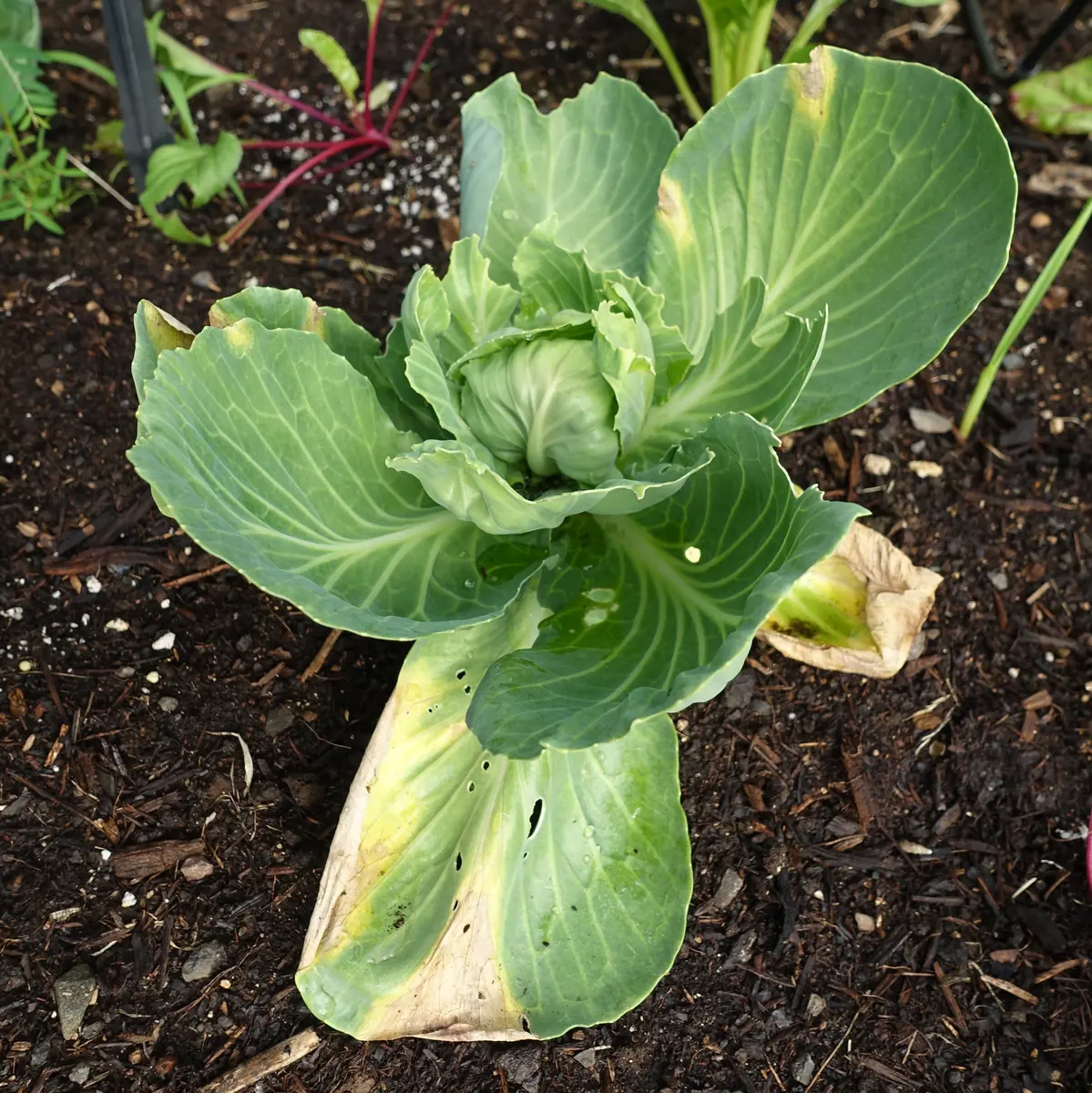
.jpg)
How to identify it
- The first sign is usually a yellow, V-shaped patch on the edge of a leaf, with the point of the V aimed toward the midrib.
- Inside the yellow patch the veins turn dark brown to black, which you can see best when you hold the leaf up to the light.
- The patch dries out and turns brown and papery from the margin inward, and lower leaves often drop early.
- If you cut across an infected stem you may see a black ring or black streaks in the water-conducting tissue.
- Seedlings infected from the seed can show blackened, shriveled leaf edges and may wilt or die soon after they come up.
- Badly infected heads of cabbage or cauliflower are often invaded by soft rot bacteria, which leave them slimy and smelly.
What it is often confused with
Fusarium yellows
Fusarium yellows also yellows cabbage leaves, often on one side of the plant, but the veins inside the yellow tissue turn brown rather than black and you do not get the neat V shape at the leaf edge.
Downy mildew
Downy mildew makes angular yellow spots between the veins with gray, fuzzy growth on the underside of the leaf, while black rot starts at the margin and has no fuzz.
Grape black rot
Black rot of grapes shares the name but is a separate fungal disease of grapevines (Guignardia bidwellii) that shrivels the berries into hard black mummies, and it does not infect cabbage.
When and where it is worst
Black rot turns up wherever cole crops are grown, but it is worst in warm, humid regions such as the Southeast, the Gulf states and the lower Midwest. It builds fastest when daytime temperatures sit between about 80 and 86°F with frequent rain, heavy dew or sprinkler irrigation, so summer and early fall plantings tend to suffer more than cool spring crops.
The bacteria live on and in seed, on infected transplants, in crop debris until it breaks down, and on cruciferous weeds such as wild mustard and shepherd's purse. Rain splash, wind-driven rain, tools and hands carry them from plant to plant, and they enter through the water pores along the leaf edge and through insect or hail damage.
Plants it affects
These plants in our library list it as a problem to watch for.
How to prevent it
- Buy seed that is labeled as hot-water treated or tested for black rot, and buy transplants only from a grower you trust.
- If you save seed or are unsure of it, hot-water treat it at 122°F for 20 to 30 minutes depending on the crop, then cool and dry it, following your extension service's chart for exact times.
- Rotate so that no cabbage-family crop, including radish, turnip, mustard and kale, grows in the same bed for at least two to three years.
- Water at the base with drip or a soaker hose, and avoid working among the plants while the leaves are wet.
- Keep cruciferous weeds such as wild mustard out of and around the garden, since they can carry the bacteria.
- Dig in or remove crop residue soon after harvest so it breaks down before the next cole crop goes in.
Organic control, step by step
- Pull out seedlings or young plants that show V-shaped lesions as soon as you see them, bag them and put them in the trash rather than the compost.
- On older plants, snip off infected lower leaves on a dry day and wash your hands and pruners before you touch healthy plants.
- Mulch the bed with straw so rain does not splash soil and bacteria up onto the leaves.
- A fixed copper product labeled for cole crops and allowed in organic growing can slow spread on healthy leaves in wet spells, but it will not cure leaves that are already infected.
Conventional control
- Fixed copper (for example copper hydroxide or copper octanoate) is the main home garden option, applied every 7 to 10 days through wet weather once the disease is in the area.
- No home garden product cures black rot, so seed treatment, rotation and removing infected plants matter far more than spraying.
- Read the label, check that cabbage or the crop you grow is listed, and keep to the pre-harvest interval.
Frequently asked questions
Can I eat cabbage that has black rot?
Yes, if the head itself is firm and sound you can trim off the infected outer leaves and eat the rest. The bacteria do not make people sick. Throw out any head that has gone soft or slimy, because that is secondary rot.
How long does black rot stay in the soil?
The bacteria survive in crop debris until it has fully rotted, which can take up to two years. That is why a rotation of at least two to three years away from all cabbage-family crops is recommended.
Which crops get black rot?
All the cole crops can get it, including cabbage, cauliflower, broccoli, broccolini, Brussels sprouts, kale, collards, bok choy, gai lan and napa cabbage. Radish, turnip and mustard are hosts too, as are cruciferous weeds.
Should I compost plants with black rot?
It is safer not to. A home compost pile rarely gets hot enough all the way through to kill the bacteria, so bag infected plants and put them in the trash.
Related problems
Sources: UMass Extension Vegetable Program, Brassicas: Black rot; University of Kentucky Plant Pathology, Black rot of crucifers (PPFS-VG-01); Pacific Northwest Plant Disease Management Handbook, Brussels sprouts black rot. Identification and control follow these sources. Always read and follow the product label.