Blossom end rot: identify, prevent, control
Updated October 2026
Most common on the first fruits of the season and during hot, dry spells or after heavy rain following drought, in every region.
Blossom end rot is a disorder, not an infection. The developing fruit runs short of calcium at its far end because water, which carries calcium through the plant, does not reach it steadily, usually because of uneven watering or fast early growth. It is frustrating but easy to fix, and plants normally grow out of it once watering evens out.

How to identify it
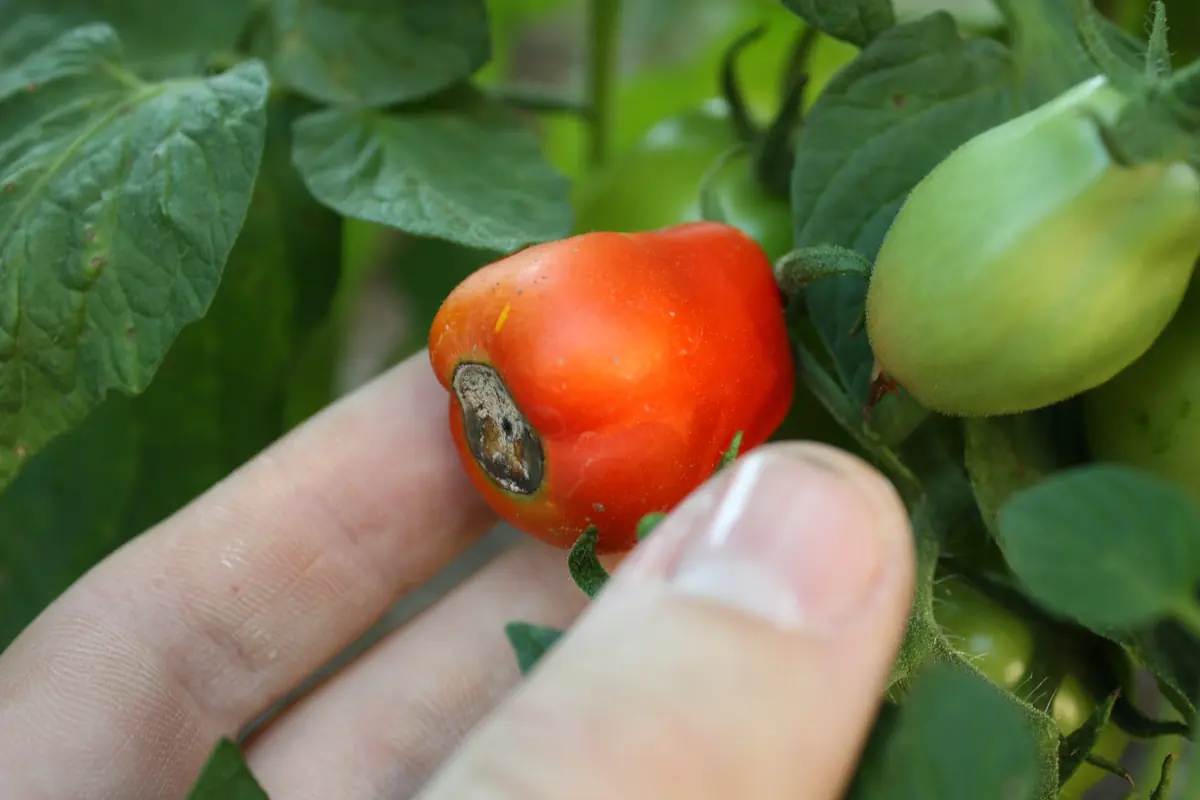
- A small, pale, water-soaked spot appears on the blossom end of the fruit, which is the end opposite the stem, often while the fruit is still green.
- The spot enlarges and turns tan, then dark brown or black, and becomes flat or sunken and leathery.
- On tomatoes the patch can cover a third or more of the fruit, and on peppers it may look lighter tan and papery or appear on the side of the fruit near the tip.
- On squash and zucchini the tip of the young fruit shrivels, darkens and often rots soft.
- The leaves and the rest of the plant usually look healthy, and the problem often affects several fruits in the same flush.
- Mold, either black or white, may grow on the dead patch later, but that is a secondary invader rather than the cause.
What it is often confused with
Sunscald
Sunscald makes pale, papery or blistered patches on the side of the fruit that faces the sun, not on the blossom end, and it follows leaf loss or heavy pruning.
Poor pollination on squash
Young squash that were never pollinated turn yellow from the tip and shrivel completely and drop, while blossom end rot leaves a dark, sunken patch on fruit that has started to grow.
Early blight fruit rot
Early blight fruit lesions are dark with rings and usually sit at the stem end, and the plant has ringed spots on its lower leaves as well.
When and where it is worst
Blossom end rot appears in every region. It is worst on the first fruits of the season, when plants are growing fast, and during hot, dry or windy weather when the leaves pull water away from the fruit. It also shows up after heavy rain follows a dry spell, in sandy soils that dry out fast in the Southeast, Florida and the Southwest, and in containers that are allowed to dry out between waterings.
Tomatoes are most prone, especially paste and plum types such as Roma, along with bell and chili peppers, squash, zucchini, eggplant and watermelon. Root damage from deep cultivation, too much nitrogen or ammonium fertilizer, and very acid soil all make it worse.
Plants it affects
These plants in our library list it as a problem to watch for.
How to prevent it
- Water deeply and evenly so the soil stays moist but not soggy, aiming for about an inch to an inch and a half of water a week from rain and irrigation together.
- Spread two to three inches of mulch, such as straw or shredded leaves, to keep soil moisture steady.
- Use drip irrigation or a soaker hose on a regular schedule, and water containers daily in hot weather if they need it.
- Have the soil tested before planting, and if it is acid, add lime as the test recommends to bring the pH to about 6.5.
- Go easy on nitrogen, especially ammonium-based fertilizers and fresh manure, so plants do not put on lush leaves at the expense of fruit.
- Avoid hoeing or digging deeply near the roots, because damaged roots take up less water and calcium.
Organic control, step by step
- Pick off affected fruit as soon as you see it so the plant puts its energy into new, healthy fruit.
- Check the soil a few inches down with your finger every day or two and water before it dries out.
- Add mulch if you have not already, and keep it a few inches away from the stems.
- Apply garden lime or gypsum only if a soil test shows low calcium or low pH, since most garden soils already hold plenty of calcium.
Conventional control
- No fungicide or insecticide prevents or cures blossom end rot, because no germ causes it.
- Calcium sprays sold for blossom end rot give inconsistent results at best, because the fruit skin absorbs little calcium and calcium does not move from leaves into fruit, so steady watering does far more.
- If you use any soil amendment or spray product, read the label, check that your crop is listed, and keep to any pre-harvest interval.
Frequently asked questions
Can I eat a tomato with blossom end rot?
Yes. Cut away the dark patch and a little extra, and the rest of the fruit is safe to eat. Fruit that has gone moldy or soft should go in the compost.
Should I add eggshells or Epsom salt?
Eggshells break down far too slowly to supply calcium during the season, and Epsom salt adds magnesium, which can actually compete with calcium uptake. Even watering is what fixes the problem.
Why do only the first tomatoes get it?
Early fruit forms while the plant is growing fast and the root system is still small, and spring weather swings between wet and dry. Later fruit usually comes through clean once the roots have grown and watering is steady.
Does my soil need calcium?
Usually not. Most garden soils hold enough calcium, and the shortage is inside the fruit because water does not reach it steadily. A soil test will tell you whether you need lime or gypsum.
Related problems
Sources: Iowa State University Extension and Outreach, Blossom end rot; Clemson Cooperative Extension HGIC, Gardening myths: Fix blossom end rot with calcium sprays; NDSU Extension, Dakota Gardener: Preventing rotten tomatoes in a drought. Identification and control follow these sources. Always read and follow the product label.