
Early blight: identify, prevent, control
Updated October 2026
Shows up soon after fruit set and builds through warm, wet summers, most of all in the humid East, the Southeast and the Midwest.
Early blight is a fungal leaf spot that turns up in most tomato and potato patches every year, especially east of the Rockies. It starts on the oldest leaves at the bottom of the plant and works its way up, and heavy infections strip the plants so the fruit sunscalds and the potato crop is smaller. It is slower and far less destructive than late blight, and good habits keep it in check.
Alternaria solani, Alternaria linariae (A. tomatophila)
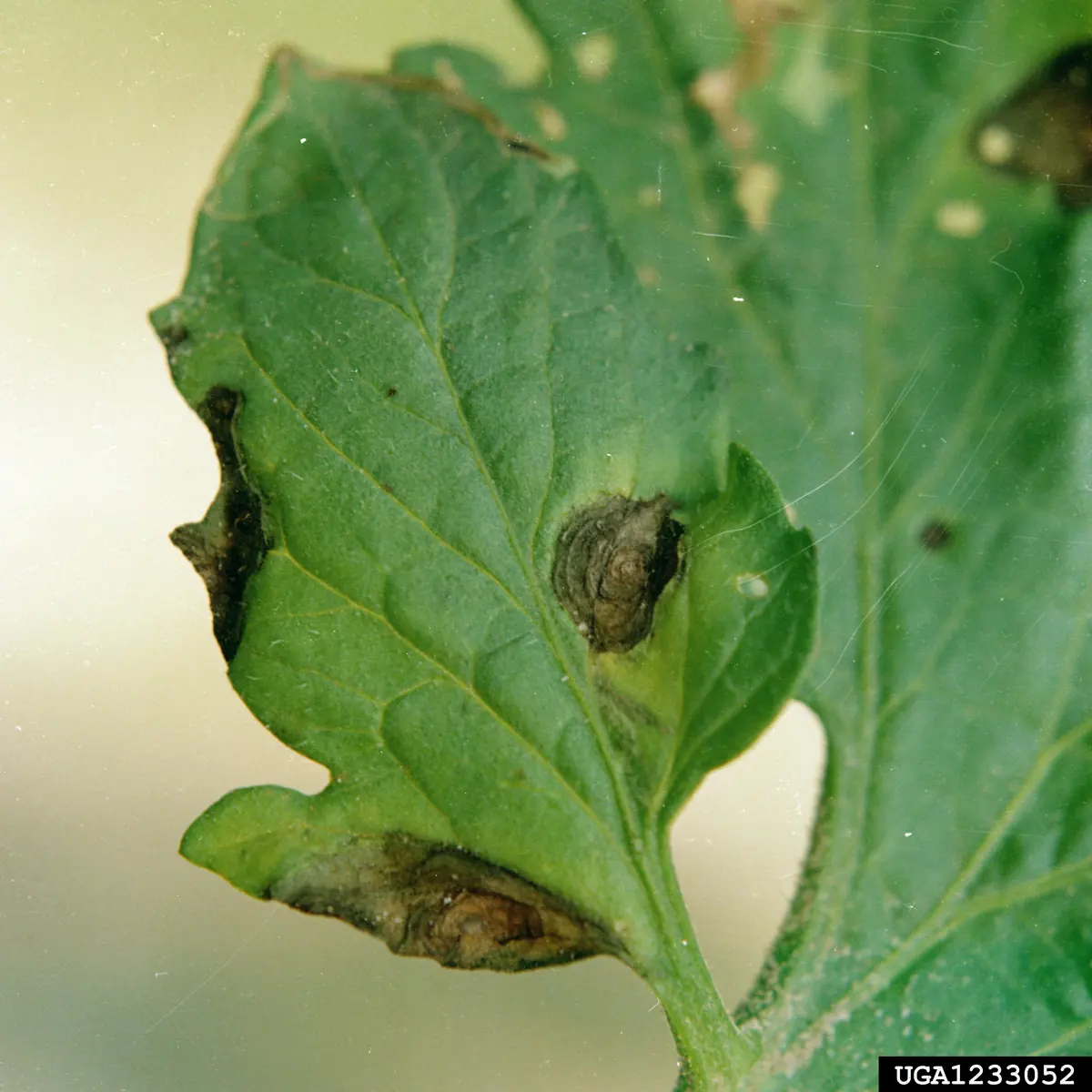

How to identify it
- Small dark brown spots appear on the lowest, oldest leaves, usually around the time the first fruit sets.
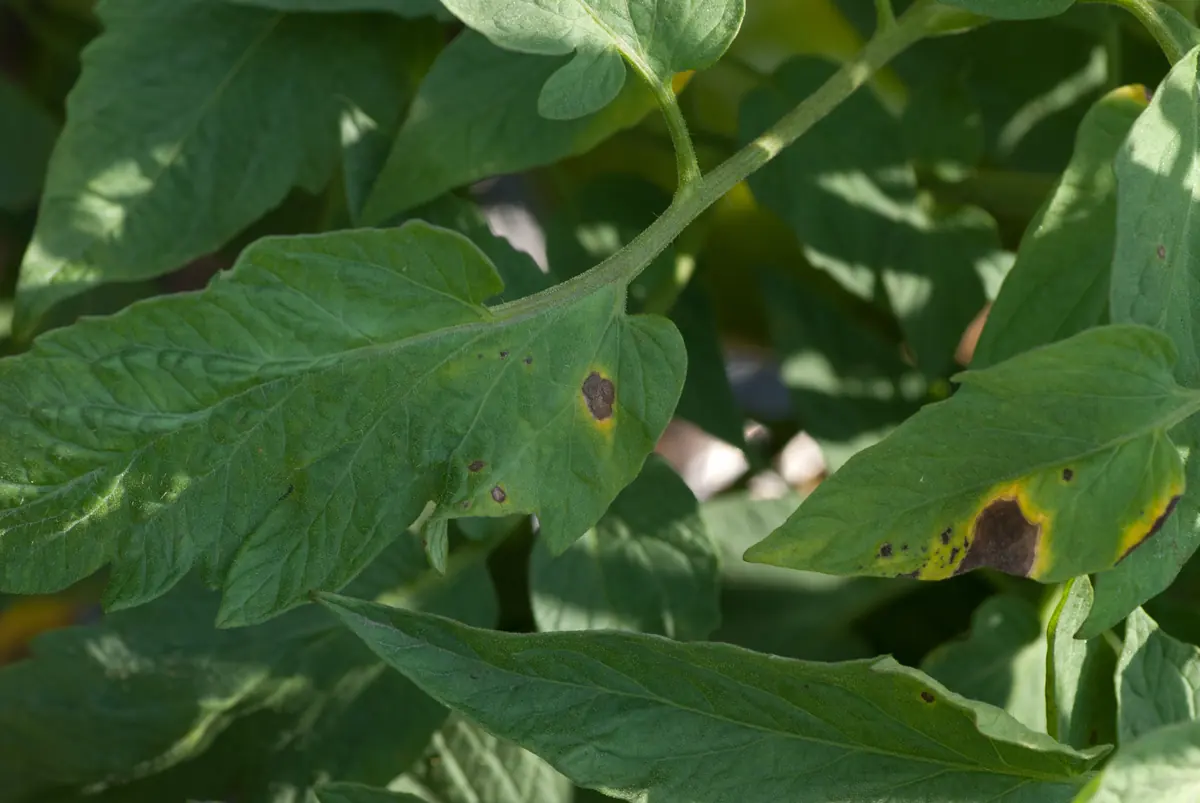
- The spots grow to about a quarter to half an inch across and develop rings inside them like a target or a tree stump.
- A yellow zone often forms around each spot, and badly spotted leaves turn yellow, then brown, and drop off.
- Dark, sunken lesions with rings can appear on stems, and on young transplants a dark collar rot can girdle the stem near the soil.
- On tomato fruit you may see dark, leathery, sunken patches with rings, usually at the stem end; on potatoes the tubers can show dark, slightly sunken, dry spots under the skin.
.jpg)
What it is often confused with
Septoria leaf spot
Septoria spots on tomato are much smaller, about an eighth of an inch, with a pale gray center and tiny black dots and no target rings, and there are usually dozens of them on each leaf.
Late blight
Late blight makes large, greasy-looking gray-green to brown patches with no rings, often with white fuzz underneath in damp weather, and it can kill a plant in a week, while early blight moves slowly from the bottom up.
Bacterial spot
Bacterial spot leaves small, dark, greasy spots without rings and raised scabby spots on the fruit, which early blight does not.
When and where it is worst
Early blight is common across the eastern half of the country, from the Northeast and Midwest down through the Southeast and Texas, and less of a problem in the dry Southwest and inland California. It needs warm weather, roughly 75 to 85°F, and long periods of wet leaves from rain, dew or sprinklers, so humid summers after midsummer storms are when it takes off.
The fungus survives the winter on infected plant debris in the soil, on volunteer tomatoes and potatoes, and on related weeds such as nightshade. Spores splash up from the soil onto the lowest leaves and then spread up the plant and between plants on wind and water. Celery has its own disease also called early blight, caused by a different fungus (Cercospora apii), which makes gray-brown spots on leaves and stalks; the same dry-leaf and clean-up habits help with it.
Plants it affects
These plants in our library list it as a problem to watch for.
How to prevent it
- Rotate so that tomatoes, potatoes, peppers and eggplants do not grow in the same bed for at least two years, and three or four if you can.
- Choose tolerant tomato varieties such as Mountain Magic, Mountain Fresh Plus, Juliet, Big Beef or Celebrity, which NC State Extension lists as showing more tolerance.
- Stake or cage tomatoes, space plants about two feet apart and remove suckers so air moves through the plant and leaves dry quickly.
- Mulch with straw or another organic mulch so rain cannot splash soil and spores onto the lower leaves.
- Water at the base in the morning with drip or a soaker hose instead of wetting the leaves.
- Keep plants well fed and watered, because stressed, hungry plants get early blight worse, and clear away or bury all vines at the end of the season.
Organic control, step by step
- Pinch off the lowest leaves up to about a foot above the soil once plants are established, and remove spotted leaves as soon as they appear on a dry day.
- Wash your hands and tools after handling infected leaves and before you touch healthy plants.
- Spray a biological fungicide based on Bacillus subtilis or Bacillus amyloliquefaciens, or potassium bicarbonate, every 7 to 10 days once the first spots appear.
- Use a fixed copper product labeled for tomatoes and potatoes during long wet spells, starting when spots first show and covering the lower leaves well.
Conventional control
- Chlorothalonil, sold for home gardens under several names, protects healthy leaves when applied every 7 to 14 days from the first sign of disease.
- Mancozeb is another protectant labeled for home use on tomatoes and potatoes and is applied on a similar schedule.
- Sprays only protect new growth and do not heal spotted leaves, so start early and get full coverage, including the undersides and the lower canopy.
- Read the label, check that tomatoes or potatoes are listed, and keep to the pre-harvest interval.
Frequently asked questions
Are tomatoes from a plant with early blight safe to eat?
Yes. Fruit without lesions is perfectly safe to eat. Cut away any small dark, leathery spots, and throw out fruit with large or soft lesions, because other rots often follow.
Why does early blight start at the bottom of the plant?
The spores live in the soil and on old debris, and rain splashes them onto the lowest leaves first. Older leaves are also more susceptible than young ones, so the disease climbs the plant from the ground up.
Can I compost tomato plants with early blight?
Only if your pile heats up well all the way through. Most home piles do not, so it is safer to bag the vines for the trash or bury them deep where you will not grow tomatoes or potatoes next year.
Does early blight affect peppers and eggplants?
It occasionally infects eggplant and pepper, but tomato and potato are the main hosts. That is why rotation plans group all four crops together.
Related problems
Sources: NC State Extension, Early blight of tomato; Colorado State University Extension, Tomato early blight; UMass Extension, Tomato problems: Early blight; Pacific Northwest Plant Disease Management Handbook, Potato early blight. Identification and control follow these sources. Always read and follow the product label.