
When to Plant Corn in Zone 6
USDA zone 6 covers zones 6a and 6b, with winter lows of -10 to 0°F (-23 to -18°C).
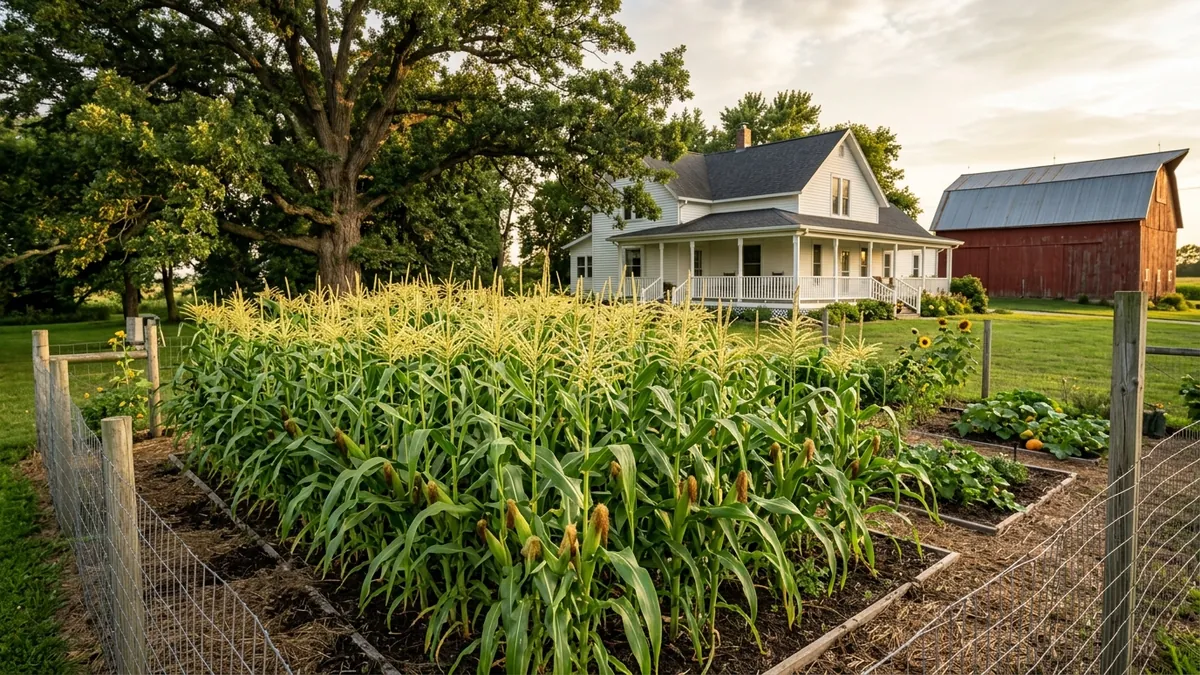
Sweet corn is a warm-season crop with a hard minimum, because the soil has to reach about 64°F before the seed will sprout. Zone 6 plants in May and June in the Midwest, Northeast and Mountain West, with a longer run in Missouri and Kansas, from May to July.
Zone 6 sweet corn planting months by region
| Planting region | Share of zone 6 | Plant sweet corn | Last frost, zone 6 ZIP codes | First frost, zone 6 ZIP codes |
|---|---|---|---|---|
| Midwest & Great Lakes Continental, cold winters and warm summers | 38 percent | May and June | April 23 | October 21 |
| Northeast & New England Cold winters, warm humid summers | 30 percent | May and June | April 30 | October 17 |
| Southern Plains Hot summers, two planting seasons | 15 percent | May to July | April 16 | October 21 |
| Mountain West High-elevation, dry, big day-night swings | 7 percent | May and June | May 10 | October 5 |
Other regions (9 percent of the zone): Mid-Atlantic, Mid-South, Pacific Northwest.
How we built this table: we placed all 10,458 zone 6 ZIP codes (2023 USDA map) in our planting regions; the months are each region's own calendar and the frost dates are NOAA 1991 to 2020 medians for the zone's ZIP codes there.
Sweet corn in zone 6 depends on warm soil and a tight block of plants
The typical last frost is April 23 in the Midwest and April 30 in the Northeast, yet soil warms more slowly than the air, and seed sown too early sits and rots. A thermometer pushed 2 inches into the bed settles the question. Plant the seed about an inch (3 cm) deep and 12 inches (30 cm) apart, our spacing, in blocks of at least four short rows rather than one long row, so wind carries pollen from the tassels to every silk.
Illinois, Indiana and Ohio are field corn country, which is a hazard for the garden. Pollen from a neighboring field can turn supersweet kernels starchy, so keep supersweets away from field corn and from other types, or plant them so they flower at least two weeks apart. Standard sweet varieties such as Silver Queen and Golden Bantam are more forgiving. Peaches and Cream is a popular bicolor ready in about 80 days, and a typical crop needs about 90 days, our figure, with the first frost near October 21 in the Midwest.
Missouri and Kansas have a long season, about 186 frost-free days, which invites a second planting, but heat at pollination is the trouble: when tassels shed pollen in days above 95°F the silks dry out and ears fill poorly. Early plantings escape the worst of it, and so does irrigating through tasseling week. Corn earworm arrives in force later, and a few drops of mineral oil on each silk tip, an old garden remedy, discourages it. In the Mountain West, with only about 146 frost-free days, pick an early variety such as Early Sunglow and warm the bed under black plastic first.
Zone 6 sweet corn questions
How do I know when sweet corn is ripe in zone 6?
Count about 20 days from the first silks. The silks turn brown and dry, the ear feels full to the tip, and a punctured kernel squirts milky juice. Clear, watery juice means wait a few more days, and doughy juice means the corn waited too long.
Can I grow corn with beans and pumpkins in zone 6?
Yes, the old three sisters method works if the corn goes in first and has a few inches of growth before the beans follow. The beans climb the stalks and the pumpkins shade the soil, but keep the corn in a proper block, because too few plants pollinate badly.
Growing advice follows published guidance from Ohio State University Extension and University of Missouri Extension, sweet corn guidance.
Keep planning
- How to grow sweet corn: the full guide
- Sweet corn planting calendar for every region
- Zone 6a planting calendar and zone 6b planting calendar
- All USDA zones and the Frost Lookup by ZIP code
- When to plant sweet corn in zone 7
- When to plant beans in zone 6
- When to plant beets in zone 6
- When to plant broccoli in zone 6
- When to plant cabbage in zone 6
- When to plant carrots in zone 6
- When to plant cucumbers in zone 6
- When to plant lettuce in zone 6