
When to Plant Beans in Zone 6
USDA zone 6 covers zones 6a and 6b, with winter lows of -10 to 0°F (-23 to -18°C).
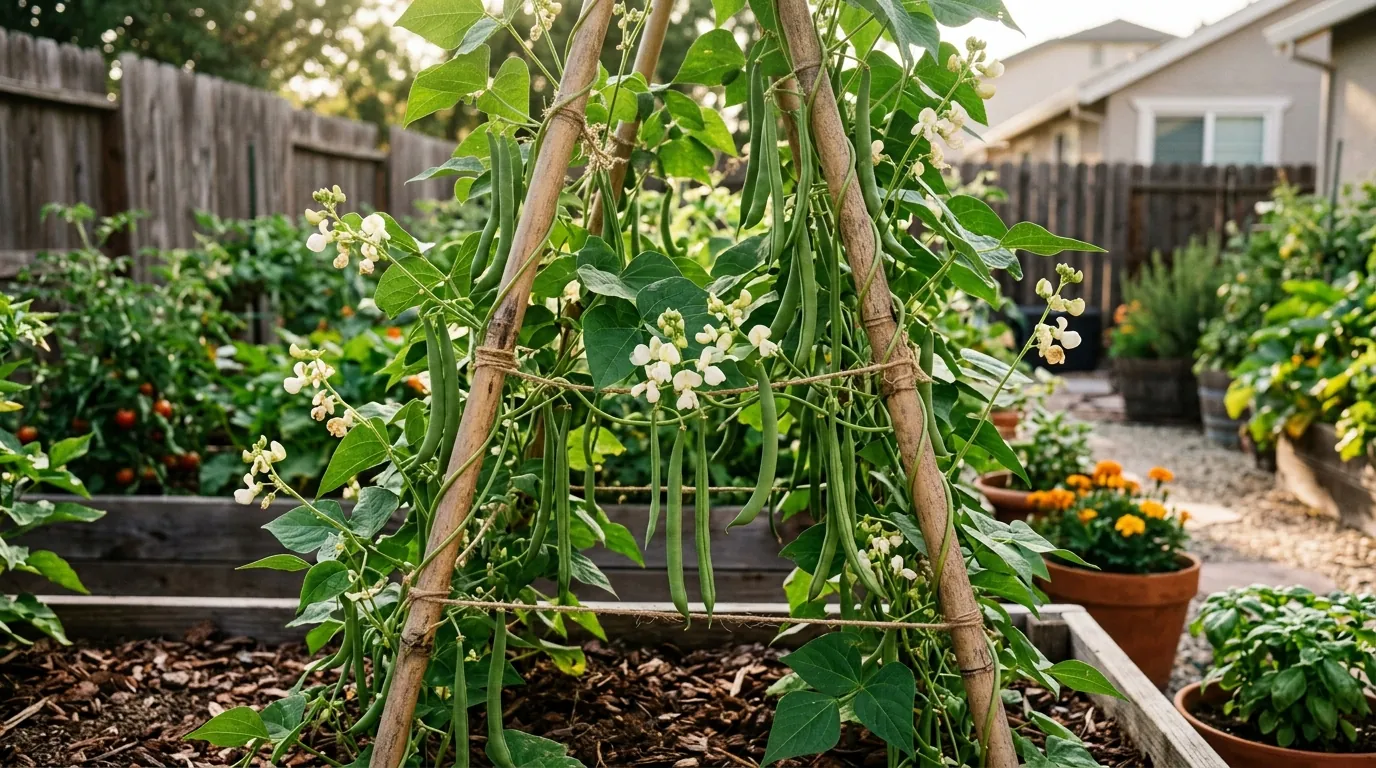
Beans wait for warm weather in zone 6, and then they grow fast. The Midwest, Northeast and Mountain West sow in May and June. Missouri and Kansas get a longer run, from May to July.
Zone 6 beans planting months by region
| Planting region | Share of zone 6 | Sow beans | Last frost, zone 6 ZIP codes | First frost, zone 6 ZIP codes |
|---|---|---|---|---|
| Midwest & Great Lakes Continental, cold winters and warm summers | 38 percent | May and June | April 23 | October 21 |
| Northeast & New England Cold winters, warm humid summers | 30 percent | May and June | April 30 | October 17 |
| Southern Plains Hot summers, two planting seasons | 15 percent | May to July | April 16 | October 21 |
| Mountain West High-elevation, dry, big day-night swings | 7 percent | May and June | May 10 | October 5 |
Other regions (9 percent of the zone): Mid-Atlantic, Mid-South, Pacific Northwest.
How we built this table: we placed all 10,458 zone 6 ZIP codes (2023 USDA map) in our planting regions; the months are each region's own calendar and the frost dates are NOAA 1991 to 2020 medians for the zone's ZIP codes there.
The window closes quickly in the north of the zone
The first frost comes late enough, around October 21 in the Midwest and October 17 in the Northeast, that a bush bean sown at the end of the window still bears, since our figure is about 65 days to harvest. The danger is at the other end. Seed sown into cold, wet soil rots, and young plants die in even a light frost. The typical last frost is April 23 in the Midwest and May 10 in the Mountain West, so wait until the soil reaches about 60°F and the frost risk has passed.
Make several sowings. A row of bush beans is productive for three weeks or so, then slows, so sow a new row every two weeks to the end of the window. Blue Lake 274 is a heavy-bearing green bush bean, Royal Burgundy has purple pods that turn green when cooked and are easy to find among the leaves, and Dragon Tongue is a yellow and purple streaked bean that is good for snapping and for shelling.
Pole beans suit gardens with short seasons because they bear over a long period from a small footprint. Kentucky Wonder and Scarlet Runner, which likes cool nights and so does well in the Mountain West, climb a trellis or tepee. In Missouri and Kansas, dry heat in midsummer stops flowers setting, so pod production breaks until the weather cools. Mulch, steady water and a final sowing at the end of the window carry the harvest through the gap. Mexican bean beetles are the main pest in the Midwest, so hand-pick them and crush their yellow egg clusters.
Zone 6 beans questions
Can I plant beans before the last frost in zone 6?
It is not worth the risk. Frost kills the plants outright and cold soil rots the seed. Our zone 6 calendars begin in May and June for most regions, and a sowing two weeks after the last frost usually catches up with an earlier one.
Do beans need fertilizer in zone 6?
Very little. Beans fix their own nitrogen with the help of soil bacteria, and extra nitrogen makes leafy plants with few pods. Add compost before sowing and a little potash if a soil test suggests it.
Growing advice follows published guidance from Penn State Extension and University of Missouri Extension, bean guidance.
Keep planning
- How to grow beans: the full guide
- Beans planting calendar for every region
- Zone 6a planting calendar and zone 6b planting calendar
- All USDA zones and the Frost Lookup by ZIP code
- When to plant beans in zone 7
- When to plant beets in zone 6
- When to plant broccoli in zone 6
- When to plant cabbage in zone 6
- When to plant carrots in zone 6
- When to plant cucumbers in zone 6
- When to plant lettuce in zone 6
- When to plant onions in zone 6