
When to Plant Garlic in Zone 6
USDA zone 6 covers zones 6a and 6b, with winter lows of -10 to 0°F (-23 to -18°C).
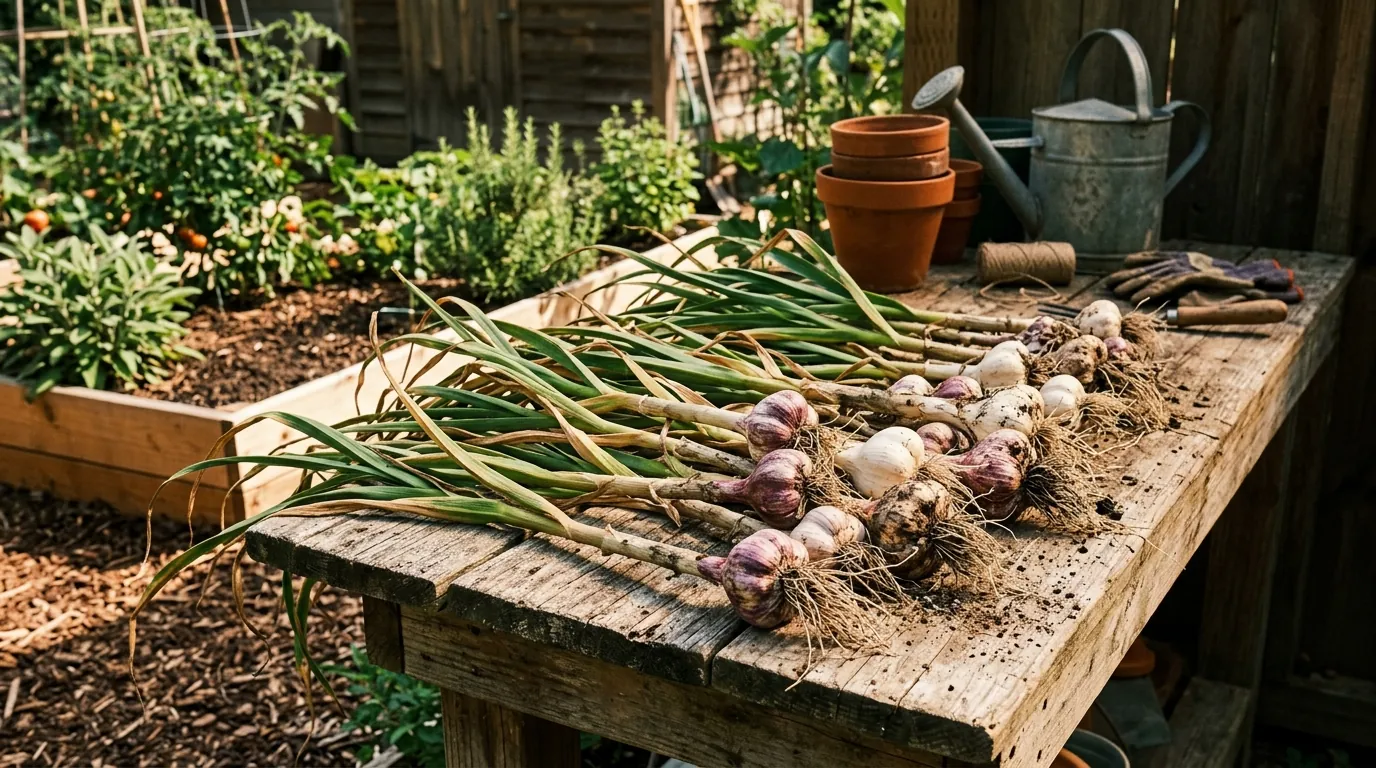
Zone 6 gardeners plant garlic in October. That is the whole window in our Midwest and Northeast calendars, which cover Ohio, Indiana, Illinois, Michigan, Pennsylvania, New York and southern New England. Missouri and Kansas can carry on into November, and the Mountain West can start in September.
Zone 6 garlic planting months by region
| Planting region | Share of zone 6 | Plant garlic | Last frost, zone 6 ZIP codes | First frost, zone 6 ZIP codes |
|---|---|---|---|---|
| Midwest & Great Lakes Continental, cold winters and warm summers | 38 percent | October | April 23 | October 21 |
| Northeast & New England Cold winters, warm humid summers | 30 percent | October | April 30 | October 17 |
| Southern Plains Hot summers, two planting seasons | 15 percent | October and November | April 16 | October 21 |
| Mountain West High-elevation, dry, big day-night swings | 7 percent | September and October | May 10 | October 5 |
Other regions (9 percent of the zone): Mid-Atlantic, Mid-South, Pacific Northwest.
How we built this table: we placed all 10,458 zone 6 ZIP codes (2023 USDA map) in our planting regions; the months are each region's own calendar and the frost dates are NOAA 1991 to 2020 medians for the zone's ZIP codes there.
Mid-October, give or take, across zone 6
A long-standing rule of thumb in the Northeast is to plant garlic around Columbus Day, in mid-October, and it holds for most of zone 6. The target is soil that has cooled to about 50°F at planting depth, a few weeks before it starts freezing, so the cloves send down roots without pushing up much leaf. Zone 6 ZIP codes see a first frost around October 17 in the Northeast and October 21 in the Midwest, and garlic planted within a week or two of that date is in about the right place.
Planting too early is a more common zone 6 mistake than planting too late. A warm September tempts people to get cloves in, and garlic that has grown 6 inches of leaf by December can be burned back by the first hard cold. In the Mountain West, where zone 6 ZIP codes in Colorado, Utah and Idaho see a first frost around October 5, our calendar does open in September, and gardens in the higher valleys should take it.
Zone 6 is mild enough for softneck garlic and cold enough for hardneck, so many growers plant both. Hardneck gives scapes in June and larger cloves that peel easily; softneck lasts longer in storage, often into spring. Space cloves 6 inches (15 cm) apart, cover the bed with straw once the ground starts to freeze, and keep weeds out in spring, because garlic competes poorly. Harvest comes in early to mid July; our guide on when to harvest garlic shows what to look for.
Zone 6 garlic questions
Can I plant garlic in November in zone 6?
Our Southern Plains calendar, which covers zone 6 in Missouri, Kansas and Nebraska, runs through November, and so does the Mid-Atlantic calendar for West Virginia. The Midwest, Northeast and Mountain West calendars close at the end of October. The test is whether the soil can still be worked and has a few weeks before it freezes solid.
Should I plant hardneck or softneck garlic in zone 6?
Either grows well. Hardneck is the safer choice on the colder side of the zone and in the Mountain West, while softneck suits the milder, lower-lying parts and keeps longer after harvest. Planting some of each spreads the risk in an odd winter.
Keep planning
- How to grow garlic: the full guide
- Garlic planting calendar for every region
- Zone 6a planting calendar and zone 6b planting calendar
- All USDA zones and the Frost Lookup by ZIP code
- When to plant garlic in zone 5
- When to plant garlic in zone 7
- When to plant carrots in zone 6
- When to plant onions in zone 6
- When to plant potatoes in zone 6