
When to Plant Cabbage in Zone 8
USDA zone 8 covers zones 8a and 8b, with winter lows of 10 to 20°F (-12 to -7°C).
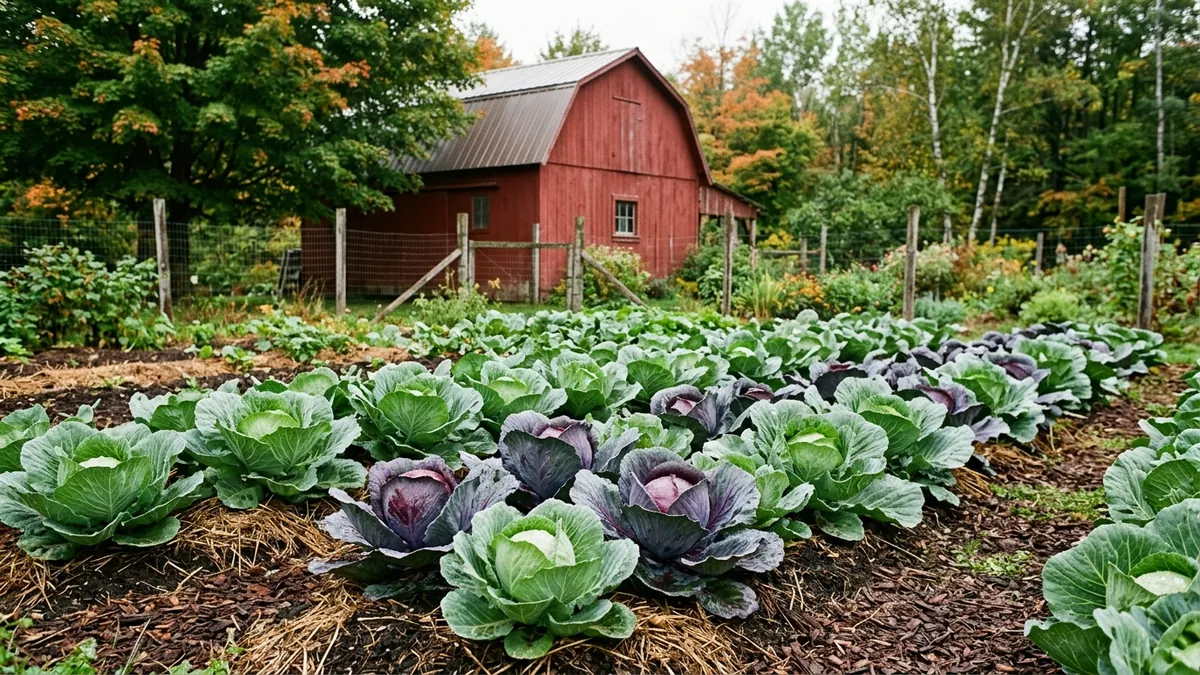
Cabbage in zone 8 runs on the cool half of the year, with calendars that look very different from place to place. The Gulf South transplants from September to February, Texas in January and February and in August and September, the Mid-South in February and March and in July and August, the Mid-Atlantic from February to April and the Pacific Northwest from February to April.
Zone 8 cabbage planting months by region
| Planting region | Share of zone 8 | Sow or transplant cabbage | Last frost, zone 8 ZIP codes | First frost, zone 8 ZIP codes |
|---|---|---|---|---|
| Mid-South Warm temperate | 36 percent | February and March, then July and August | March 27 | November 7 |
| Gulf South Humid subtropical | 21 percent | September to February | March 19 | November 11 |
| Texas Hot summers, spring and fall seasons | 19 percent | January and February, then August and September | March 16 | November 14 |
| Mid-Atlantic Humid subtropical, four seasons | 9 percent | February to April, then July to October | March 30 | November 12 |
| Pacific Northwest Maritime, mild wet winters and cool summers | 8 percent | February to April, then July to September | April 7 | November 3 |
Other regions (7 percent of the zone): Southern Plains, Northern California & Central Valley, Desert Southwest, Mountain West, Southern California.
How we built this table: we placed all 6,809 zone 8 ZIP codes (2023 USDA map) in our planting regions; the months are each region's own calendar and the frost dates are NOAA 1991 to 2020 medians for the zone's ZIP codes there.
Winter heads on the Gulf, fall heads almost everywhere else
On the Gulf, cabbage is a true winter vegetable. Transplants go into the garden from early fall, the heads form through the mild months, and a typical first frost around November 11 barely slows them. Mature heads tolerate a hard freeze into the low 20s°F, and the cold sweetens the leaves. The season ends when the typical last frost of March 19 gives way to warm nights, so use the first part of the window for large heads such as Late Flat Dutch and the last part for small, fast ones like Golden Acre.
Texas has two windows, and the second, which begins in late summer, is the main one: transplants set out in heat need shade and daily water, but the heads mature in cool weather. The Mid-South typical last frost is March 27, so the spring crop has only a few weeks before heat arrives. Set out transplants as soon as the window opens and expect smaller heads than the fall ones. Cabbage splits after heavy rain once the head is firm, so harvest promptly. Gonzales, a mini cabbage, and Early Jersey Wakefield fit short springs.
The Pacific Northwest part of zone 8 grows the best cabbage in the zone, with a long, cool season, a typical last frost near April 7 and a first frost around November 3. Slugs and clubroot are the real hazards. Lime wet, acid soils toward pH 7, rotate beds and keep seedlings guarded against slugs. Savoy types such as Savoy Ace handle cold, wet weather well, and red cabbage like Red Acre keeps in the ground into winter.
Zone 8 cabbage questions
Will a freeze kill my cabbage in zone 8?
Seedlings can be hurt by a hard freeze, but established plants take about 20°F with little damage, and cold even sweetens the heads. Cover small transplants on the coldest nights.
Why did my zone 8 cabbage bolt instead of heading?
Two weeks of cold, below about 50°F, while the plants are small can trigger a flower stalk, and so can a late planting that meets heat. Pick bolt-resistant varieties and move transplants into the garden at the start of each window.
Growing advice follows published guidance from University of Georgia Extension, Louisiana State University AgCenter and Oregon State University Extension, cabbage guidance.
Keep planning
- How to grow cabbage: the full guide
- Cabbage planting calendar for every region
- Zone 8a planting calendar and zone 8b planting calendar
- All USDA zones and the Frost Lookup by ZIP code
- When to plant cabbage in zone 7
- When to plant broccoli in zone 8
- When to plant carrots in zone 8
- When to plant cucumbers in zone 8
- When to plant lettuce in zone 8
- When to plant onions in zone 8
- When to plant pumpkins in zone 8
- When to plant strawberries in zone 8