
When to Plant Cabbage in Zone 7
USDA zone 7 covers zones 7a and 7b, with winter lows of 0 to 10°F (-18 to -12°C).
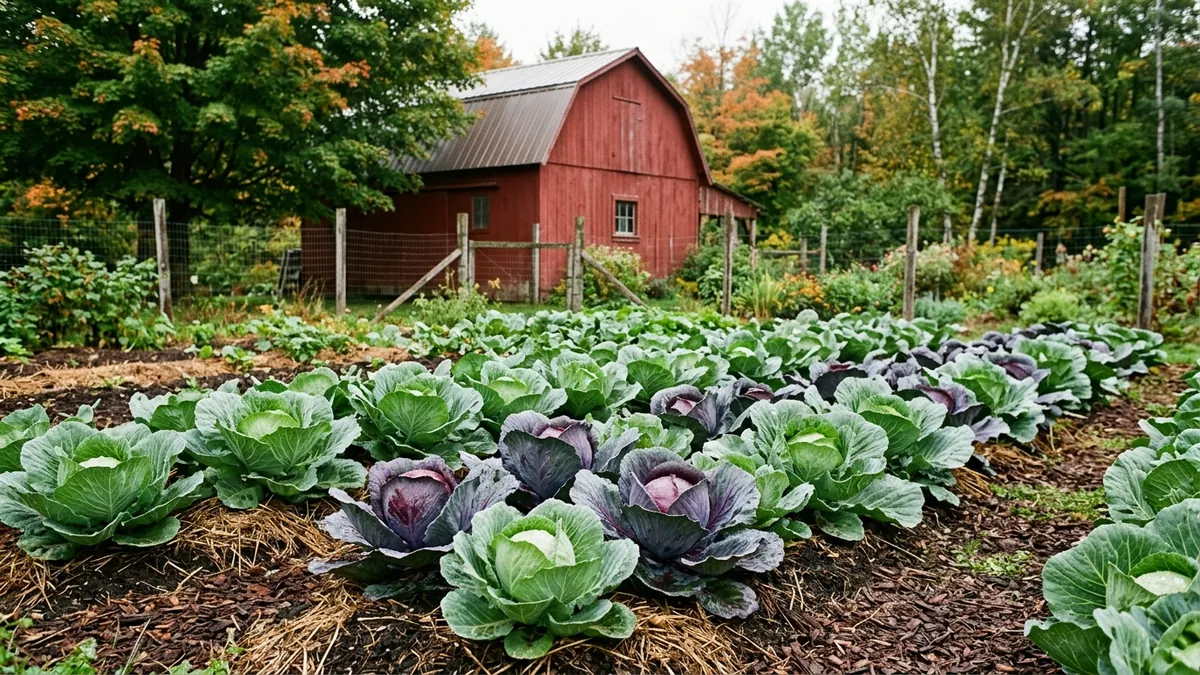
Cabbage suits zone 7 in spring and fall, though the shoulder months differ by region. The Mid-Atlantic and Southern Plains sow or transplant from February to April and again from July to October, the Northeast from March to May and from July to September, and the Mid-South in February and March and in July and August. The Mountain West part of the zone runs in April and May and from July to September.
Zone 7 cabbage planting months by region
| Planting region | Share of zone 7 | Sow or transplant cabbage | Last frost, zone 7 ZIP codes | First frost, zone 7 ZIP codes |
|---|---|---|---|---|
| Northeast & New England Cold winters, warm humid summers | 27 percent | March to May, then July to September | April 13 | October 31 |
| Mid-Atlantic Humid subtropical, four seasons | 22 percent | February to April, then July to October | April 12 | October 29 |
| Mid-South Warm temperate | 22 percent | February and March, then July and August | April 10 | October 28 |
| Southern Plains Hot summers, two planting seasons | 13 percent | February to April, then July to October | April 6 | October 31 |
| Mountain West High-elevation, dry, big day-night swings | 5 percent | April and May, then July to September | April 26 | October 19 |
Other regions (11 percent of the zone): Midwest & Great Lakes, Pacific Northwest, Texas, Gulf South, Desert Southwest, Northern California & Central Valley.
How we built this table: we placed all 8,732 zone 7 ZIP codes (2023 USDA map) in our planting regions; the months are each region's own calendar and the frost dates are NOAA 1991 to 2020 medians for the zone's ZIP codes there.
Cabbage in zone 7 wants two cool seasons
A head needs about 90 days, our figure, and fairly cool weather to finish without splitting or bolting, which is why timing matters more than variety. In the Mid-South, spring heads have to be done before hot nights arrive, so use transplants from the first days of the window. The typical last frost is April 10 in the Mid-South and April 13 in the Northeast, but cabbage seedlings tolerate a hard frost once hardened off. Early Jersey Wakefield, a pointed head, and Golden Acre, a small round one, mature fast enough for spring.
Fall heads are sweeter and easier. Start seedlings in the shade in midsummer, set them out into warm soil, and let the cool nights do the rest. Zone 7 ZIP codes have a first frost around October 31 in the Northeast and October 28 in the Mid-South, and mature heads handle frosts that drop to the low 20s°F. Late Flat Dutch and Stonehead are good fall choices, and savoy types are the most frost tolerant of all.
Most losses come from caterpillars. Imported cabbageworm and cabbage loopers feed in the heart of the head, so cover transplants with row cover on day one and pick off the eggs. Splitting follows a heavy rain after a dry spell, so even watering helps. Clubroot and black rot are soil and seed problems, which a three year rotation of brassicas around the garden keeps in check. Our cabbage worm guide covers the control methods.
Zone 7 cabbage questions
When should I set out cabbage transplants for fall in zone 7?
Our fall windows run from July to October in the Mid-Atlantic and Southern Plains and in July and August in the Mid-South, so aim for the front half. A transplant set out about 90 days before the first frost has time to form a full head.
How far apart should I plant cabbage?
About 20 inches (50 cm) apart, our spacing, in rows 2 to 3 feet apart. Closer spacing gives smaller heads, which suit small households, and wider spacing suits large storage varieties.
Growing advice follows published guidance from University of Kentucky Cooperative Extension and Penn State Extension, cabbage guidance.
Keep planning
- How to grow cabbage: the full guide
- Cabbage planting calendar for every region
- Zone 7a planting calendar and zone 7b planting calendar
- All USDA zones and the Frost Lookup by ZIP code
- When to plant cabbage in zone 6
- When to plant cabbage in zone 8
- When to plant beans in zone 7
- When to plant beets in zone 7
- When to plant broccoli in zone 7
- When to plant carrots in zone 7
- When to plant cucumbers in zone 7
- When to plant lettuce in zone 7
- When to plant onions in zone 7