
When to Plant Garlic in Zone 9
USDA zone 9 covers zones 9a and 9b, with winter lows of 20 to 30°F (-7 to -1°C).
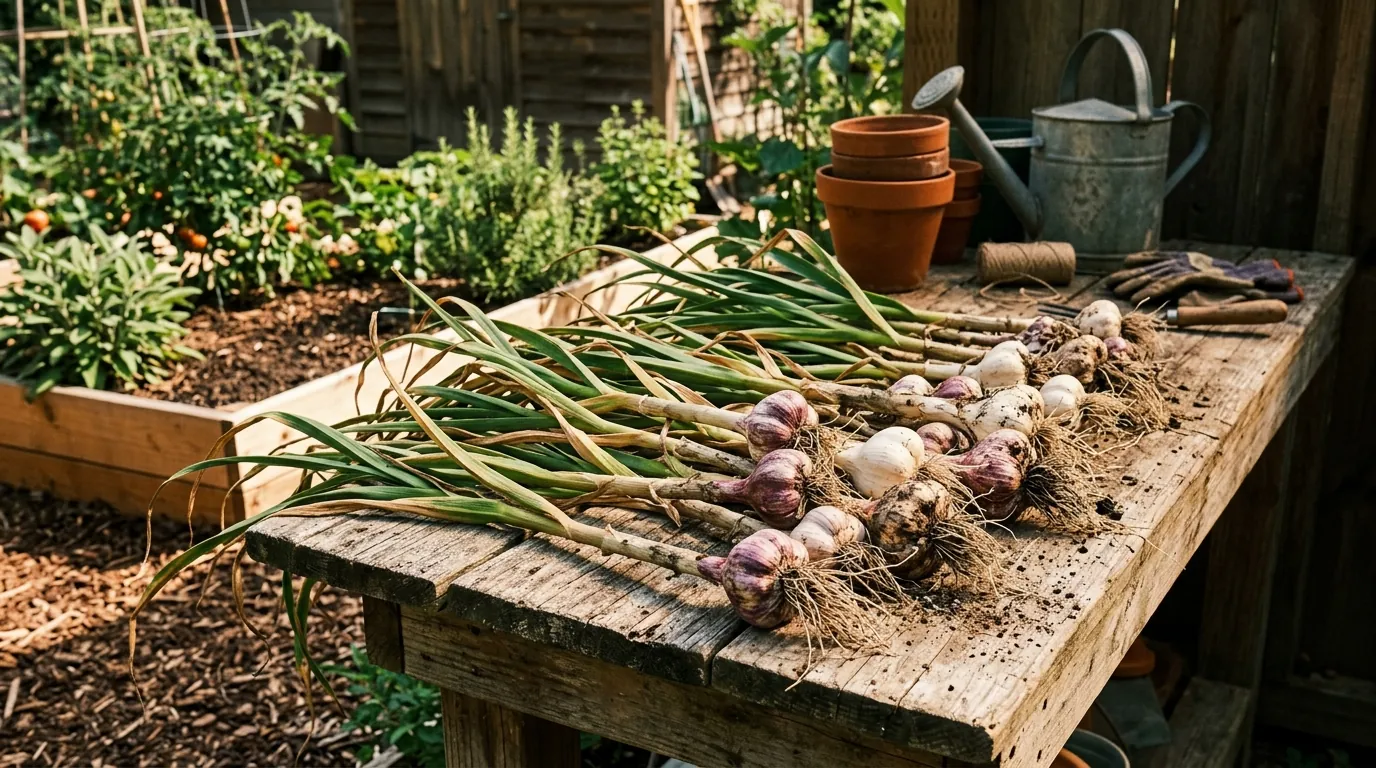
In zone 9, plant garlic in fall and on into early winter. Our Texas calendar gives October and November plus January, the Central Valley and the low desert get October and November, and the Gulf Coast and North Florida a long window from September to February.
Zone 9 garlic planting months by region
| Planting region | Share of zone 9 | Plant garlic | Last frost, zone 9 ZIP codes | First frost, zone 9 ZIP codes |
|---|---|---|---|---|
| Texas Hot summers, spring and fall seasons | 23 percent | October and November, then January | February 20 | December 3 |
| Gulf South Humid subtropical | 21 percent | September to February | March 2 | November 26 |
| Northern California & Central Valley Mediterranean, mild winters and hot dry summers | 17 percent | October and November | February 22 | December 1 |
| Desert Southwest Low desert, hot and dry | 9 percent | October and November | February 1 | December 10 |
| North Florida Humid subtropical, mild winter | 9 percent | September to February | March 1 | December 1 |
| Southern California Mediterranean | 9 percent | September to November, then January and February | February 2 | December 8 |
| Pacific Northwest Maritime, mild wet winters and cool summers | 6 percent | October and November | March 13 | November 17 |
| Central Florida Subtropical | 5 percent | September to February | Rare | Rare |
Other regions (2 percent of the zone): Mid-South.
How we built this table: we placed all 4,284 zone 9 ZIP codes (2023 USDA map) in our planting regions; the months are each region's own calendar and the frost dates are NOAA 1991 to 2020 medians for the zone's ZIP codes there.
Garlic where winter barely shows up
The thing that decides garlic here is cold, and there is not much of it. A clove needs a spell of cool temperatures before it will divide into a proper head, and in Houston, New Orleans or Jacksonville a mild winter may not provide enough. That is why the October and November part of the window is the one to aim for, even where our calendars run longer: the cloves are growing through the coolest stretch of the year.
When zone 9 garlic comes up as single round bulbs, the fix is usually to chill the seed. Put the cloves in a paper bag in the refrigerator, away from fruit, for several weeks before planting, and plant them straight from the cold. Choose softneck types, including the artichoke and creole groups, rather than hardnecks bred for northern winters; our garlic guide lists varieties that cope with mild winters.
California is the special case in zone 9. The Central Valley has the cool winters and dry early summers that garlic likes, and most of California's commercial garlic is grown in the San Joaquin Valley from a fall planting. Home gardens there can follow the same schedule, planting in October and November and lifting in late spring once the soil dries. Along the humid Gulf, raise the bed and keep the mulch light, because wet soil in a warm spring is the biggest threat to the bulbs.
Zone 9 garlic questions
When is garlic ready in zone 9?
Usually from April into May, earlier than almost anywhere else in the country. Watch for the lower leaves turning brown, and lift the bulbs before the soil turns hot and wet in late spring.
Can I plant garlic in September in zone 9?
Our Gulf South, North Florida, Central Florida and Southern California calendars open in September, so it is allowed there. Texas, the Central Valley and the low desert wait until October. Even where September is in the window, cloves chilled first and planted in October usually make bigger bulbs.