
When to Plant Garlic in Zone 8
USDA zone 8 covers zones 8a and 8b, with winter lows of 10 to 20°F (-12 to -7°C).
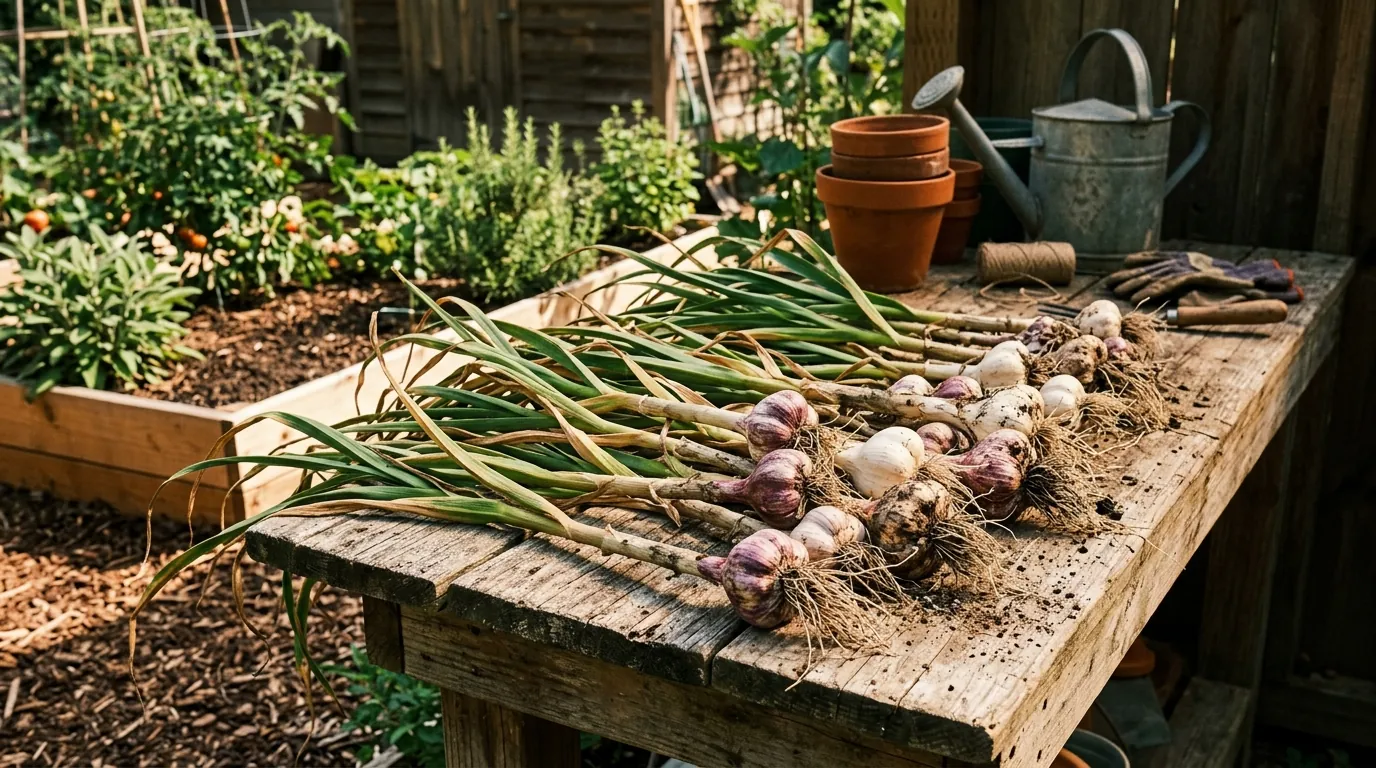
Zone 8 plants garlic in mid to late fall. Our calendars give October and November for Georgia, the Carolinas and Arkansas, and the same months for coastal Virginia and for western Washington and Oregon. The Gulf South window is the longest, September to February, and Texas plants in October and November, with January as a late option.
Zone 8 garlic planting months by region
| Planting region | Share of zone 8 | Plant garlic | Last frost, zone 8 ZIP codes | First frost, zone 8 ZIP codes |
|---|---|---|---|---|
| Mid-South Warm temperate | 36 percent | October and November | March 27 | November 7 |
| Gulf South Humid subtropical | 21 percent | September to February | March 19 | November 11 |
| Texas Hot summers, spring and fall seasons | 19 percent | October and November, then January | March 16 | November 14 |
| Mid-Atlantic Humid subtropical, four seasons | 9 percent | October and November | March 30 | November 12 |
| Pacific Northwest Maritime, mild wet winters and cool summers | 8 percent | October and November | April 7 | November 3 |
Other regions (7 percent of the zone): Southern Plains, Northern California & Central Valley, Desert Southwest, Mountain West, Southern California.
How we built this table: we placed all 6,809 zone 8 ZIP codes (2023 USDA map) in our planting regions; the months are each region's own calendar and the frost dates are NOAA 1991 to 2020 medians for the zone's ZIP codes there.
Picking the right garlic for a zone 8 winter
With a first frost around November 7 in the Mid-South part of the zone and November 14 in Texas, the soil in zone 8 does not cool enough for garlic until late October. Cloves planted into warm September soil in the Gulf South, where our calendar does allow it, sprout quickly and make a lot of leaf. That is not a problem in itself, but it leaves the plants softer when a January freeze comes through. October and November plantings are the reliable middle of every zone 8 window.
Most zone 8 garlic failures come from the wrong type. Hardneck garlic from northern catalogs often struggles in Georgia or Alabama, because the winters there are neither long nor cold enough for it. Softneck garlic is the dependable choice for the southern part of the zone, and our garlic guide lists Inchelium Red and California Early, both widely grown in milder climates. Western Washington and Oregon are the exception: zone 8 there has long, cool springs, and hardneck types grow well.
Harvest comes early, usually from mid-May across the South, and the timing matters more than in the north. Bulbs left in wet ground through a warm, rainy late spring split their wrappers and rot. Start checking when the lower leaves brown, lift on a dry day, and cure the bulbs in an airy shed out of the sun for two to three weeks.
Zone 8 garlic questions
Do I need to refrigerate garlic before planting in zone 8?
Usually not. Zone 8 winters give softneck garlic enough cold to form cloves, and pre-chilling is mainly a practice for zones 9 and 10. If your bulbs came out as single rounds last year, try chilling a few cloves in the refrigerator for several weeks before planting, as a test.
Can I plant garlic in January in zone 8?
The Texas and Gulf South calendars include January, and the Gulf South runs into February. Elsewhere in zone 8 our windows close at the end of November. January cloves have fewer weeks to grow before the spring heat, so expect smaller bulbs than from an October planting.
Keep planning
- How to grow garlic: the full guide
- Garlic planting calendar for every region
- Zone 8a planting calendar and zone 8b planting calendar
- All USDA zones and the Frost Lookup by ZIP code
- When to plant garlic in zone 7
- When to plant garlic in zone 9
- When to plant carrots in zone 8
- When to plant sweet corn in zone 8
- When to plant onions in zone 8
- When to plant potatoes in zone 8
- When to plant strawberries in zone 8