
When to Plant Spinach in Zone 6
USDA zone 6 covers zones 6a and 6b, with winter lows of -10 to 0°F (-23 to -18°C).
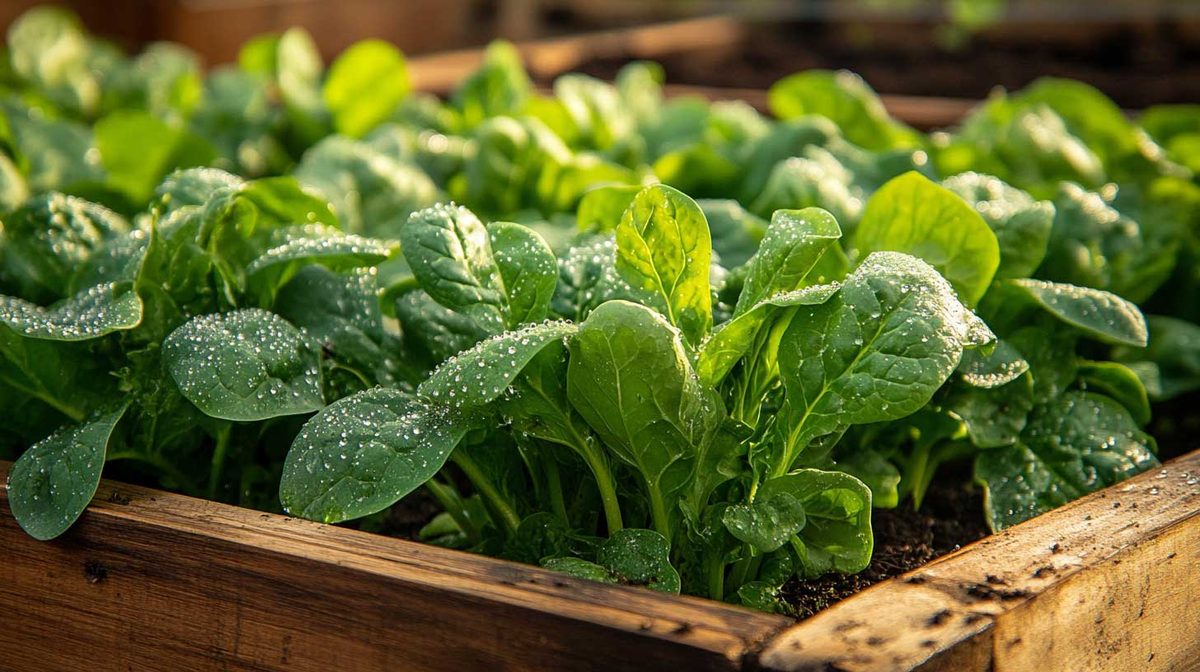
Few vegetables suit a zone 6 calendar as well as spinach, which wants cold soil in spring and cold nights in fall. Our calendars open from February to April in Missouri and Kansas, from March to May in the Northeast, and in April and May in the Midwest and Mountain West. The fall sowing follows from July to September in the Midwest and Northeast, and from August to October in Missouri and Kansas.
Zone 6 spinach planting months by region
| Planting region | Share of zone 6 | Sow spinach | Last frost, zone 6 ZIP codes | First frost, zone 6 ZIP codes |
|---|---|---|---|---|
| Midwest & Great Lakes Continental, cold winters and warm summers | 38 percent | April and May, then July to September | April 23 | October 21 |
| Northeast & New England Cold winters, warm humid summers | 30 percent | March to May, then July to September | April 30 | October 17 |
| Southern Plains Hot summers, two planting seasons | 15 percent | February to April, then August to October | April 16 | October 21 |
| Mountain West High-elevation, dry, big day-night swings | 7 percent | April and May, then July to September | May 10 | October 5 |
Other regions (9 percent of the zone): Mid-Atlantic, Mid-South, Pacific Northwest.
How we built this table: we placed all 10,458 zone 6 ZIP codes (2023 USDA map) in our planting regions; the months are each region's own calendar and the frost dates are NOAA 1991 to 2020 medians for the zone's ZIP codes there.
Spinach asks for cold soil, and zone 6 supplies it twice a year
Soil temperature counts for more than the date. Seed sprouts best between about 50°F and 68°F, our range, and sulks once the bed passes 75°F, so spinach goes in the moment the ground can be worked. In Missouri and Kansas that can fall well before the typical last frost of April 16, and the Midwest follows ahead of its own, near April 23. Seedlings that have spent a week outdoors take a hard freeze without damage, so the only real risk in a cold spring is a bed too wet to rake.
Day length ends the spring crop. Spinach bolts as days stretch past about 14 hours, whatever the thermometer says, and gardeners in Ohio and Illinois often pull the last plants before summer begins. Sun and dry air in the Mountain West, which has only about 146 frost-free days, hurry the plants along even faster. Choose a slow-bolting variety such as Melody or Olympia, sow thinly and pick the outer leaves while the plants are small, so the harvest comes before the flower stalk does.
The fall crop is sweeter. Cool nights turn starch into sugar, and a typical first frost near October 21 in the Midwest and October 17 in the Northeast only improves the leaves. At about 55 days to harvest, our figure, a row sown early in the fall window is ready before the freezes begin, and later rows stay small and sit through winter. Cover them with straw or a cold frame, and Giant Winter will restart at the first thaw. Leaf miners and downy mildew are the common troubles, so thin to 8 inches (20 cm), our spacing, and keep the foliage dry.
Zone 6 spinach questions
Will spinach overwinter in zone 6?
Often it does, as small plants. Seed sown in the last weeks of our fall window makes a few leaves before the ground freezes, then waits under a straw mulch or a cold frame and grows again at the first thaw. Giant Winter was bred for exactly that job, and the plants are far tougher than their tender look suggests.
What should I do when my zone 6 spinach starts to bolt?
Pull it. A tall central stalk means the leaves have turned bitter, and picking on will not fix that. Use the space for bush beans or cucumbers and sow spinach again in the fall window, which our Midwest calendar runs from July to September.
Growing advice follows published guidance from Penn State Extension and Kansas State University Research and Extension, spinach guidance.
Keep planning
- How to grow spinach: the full guide
- Spinach planting calendar for every region
- Zone 6a planting calendar and zone 6b planting calendar
- All USDA zones and the Frost Lookup by ZIP code
- When to plant spinach in zone 7
- When to plant beans in zone 6
- When to plant beets in zone 6
- When to plant broccoli in zone 6
- When to plant cabbage in zone 6
- When to plant carrots in zone 6
- When to plant sweet corn in zone 6
- When to plant cucumbers in zone 6