
When to Plant Watermelon in Zone 6
USDA zone 6 covers zones 6a and 6b, with winter lows of -10 to 0°F (-23 to -18°C).
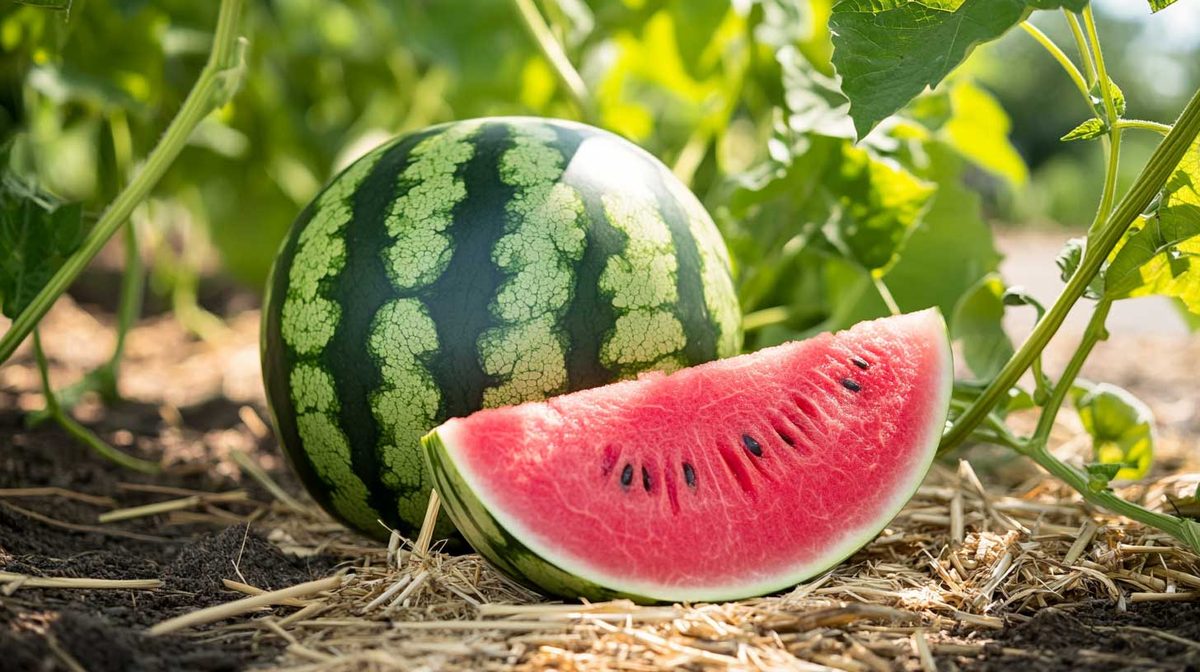
Watermelon pushes zone 6 gardeners to the edge of the growing season, so the sowing dates are late and tight. The Midwest, Northeast and Mountain West sow or set out transplants in May and June, and Missouri and Kansas have a longer run, from May to July.
Zone 6 watermelon planting months by region
| Planting region | Share of zone 6 | Sow or set out watermelon | Last frost, zone 6 ZIP codes | First frost, zone 6 ZIP codes |
|---|---|---|---|---|
| Midwest & Great Lakes Continental, cold winters and warm summers | 38 percent | May and June | April 23 | October 21 |
| Northeast & New England Cold winters, warm humid summers | 30 percent | May and June | April 30 | October 17 |
| Southern Plains Hot summers, two planting seasons | 15 percent | May to July | April 16 | October 21 |
| Mountain West High-elevation, dry, big day-night swings | 7 percent | May and June | May 10 | October 5 |
Other regions (9 percent of the zone): Mid-Atlantic, Mid-South, Pacific Northwest.
How we built this table: we placed all 10,458 zone 6 ZIP codes (2023 USDA map) in our planting regions; the months are each region's own calendar and the frost dates are NOAA 1991 to 2020 medians for the zone's ZIP codes there.
A short-season melon and a warm bed make the difference
The seed needs soil of at least 70°F, and a vine set out into cold ground simply stops growing. Our germination range runs from about 72°F to 90°F. Lay black plastic over the bed a week or two ahead, start seed indoors in peat pots about three weeks before the transplant date, and set the seedlings out once nights hold above 55°F. The typical last frost falls around April 23 in the Midwest and April 30 in the Northeast, and planting two weeks after it costs nothing.
Counting days is what decides the variety. A watermelon needs about 90 days, our figure, and the Mountain West has only about 146 frost-free days, with a first frost near October 5, so a full-season type such as Crimson Sweet is a gamble in Colorado and Utah. Sugar Baby, Blacktail Mountain and Yellow Doll ripen in roughly 70 to 80 days and are the safer bets. The Midwest has about 180 days, which makes a standard 85 day melon an easy fit.
Missouri and Kansas have the longest run, about 186 frost-free days, and the summer heat that melons like best. Their worries are different: fusarium wilt in old melon beds, so rotate the crop and favor resistant varieties such as Charleston Gray and Jubilee, and cucumber beetles, which spread bacterial wilt. Give each plant 5 feet (150 cm), our spacing, mulch once the soil is warm, and water deeply each week until the fruit is the size of a softball, then ease off to concentrate the sugar. A yellow underside, a brown curl of tendril beside the stem and a dull thump say it is ripe.
Zone 6 watermelon questions
Can zone 6 gardeners grow big watermelons?
Yes in the Midwest and in Missouri and Kansas, where the season has the days a 90 day melon needs. In the Mountain West choose the smaller icebox types, which ripen sooner and fit a short summer, and keep the young plants under a low tunnel or row cover for the first few weeks.
Why does my watermelon flower but set no fruit?
Usually pollination. The vines carry separate male and female flowers, and bees have to carry pollen between them. Cool, wet or smoky weather keeps bees away, and in the morning you can brush pollen from a male flower onto a female one, the one with a tiny melon behind the bloom.
Growing advice follows published guidance from Ohio State University Extension and University of Missouri Extension, watermelon guidance.
Keep planning
- How to grow watermelon: the full guide
- Watermelon planting calendar for every region
- Zone 6a planting calendar and zone 6b planting calendar
- All USDA zones and the Frost Lookup by ZIP code
- When to plant beans in zone 6
- When to plant beets in zone 6
- When to plant broccoli in zone 6
- When to plant cabbage in zone 6
- When to plant carrots in zone 6
- When to plant sweet corn in zone 6
- When to plant cucumbers in zone 6