
When to Plant Globe Artichokes in Zone 7
USDA zone 7 covers zones 7a and 7b, with winter lows of 0 to 10°F (-18 to -12°C).
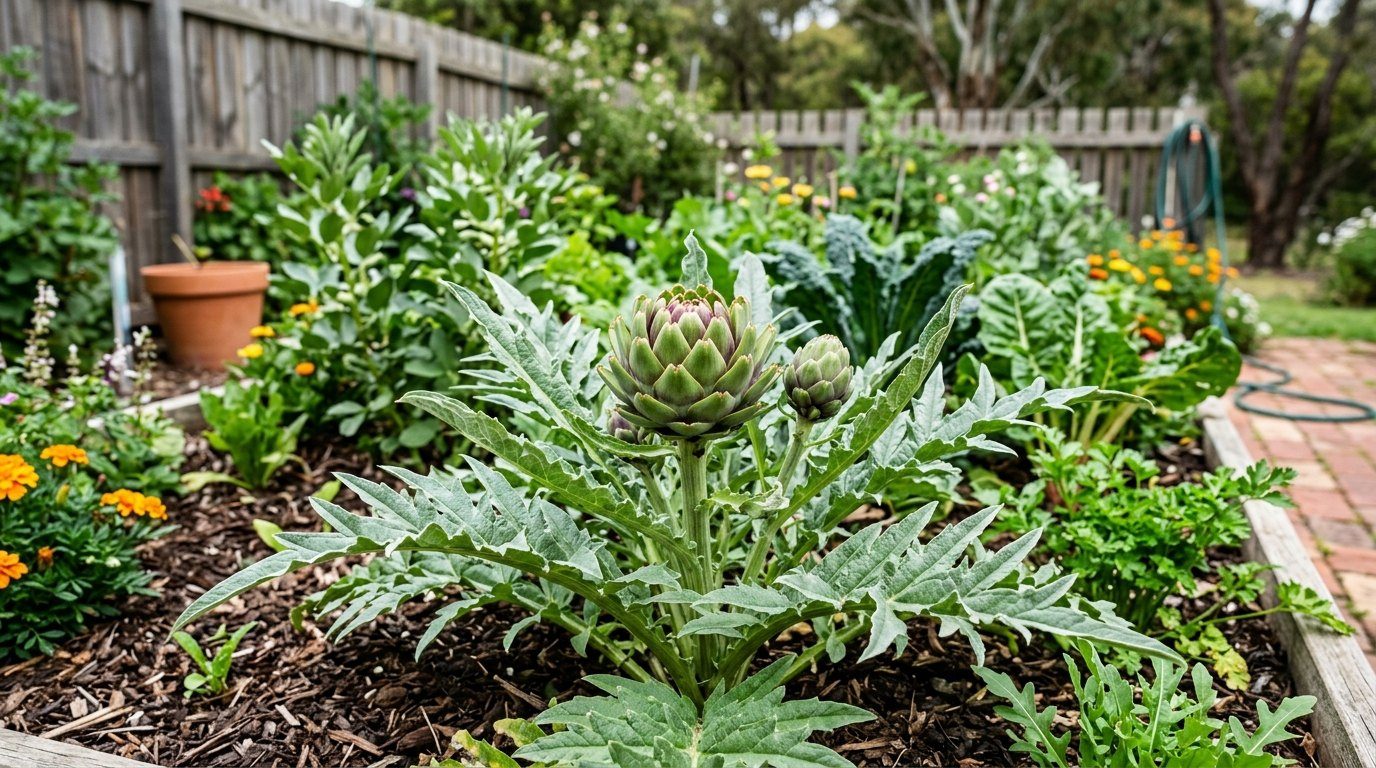
Globe artichokes are a perennial from the mild Mediterranean coast, and zone 7 sits on the edge of what they will tolerate. Our calendar starts seed indoors in March and April in the Mid-Atlantic, Mid-South and Southern Plains, and in April and May in the Northeast and Mountain West, ahead of a spring planting out.
Zone 7 globe artichokes planting months by region
| Planting region | Share of zone 7 | Sow or plant artichokes | Last frost, zone 7 ZIP codes | First frost, zone 7 ZIP codes |
|---|---|---|---|---|
| Northeast & New England Cold winters, warm humid summers | 27 percent | April and May | April 13 | October 31 |
| Mid-Atlantic Humid subtropical, four seasons | 22 percent | March and April | April 12 | October 29 |
| Mid-South Warm temperate | 22 percent | March and April | April 10 | October 28 |
| Southern Plains Hot summers, two planting seasons | 13 percent | March and April | April 6 | October 31 |
| Mountain West High-elevation, dry, big day-night swings | 5 percent | April and May | April 26 | October 19 |
Other regions (11 percent of the zone): Midwest & Great Lakes, Pacific Northwest, Texas, Gulf South, Desert Southwest, Northern California & Central Valley.
How we built this table: we placed all 8,732 zone 7 ZIP codes (2023 USDA map) in our planting regions; the months are each region's own calendar and the frost dates are NOAA 1991 to 2020 medians for the zone's ZIP codes there.
Growing artichokes as an annual where winters bite
The first way treats the plant as an annual and uses Imperial Star, a variety bred to bud in its first year. The seedlings need a week or two of nights near 50°F to behave as if a winter has passed, so harden them off in a cold frame and set them out around the typical last frost of April 10 in the Mid-South and April 12 in the Mid-Atlantic. Our germination range is about 59°F to 72°F, and each plant needs about 40 inches (100 cm), so give the bed room.
The second way keeps a perennial. Green Globe, the classic type, can survive a zone 7 winter if the crown is cut back and buried under a foot of leaves or straw, though a hard winter will still take some. In the Northeast and Mountain West the coldest nights fall close to 0°F, so assume a loss and replant each spring. Wet, cold soil rots the crown, which is why a raised mound beats a flat bed.
Time is the limit. Our figure is about 180 days from sowing to buds, so seed must go into trays early, and buds arrive in late summer rather than spring. The Mid-Atlantic has about 199 frost-free days and the Northeast about 199, with a first frost near October 31. Cut buds while they are plump and tight, before the scales open, and side buds keep forming. Aphids cluster inside the buds, so hose them off, and put out slug bait. Buds left to open become large purple thistle flowers that bees love.
Zone 7 globe artichokes questions
Will globe artichokes survive winter in zone 7?
Sometimes. A mature Green Globe under a deep mulch often comes through a mild winter, particularly in the Mid-Atlantic and Mid-South, and a hard winter can kill it. Treat any survivor as a bonus and start Imperial Star seedlings as insurance.
Why did my artichoke plant make no buds?
Without a spell of cold the plant stays leafy. Imperial Star needs a week or two of cool nights as a seedling, and a plant from ordinary seed will usually wait until its second year.
Growing advice follows published guidance from University of California Cooperative Extension and Virginia Cooperative Extension, artichoke guidance.
Keep planning
- How to grow globe artichokes: the full guide
- Globe artichokes planting calendar for every region
- Zone 7a planting calendar and zone 7b planting calendar
- All USDA zones and the Frost Lookup by ZIP code
- When to plant asparagus in zone 7
- When to plant beans in zone 7
- When to plant beets in zone 7
- When to plant broccoli in zone 7
- When to plant Brussels sprouts in zone 7
- When to plant cabbage in zone 7
- When to plant cantaloupe in zone 7