
When to Plant Brussels Sprouts in Zone 7
USDA zone 7 covers zones 7a and 7b, with winter lows of 0 to 10°F (-18 to -12°C).
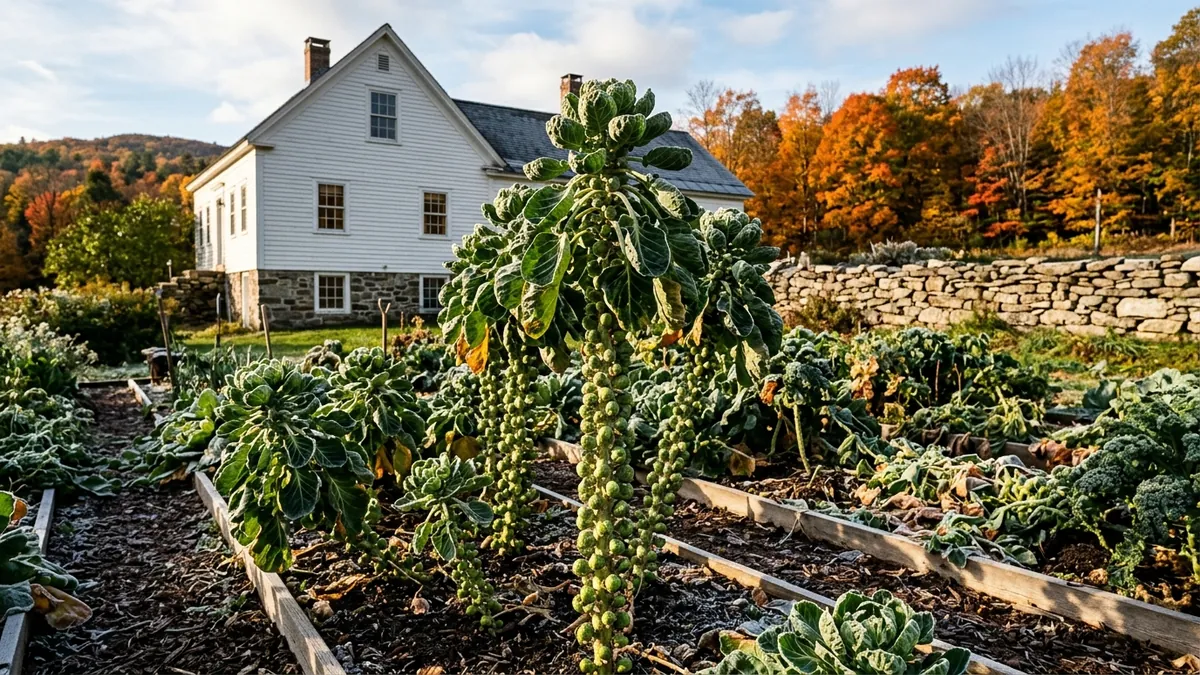
Brussels sprouts need a long stretch of cool weather, and in zone 7 that usually means growing them through the fall instead of the spring. Our fall run is from July to October in the Mid-Atlantic and Southern Plains, in July and August in the Mid-South, and from July to September in the Northeast and Mountain West. A spring run is listed too, from March to May in the Northeast and from February to April in the Mid-Atlantic, though the crop is harder to ripen before summer heat.
Zone 7 Brussels sprouts planting months by region
| Planting region | Share of zone 7 | Sow or transplant Brussels sprouts | Last frost, zone 7 ZIP codes | First frost, zone 7 ZIP codes |
|---|---|---|---|---|
| Northeast & New England Cold winters, warm humid summers | 27 percent | March to May, then July to September | April 13 | October 31 |
| Mid-Atlantic Humid subtropical, four seasons | 22 percent | February to April, then July to October | April 12 | October 29 |
| Mid-South Warm temperate | 22 percent | February and March, then July and August | April 10 | October 28 |
| Southern Plains Hot summers, two planting seasons | 13 percent | February to April, then July to October | April 6 | October 31 |
| Mountain West High-elevation, dry, big day-night swings | 5 percent | April and May, then July to September | April 26 | October 19 |
Other regions (11 percent of the zone): Midwest & Great Lakes, Pacific Northwest, Texas, Gulf South, Desert Southwest, Northern California & Central Valley.
How we built this table: we placed all 8,732 zone 7 ZIP codes (2023 USDA map) in our planting regions; the months are each region's own calendar and the frost dates are NOAA 1991 to 2020 medians for the zone's ZIP codes there.
Sprouts are a fall crop that needs the summer to be over
A plant needs about 120 days, our figure, and the sprouts turn sweeter after frost, so count back from the first freeze, which falls near October 31 in the Northeast and October 28 in the Mid-South. Start seedlings in light shade in early summer and set them 24 inches (60 cm) apart, our spacing, into firm soil, because loose soil makes loose sprouts. Heat above about 80°F gives open, bitter sprouts, so mulch the bed and water deeply through the warm weeks after transplanting.
Topping the plant, which means snipping off the growing tip about four weeks before you want to harvest, sends energy to the sprouts so they swell together. Jade Cross is an early hybrid that fits a short fall, and Long Island Improved is the old standby that grew up on the East Coast. Harvest from the bottom of the stalk upward as each sprout reaches an inch across, and a stalk that is cut whole and hung in a cool garage will keep for weeks.
Caterpillars and aphids are the real work. Imported cabbageworms and loopers chew the leaves, and aphids hide deep inside the sprouts, so lay row cover over the transplants on day one and check the undersides of leaves each week. Plants stand through frosts into the low 20s°F without damage. In the Mid-Atlantic and Mid-South, a sheet of shade cloth over the seedlings for the first few weeks helps them through the last of the heat, and the Mountain West, with about 175 frost-free days, should favor the earliest hybrids.
Zone 7 Brussels sprouts questions
Can Brussels sprouts stay in the garden after frost in zone 7?
Yes, and they taste better for it. Stalks handle freezes into the low 20s°F, so pick as the sprouts size up and cut what remains before a hard freeze below the mid teens.
Why are my Brussels sprouts loose and open?
Warm weather, loose soil and too much nitrogen all make sprouts open instead of tight. Firm the soil around transplants, go easy on fertilizer and time the crop to mature in cool fall weather.
Growing advice follows published guidance from Penn State Extension and University of Kentucky Cooperative Extension, Brussels sprouts guidance.
Keep planning
- How to grow Brussels sprouts: the full guide
- Brussels sprouts planting calendar for every region
- Zone 7a planting calendar and zone 7b planting calendar
- All USDA zones and the Frost Lookup by ZIP code
- When to plant globe artichokes in zone 7
- When to plant asparagus in zone 7
- When to plant beans in zone 7
- When to plant beets in zone 7
- When to plant broccoli in zone 7
- When to plant cabbage in zone 7
- When to plant cantaloupe in zone 7