
When to Plant Radishes in Zone 7
USDA zone 7 covers zones 7a and 7b, with winter lows of 0 to 10°F (-18 to -12°C).
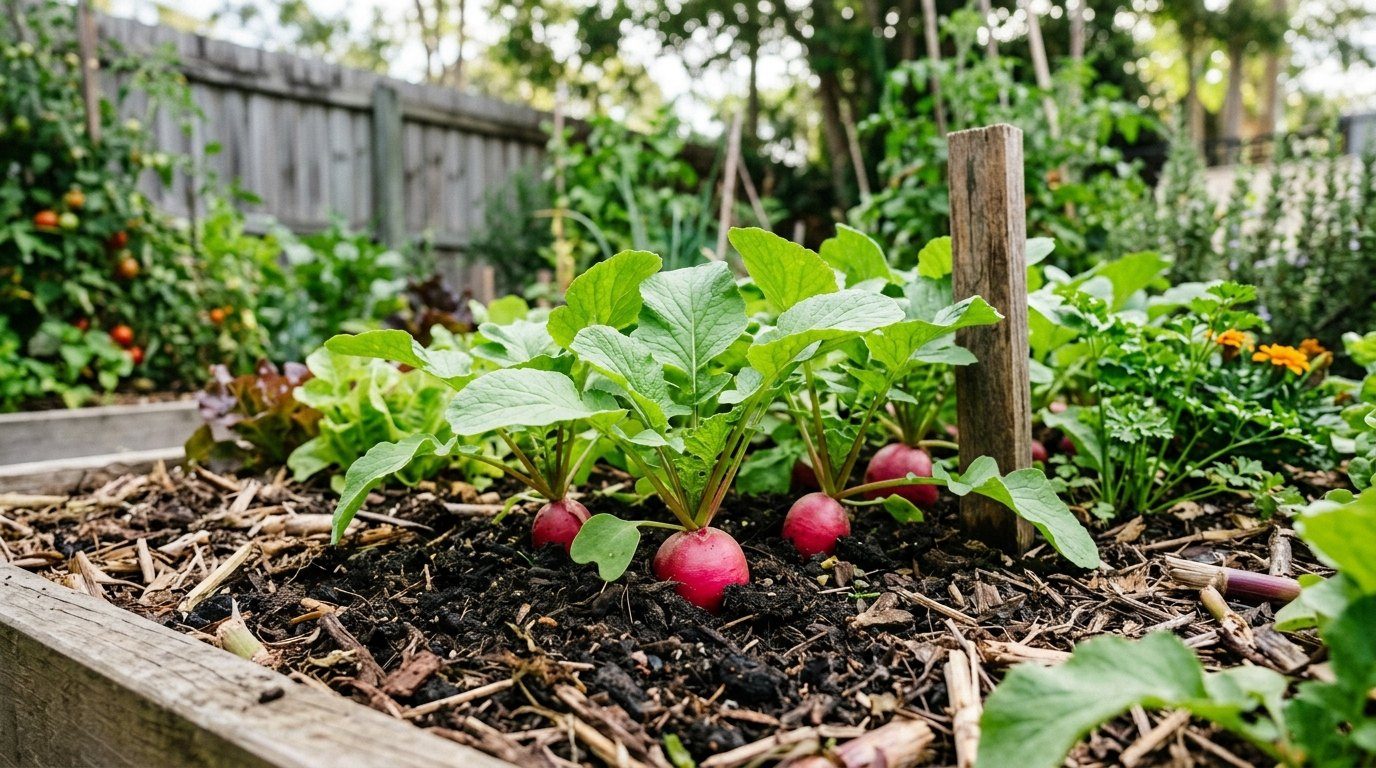
Radishes are ready about 30 days after sowing, which makes them the quickest return in a zone 7 garden and the best way to fill a gap. Spring sowing runs from March to May in the Northeast, from February to April in the Mid-Atlantic and Southern Plains, and in February and March in the Mid-South, with a second run from July to October in the Mid-Atlantic.
Zone 7 radishes planting months by region
| Planting region | Share of zone 7 | Sow radishes | Last frost, zone 7 ZIP codes | First frost, zone 7 ZIP codes |
|---|---|---|---|---|
| Northeast & New England Cold winters, warm humid summers | 27 percent | March to May, then July to September | April 13 | October 31 |
| Mid-Atlantic Humid subtropical, four seasons | 22 percent | February to April, then July to October | April 12 | October 29 |
| Mid-South Warm temperate | 22 percent | February and March, then August and September | April 10 | October 28 |
| Southern Plains Hot summers, two planting seasons | 13 percent | February to April, then July to October | April 6 | October 31 |
| Mountain West High-elevation, dry, big day-night swings | 5 percent | April and May, then July to September | April 26 | October 19 |
Other regions (11 percent of the zone): Midwest & Great Lakes, Pacific Northwest, Texas, Gulf South, Desert Southwest, Northern California & Central Valley.
How we built this table: we placed all 8,732 zone 7 ZIP codes (2023 USDA map) in our planting regions; the months are each region's own calendar and the frost dates are NOAA 1991 to 2020 medians for the zone's ZIP codes there.
Radishes finish in a month, so heat is the only thing to dodge
Radishes grow best in cool soil, and our germination range, about 50°F to 77°F, shows where trouble starts. Once days pass about 75°F the roots turn woody and hot, and long days send the plant to seed with no root at all. In the Mid-South, where the typical last frost is April 10, the spring window is short, so sow a pinch of seed every week instead of one long row. Seed sown half an inch (1 cm) deep sprouts in days, and thinning to 2 inches (5 cm), our spacing, gives each root room to swell.
Fall radishes are the better crop. Soil cools as the nights lengthen, the roots stay crisp, and a typical first frost near October 31 in the Northeast and October 28 in the Mid-South arrives well after a 30 day crop is finished. Cherry Belle is the usual round red choice, French Breakfast is long and mild, and Easter Egg gives a mix of colors from one packet. Watermelon radish and daikon need about 60 days, so sow them at the front of the fall window.
Flea beetles pepper spring leaves with tiny holes, and row cover laid over the bed on the day of sowing stops them. Cabbage root maggots tunnel into roots in cool, wet weather, and the same cover helps there. The Mountain West has about 175 frost-free days, so gardeners can sow the day the soil is workable and again as nights cool, though its dry soil makes even watering the secret to mild roots. Radishes also mark a row: sow them with carrots, whose slow seed needs weeks to sprout, and pull the radishes before the carrots need the room.
Zone 7 radishes questions
Why are my radishes all leaves and no roots?
Heat, crowding and too much nitrogen all produce leaf at the expense of root. Thin early, skip rich fertilizer and sow in the cooler parts of the window, and the roots swell instead.
Can radishes go in before the last frost in zone 7?
Yes. Seedlings take a light frost without harm, so sow as soon as the soil can be worked. Our Mid-South window opens in February and March, well ahead of the typical last frost.
Growing advice follows published guidance from Clemson Cooperative Extension and Ohio State University Extension, radish guidance.
Keep planning
- How to grow radishes: the full guide
- Radishes planting calendar for every region
- Zone 7a planting calendar and zone 7b planting calendar
- All USDA zones and the Frost Lookup by ZIP code
- When to plant globe artichokes in zone 7
- When to plant asparagus in zone 7
- When to plant beans in zone 7
- When to plant beets in zone 7
- When to plant broccoli in zone 7
- When to plant Brussels sprouts in zone 7
- When to plant cabbage in zone 7