
When to Plant Peas in Zone 8
USDA zone 8 covers zones 8a and 8b, with winter lows of 10 to 20°F (-12 to -7°C).
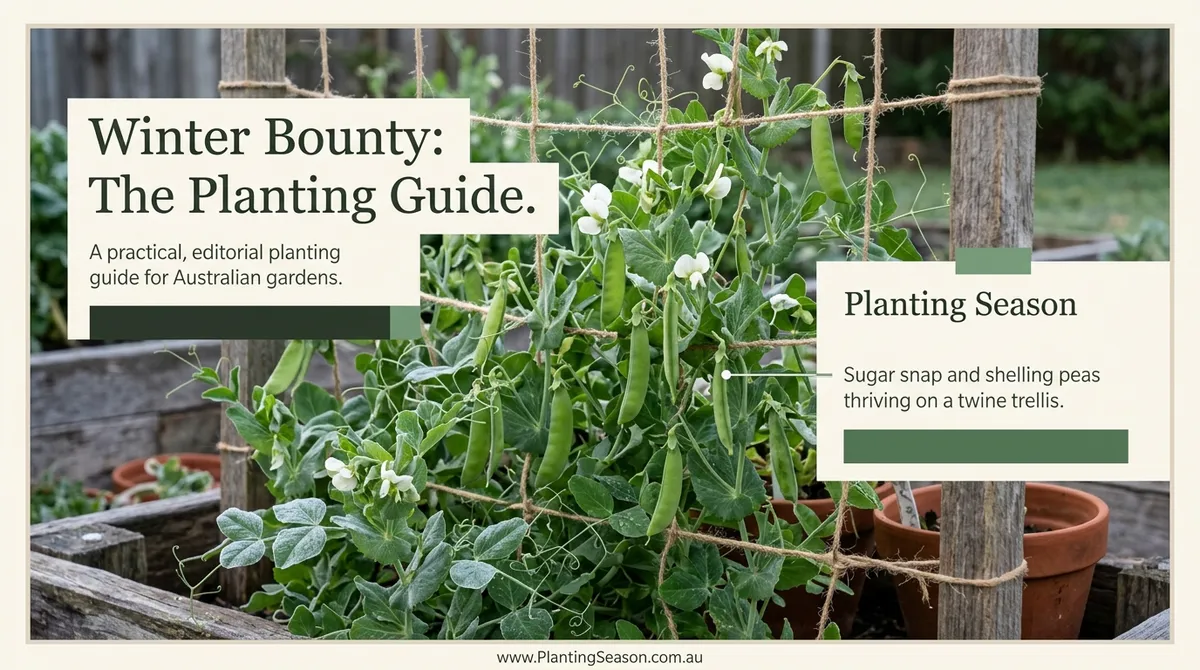
Peas need cool weather from the day they are sown, and zone 8 offers it in two narrow bands. The Gulf South sows in January and February and in September and October, Texas in February and in September, the Mid-South in February and March and in August and September, the Mid-Atlantic from February to April and from August to October, and the Pacific Northwest from February to April and from July to September.
Zone 8 peas planting months by region
| Planting region | Share of zone 8 | Plant peas | Last frost, zone 8 ZIP codes | First frost, zone 8 ZIP codes |
|---|---|---|---|---|
| Mid-South Warm temperate | 36 percent | February and March, then August and September | March 27 | November 7 |
| Gulf South Humid subtropical | 21 percent | September and October, then January and February | March 19 | November 11 |
| Texas Hot summers, spring and fall seasons | 19 percent | February, then September | March 16 | November 14 |
| Mid-Atlantic Humid subtropical, four seasons | 9 percent | February to April, then August to October | March 30 | November 12 |
| Pacific Northwest Maritime, mild wet winters and cool summers | 8 percent | February to April, then July to September | April 7 | November 3 |
Other regions (7 percent of the zone): Southern Plains, Northern California & Central Valley, Desert Southwest, Mountain West, Southern California.
How we built this table: we placed all 6,809 zone 8 ZIP codes (2023 USDA map) in our planting regions; the months are each region's own calendar and the frost dates are NOAA 1991 to 2020 medians for the zone's ZIP codes there.
Zone 8 peas live on a short, cool shelf of the calendar
On the Gulf and in Texas the spring window is a race. With a typical last frost near March 19 in the Gulf South and March 16 in Texas, peas sown in midwinter ride out the late freezes and flower before afternoons pass 80°F, which is where blossoms drop and pods stay flat. About 75 days to harvest, our figure, means a row from the end of the window can run out of cool weather. Sugar Snap and Green Arrow are the common choices, and Wando handles heat better than most.
The Mid-South sows later and has a slightly longer spring, with a typical last frost of March 27. Pods ripen in the cool weeks before summer, and a trellis at least 5 feet tall carries the vines above wet soil. Fall peas in the Mid-South face the opposite problem, because seed dries out in warm ground. Soak it for a few hours, sow an inch and a half deep and shade the row, and pods set as nights cool toward the typical first frost around November 7.
The Pacific Northwest edge of zone 8 sows from late winter, but rain and cold soil make the seed rot, so use raised beds or start seed in tubes and transplant. Slugs and aphids are the usual losses there. Southern peas, also called cowpeas, are a different warm-season crop that thrives across the Gulf in summer, and our southern peas guide covers them. Garden peas of any kind prefer near-neutral soil, a pH between 6 and 7 by our range.
Zone 8 peas questions
Do peas survive a freeze in zone 8?
Seedlings and young vines usually do, down to the mid 20s°F, although open flowers and small pods are damaged. If a hard freeze comes after flowering has started, cover the row with a sheet or row cover and pick the damaged pods off later.
Can I grow peas in a zone 8 summer?
Garden peas cannot manage it. Heat above about 80°F stops flowering and turns the pods starchy. The fall window in our calendars is the answer, and southern peas, which are cowpeas, take over for summer.
Growing advice follows published guidance from Texas A&M AgriLife Extension, Louisiana State University AgCenter and Oregon State University Extension, pea guidance.
Keep planning
- How to grow peas: the full guide
- Peas planting calendar for every region
- Zone 8a planting calendar and zone 8b planting calendar
- All USDA zones and the Frost Lookup by ZIP code
- When to plant peas in zone 7
- When to plant beets in zone 8
- When to plant broccoli in zone 8
- When to plant cabbage in zone 8
- When to plant carrots in zone 8
- When to plant sweet corn in zone 8
- When to plant cucumbers in zone 8
- When to plant lettuce in zone 8