
Annual vs Perennial Plants: What the Difference Means for Your Vegetable Garden
Updated November 2026
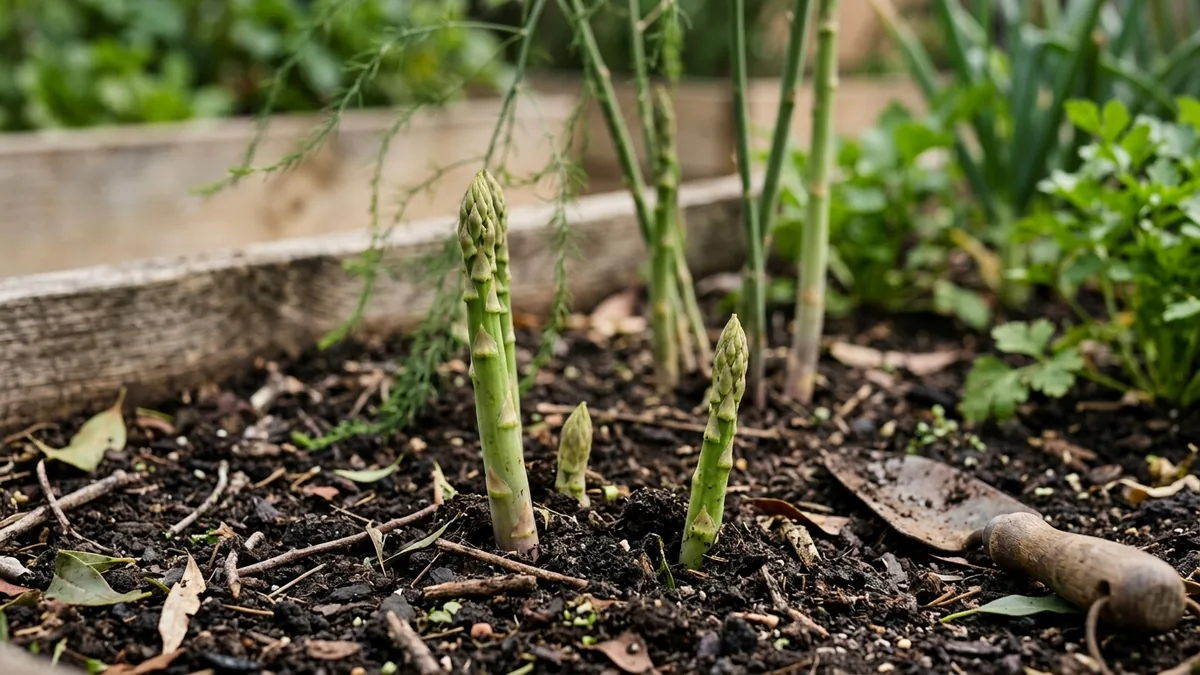
How long plants live, why climate changes the answer, and which crops you plant once.
An annual plant completes its whole life cycle, from seed to flower to seed, in a single growing season and then dies. A perennial lives for three or more years and usually dies back or goes dormant in winter before regrowing. A biennial sits between the two: it spends its first year growing leaves and roots, then flowers, sets seed and dies in its second year. Which category a plant falls into in your garden depends partly on the plant and partly on how cold your winters get.
Short answer: annuals live one season, biennials two, perennials three or more. A perennial that cannot survive your winter behaves as an annual in your garden, which is why tomatoes and peppers are replanted every spring in most of the country, even though in the tropics they live for years.
Annual, biennial and perennial defined
Annuals
An annual puts its energy into one burst: germinate, grow, flower, set seed, die. Lettuce, basil, beans, corn, cucumbers, squash and sunflowers are annuals. The practical result is that you replant them every year, and the crop has a clear start and finish. Because they race to seed, many annuals bolt when a heat wave hits, which is the plant hurrying to finish its cycle.
Biennials
A biennial needs two seasons and a winter between. In year one it builds a rosette of leaves and a storage root. After a cold spell it sends up a flower stalk in year two, sets seed and dies. Carrot, beet, parsley, cabbage, kale, onion, celery and parsnip are biennials. We grow almost all of them as annuals, because the first-year leaves, roots or heads are the crop.
Perennials
A perennial survives winter, either as a dormant crown, root or tuber underground or as woody stems above ground, and regrows from the same plant the next year. Some perennials, such as asparagus and rhubarb, die to the ground each winter and return in spring. Others, such as rosemary, lavender and blueberries, keep woody structure. Perennials take longer to start giving a crop, but once settled they save the work of sowing every year.
Perennials grown as annuals
Many of the crops Americans treat as annuals are tender perennials. Tomatoes, peppers, eggplant and sweet potatoes will live for years in a frost-free climate, and a tomato plant in a greenhouse in a warm region can keep producing long beyond a single season. They become annuals in most of the country only because frost kills them. Our frost dates page shows when that frost arrives in each region, and our USDA zones page shows how cold winters get.
The reverse also happens. A plant that is a dependable perennial in the South can fail in the far North, and a hardy perennial such as rhubarb can struggle through a hot southern summer. Gardeners call this the difference between a plant's biology and its fit with your climate. The label on the seed packet tells you which one it is in the grower's home zone, not necessarily yours.
How USDA hardiness zones decide whether a perennial survives
The USDA Plant Hardiness Zone Map divides the country into zones based on the average coldest winter temperature of each place, with each zone spanning 10 degrees F and each half zone (such as 5a and 5b) spanning 5 degrees. A plant listed as hardy to zone 5 is expected to survive a winter minimum of about minus 20 to minus 10 degrees F. If your zone is colder than the plant's limit, you either grow it as an annual, lift and store it, or protect it in a pot.
Zones are a starting point and not the whole story. A plant also needs enough winter chill to rest, drainage so crowns do not rot, and summers that are not too hot. A snowy winter can protect roots better than a dry cold one, because snow insulates the soil. Look up your own zone on the zones page, for example zone 5b, and then compare it with the hardiness range given for each plant.
Plant once: perennial vegetables, fruit and herbs for much of the US
If you want beds that produce for years, these are the standard choices. Give each its own permanent spot, because moving or digging them every year defeats the point.
- Asparagus. The most dependable perennial vegetable for cold and temperate regions. Plant crowns in early spring (our calendars give Apr to May in the Midwest and Mar to Apr in the Mid-Atlantic), wait about two years before harvesting, and expect a bed to last for many years. See the asparagus guide.
- Rhubarb. Plant crowns in Apr to May in the Northeast. It likes cold winters and cool summers. Read the rhubarb guide.
- Horseradish. A hardy root that returns from any piece left in the soil, so plant it where it can stay. See horseradish.
- Sunchoke. Also called Jerusalem artichoke, a tall sunflower relative with edible tubers that spreads aggressively. See sunchokes.
- Globe artichoke. A true perennial only where winters are mild. In colder zones it is grown as an annual, or lifted and overwintered. See globe artichoke.
- Chives, oregano, thyme, mint, sage and sorrel. Herbs that return each spring across much of the country. Chives can be sown in Apr to May and Aug to Sep in the Northeast. Guides: chives, oregano, thyme, mint (best in a pot, because it spreads), sage and sorrel.
- Berries. Raspberries, blueberries, blackberries and strawberries are perennial. Pick varieties rated for your zone, since blueberries in particular come in northern and southern types.
Biennials grown for leaves or roots
Carrots, beets, parsley and cabbage are biennials that we treat as annual crops. A carrot sown in Apr to May and Jul to Sep in the Midwest is harvested that year as a root. That is the whole point of growing it. If you leave a carrot in the ground through winter in a mild climate, in spring it sends up a tall stalk with lacy white flower heads, and the root turns woody and unpleasant to eat.
Parsley behaves the same way: leaves in year one, then a flower stalk and bitter leaves in year two, so many gardeners replace it every year. Cabbage and kale also bolt in their second spring. The one reason to leave a biennial in the ground is seed saving, and our seed saving guide covers how to do it. Many people confuse bolting in the first year, which is caused by heat or a cold snap, with the normal second-year flowering of a biennial. Compare with our carrot, beet, parsley and cabbage guides.
Quick reference table
The table sorts common garden plants by how they behave in most of the United States.
| Plant | Life cycle | Climate note | What to expect |
|---|---|---|---|
| Asparagus | Perennial | Cold zones to mild zones; needs a winter rest | Spears from year 3, then for 15 years or more |
| Rhubarb | Perennial | Best where winters are cold; weak in hot summers | Stalks from year 2, long lived |
| Horseradish | Perennial | Very hardy; spreads from root pieces | Root harvested every fall |
| Sunchoke | Perennial | Very hardy; spreads fast | Tubers harvested after frost |
| Globe artichoke | Perennial in mild zones, annual elsewhere | Reliable perennial only in mild winters | Buds in spring in mild zones |
| Chives | Perennial | Very hardy | Cut from spring until frost |
| Oregano | Perennial | Hardy in most zones | Cut all season |
| Thyme | Perennial | Hardy in most zones; needs drainage | Cut all season |
| Mint | Perennial | Very hardy; grow it in a pot | Cut all season |
| Sorrel | Perennial | Hardy; comes back each spring | Leaves from early spring |
| Sage | Perennial (woody) | Hardy in most zones | Cut lightly, replace every few years |
| Lavender | Perennial (woody) | Needs sun and sharp drainage | Flowers each summer |
| Raspberries | Perennial canes (biennial canes, perennial roots) | Hardy in cold zones | Fruit on second-year canes or on fall-bearing types |
| Blueberries | Perennial shrub | Choose northern or southern types for your zone | Full crop after 3 to 4 years |
| Strawberries | Perennial | Hardy with winter mulch | Replace plants every 3 to 4 years |
| Tomato | Tender perennial grown as an annual | Dies at the first frost | Replant every spring |
| Peppers | Tender perennial grown as an annual | Dies at the first frost | Replant every spring |
| Carrot | Biennial | Grown as an annual for the root | Root in the first season |
| Beet | Biennial | Grown as an annual for the root | Root in the first season |
| Parsley | Biennial | Hardy; keeps leaves through mild winters | Leaves in year 1, flowers in year 2 |
| Cabbage | Biennial | Grown as an annual for the head | Head in the first season |
| Lettuce | Annual | Dies after flowering | Replant each season |
| Basil | Annual | Killed by frost | Replant each spring |
How to plan beds around perennials
- Give perennials their own zone. Put asparagus, rhubarb, berries and herbs along one edge or in a dedicated bed, so you can till or turn over the annual beds without disturbing them. This also makes crop rotation of the annual beds simpler, as described in the crop rotation guide.
- Site them first. Perennials are the permanent structure of the garden. Choose their location for sun, drainage and the shade they will cast when mature, then fit the annuals around them. Tall plants such as asparagus fern and artichokes should go on the north side so they do not shade shorter crops.
- Prepare the soil deeply once. Because you cannot easily dig around a perennial later, add compost and fix drainage before planting. A raised bed helps in heavy soil.
- Contain the spreaders. Mint and sunchokes run, so plant them in a large pot or an edged bed.
- Mulch and be patient. Most perennial vegetables give little in the first season. Mulch to hold moisture and suppress weeds, and resist harvesting asparagus or rhubarb too early.
- Replace the short-lived ones. Strawberries decline after three or four years and biennial herbs such as parsley need renewing yearly, so budget a little space for rotation.
Your region matters too. Find your area on the grow hub, such as the Northeast, Midwest or Pacific Northwest pages.
Questions
What is the difference between annual and perennial plants?
An annual completes its life cycle in one growing season and then dies, so you replant it every year. A perennial lives three or more years and regrows from the same roots or stems each spring.
What is a biennial plant?
A biennial grows leaves and roots in its first year, then flowers, sets seed and dies in its second. Carrot, beet, parsley and cabbage are biennials, but we harvest them in the first year and treat them as annuals.
Are tomatoes annuals or perennials?
Tomatoes are tender perennials. In a frost-free climate they can live for years, but frost kills them in most of the United States, so gardeners replant them every spring and treat them as annuals.
Which vegetables can I plant once and harvest for years?
Asparagus, rhubarb, horseradish and sunchokes are the main perennial vegetables for much of the country, and globe artichoke works in mild zones. Add perennial herbs such as chives, oregano, thyme and mint, plus berries.
How do I know if a perennial will survive my winter?
Find your USDA hardiness zone on our zones page and compare it with the zone range for the plant. If your zone is colder than the plant's limit, grow it in a pot and bring it indoors, or treat it as an annual.
What happens if I leave carrots or parsley in the ground for a second year?
They flower. The carrot sends up a tall stalk with white flower heads and the root turns woody, and parsley produces a flower stalk with bitter leaves. Leave them only if you want to collect seed.