
When to Plant Peas in Zone 6
USDA zone 6 covers zones 6a and 6b, with winter lows of -10 to 0°F (-23 to -18°C).
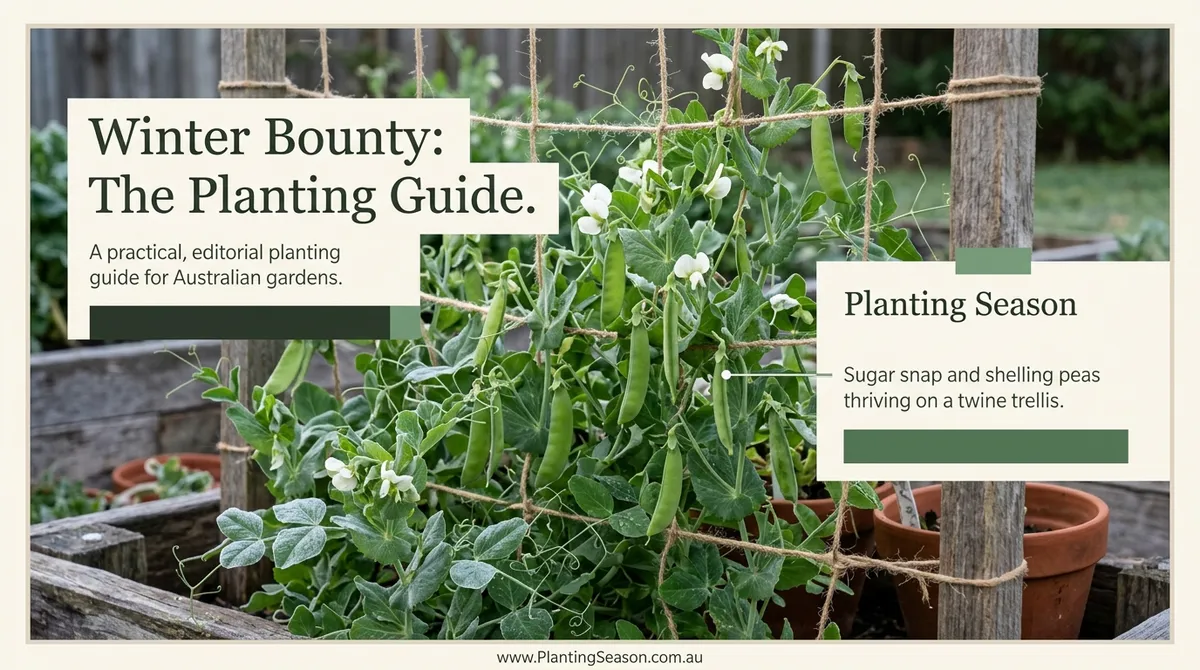
Peas are among the first seeds into zone 6 soil and the first plants to quit when summer arrives. Missouri and Kansas open from February to April, the Northeast from March to May, and the Midwest and Mountain West in April and May. Each calendar returns for a fall sowing, from August to October in Missouri and Kansas and from July to September everywhere farther north.
Zone 6 peas planting months by region
| Planting region | Share of zone 6 | Plant peas | Last frost, zone 6 ZIP codes | First frost, zone 6 ZIP codes |
|---|---|---|---|---|
| Midwest & Great Lakes Continental, cold winters and warm summers | 38 percent | April and May, then July to September | April 23 | October 21 |
| Northeast & New England Cold winters, warm humid summers | 30 percent | March to May, then July to September | April 30 | October 17 |
| Southern Plains Hot summers, two planting seasons | 15 percent | February to April, then August to October | April 16 | October 21 |
| Mountain West High-elevation, dry, big day-night swings | 7 percent | April and May, then July to September | May 10 | October 5 |
Other regions (9 percent of the zone): Mid-Atlantic, Mid-South, Pacific Northwest.
How we built this table: we placed all 10,458 zone 6 ZIP codes (2023 USDA map) in our planting regions; the months are each region's own calendar and the frost dates are NOAA 1991 to 2020 medians for the zone's ZIP codes there.
Sow peas early, because heat ends the crop and frost never does
Peas germinate in cold soil, though slowly. Seed in ground near 45°F can take three weeks to come up, while seed in warm soil sprouts within a week, and our germination range is about 50°F to 72°F. Treat the date as a guide and sow when the soil crumbles in your hand. In Missouri and Kansas the window can open before the typical last frost of April 16, and in the Midwest it follows with a last frost near April 23. Seedlings survive hard frosts and the vines flower in cool weather, so an early start is nearly all that matters.
Plan the support at sowing time. Tall varieties such as Alderman, also sold as Tall Telephone, reach 6 feet and need netting or a fence, while dwarfs like Little Marvel and Sugar Ann stand on a short brush support. Sow about an inch (3 cm) deep and 4 inches (10 cm) apart, our figures, in a double row along the support. Dwarfs ripen in about 55 to 65 days and tall types need about 75 days, our figure, so in the short Mountain West season, with 146 frost-free days, quick dwarfs win.
Fall peas are a gamble worth taking. Soak the seed for a few hours, sow it a little deeper than in spring, and shade the row until it sprouts, since warm soil and hot days spoil the first flush. A typical first frost near October 21 in the Midwest and October 17 in the Northeast leaves just enough time for a quick variety, and Wando, a heat-tolerant pea, is the usual pick for a late-summer start. Powdery mildew whitens leaves late in the season, so choose resistant varieties and water the roots rather than the foliage. Peas also leave nitrogen in the bed, which a following crop of cabbage or spinach will use.
Zone 6 peas questions
Can I plant peas while snow is still on the ground in zone 6?
You can sow once the soil has thawed and drained, even if snow lingers in the shade, but not in frozen or soaked ground, where the seed rots. Wait a few days for the bed to drain, because a sowing in slightly warmer soil usually catches up with one made in cold mud.
Do I need to inoculate pea seed in zone 6?
Not always, but it helps in a new bed. The powder carries the bacteria that let pea roots fix nitrogen, and a dusting costs very little. Beds that have grown peas or beans in recent years usually hold the bacteria already.
Growing advice follows published guidance from Penn State Extension and University of Missouri Extension, pea guidance.
Keep planning
- How to grow peas: the full guide
- Peas planting calendar for every region
- Zone 6a planting calendar and zone 6b planting calendar
- All USDA zones and the Frost Lookup by ZIP code
- When to plant peas in zone 5
- When to plant peas in zone 7
- When to plant beans in zone 6
- When to plant beets in zone 6
- When to plant broccoli in zone 6
- When to plant cabbage in zone 6
- When to plant carrots in zone 6
- When to plant sweet corn in zone 6
- When to plant cucumbers in zone 6