
When to Plant Okra in Zone 7
USDA zone 7 covers zones 7a and 7b, with winter lows of 0 to 10°F (-18 to -12°C).
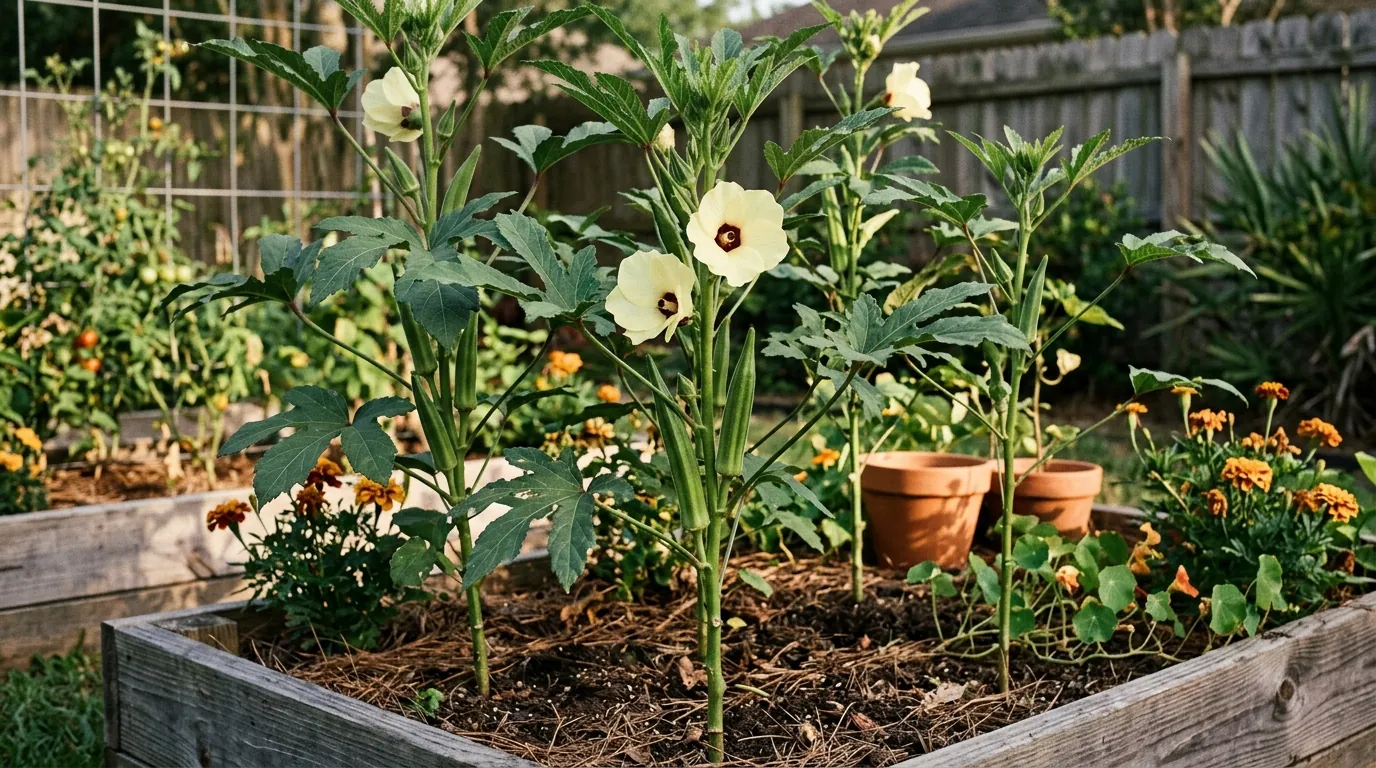
Okra is a crop from hot country, so zone 7 gardeners earn it with patience instead of an early start. The Mid-Atlantic, Mid-South and Southern Plains sow from May to July, and the Northeast and Mountain West sow a little tighter, in May and June.
Zone 7 okra planting months by region
| Planting region | Share of zone 7 | Sow okra | Last frost, zone 7 ZIP codes | First frost, zone 7 ZIP codes |
|---|---|---|---|---|
| Northeast & New England Cold winters, warm humid summers | 27 percent | May and June | April 13 | October 31 |
| Mid-Atlantic Humid subtropical, four seasons | 22 percent | May to July | April 12 | October 29 |
| Mid-South Warm temperate | 22 percent | May to July | April 10 | October 28 |
| Southern Plains Hot summers, two planting seasons | 13 percent | May to July | April 6 | October 31 |
| Mountain West High-elevation, dry, big day-night swings | 5 percent | May and June | April 26 | October 19 |
Other regions (11 percent of the zone): Midwest & Great Lakes, Pacific Northwest, Texas, Gulf South, Desert Southwest, Northern California & Central Valley.
How we built this table: we placed all 8,732 zone 7 ZIP codes (2023 USDA map) in our planting regions; the months are each region's own calendar and the frost dates are NOAA 1991 to 2020 medians for the zone's ZIP codes there.
Okra waits for warm soil, then grows faster than you can pick
Seed rots in cold soil, and our germination range runs from 72°F to 90°F, so the calendar waits well after the typical last frost of April 10 in the Mid-South and April 13 in the Northeast. Soak the seed overnight to speed sprouting, sow about three quarters of an inch (2 cm) deep and thin to 16 inches (40 cm), our spacing. Black plastic over the bed for two weeks beforehand wins a few days in the Mountain West, which has about 175 frost-free days. A plant needs about 75 days to its first pods, our figure.
Pick pods when they are 3 to 4 inches long, every second day, because a pod left a few days turns tough and the plant slows its flowering. Clemson Spineless is the old standard, Annie Oakley II is a compact hybrid for small beds, and Red Burgundy has red pods that look as good as they taste. Wear gloves and long sleeves, since the leaves and pods carry fine hairs that irritate bare skin.
Nights below about 55°F stall growth, which can happen in the Northeast and Mountain West after a late spring sowing, so a cold snap may set plants back by weeks. In the Mid-South, root-knot nematodes and fusarium wilt are the usual soil problems, so rotate the bed and favor resistant varieties. Okra is one of the few vegetables that keeps going through the dry summers of the Southern Plains. The tall stand, 4 to 6 feet by late summer, shades small crops behind it, and the first frost near October 28 in the Mid-South or October 31 in the Northeast ends pod production overnight.
Zone 7 okra questions
Is zone 7 warm enough to grow okra?
Yes, from the Mid-Atlantic southward and westward the season is long enough for a good crop. Farther north, in the Northeast and Mountain West, grow a fast, compact variety and warm the bed with black plastic.
Why are my okra pods tough and stringy?
They stayed on the plant too long. Cut pods every second day while they are 3 to 4 inches long, and the plant keeps flowering instead of ripening seed.
Growing advice follows published guidance from Clemson Cooperative Extension and Virginia Cooperative Extension, okra guidance.
Keep planning
- How to grow okra: the full guide
- Okra planting calendar for every region
- Zone 7a planting calendar and zone 7b planting calendar
- All USDA zones and the Frost Lookup by ZIP code
- When to plant okra in zone 8
- When to plant globe artichokes in zone 7
- When to plant asparagus in zone 7
- When to plant beans in zone 7
- When to plant beets in zone 7
- When to plant broccoli in zone 7
- When to plant Brussels sprouts in zone 7
- When to plant cabbage in zone 7