
When to Plant Zucchini in Zone 7
USDA zone 7 covers zones 7a and 7b, with winter lows of 0 to 10°F (-18 to -12°C).
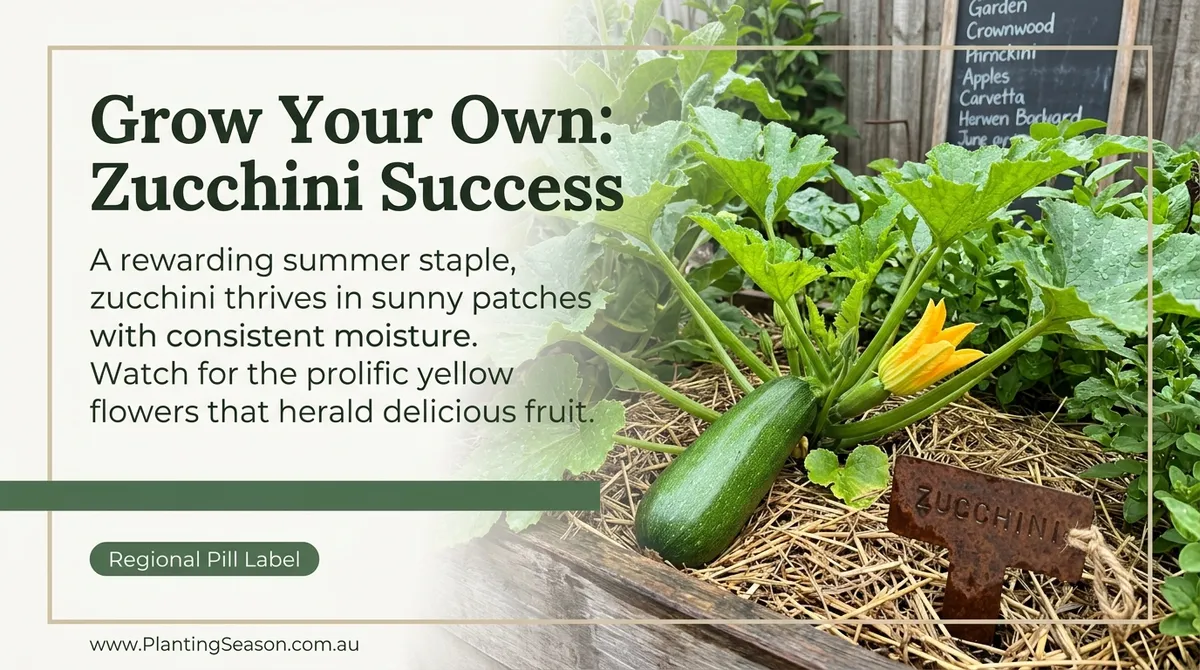
A zone 7 garden can grow more zucchini than any household will eat, so the useful question is when to sow, not how much. Our calendar opens from April to June in the Mid-South, in May and June in the Northeast and Mountain West, and from May to July in the Mid-Atlantic and Southern Plains.
Zone 7 zucchini planting months by region
| Planting region | Share of zone 7 | Sow or set out zucchini | Last frost, zone 7 ZIP codes | First frost, zone 7 ZIP codes |
|---|---|---|---|---|
| Northeast & New England Cold winters, warm humid summers | 27 percent | May and June | April 13 | October 31 |
| Mid-Atlantic Humid subtropical, four seasons | 22 percent | May to July | April 12 | October 29 |
| Mid-South Warm temperate | 22 percent | April to June | April 10 | October 28 |
| Southern Plains Hot summers, two planting seasons | 13 percent | May to July | April 6 | October 31 |
| Mountain West High-elevation, dry, big day-night swings | 5 percent | May and June | April 26 | October 19 |
Other regions (11 percent of the zone): Midwest & Great Lakes, Pacific Northwest, Texas, Gulf South, Desert Southwest, Northern California & Central Valley.
How we built this table: we placed all 8,732 zone 7 ZIP codes (2023 USDA map) in our planting regions; the months are each region's own calendar and the frost dates are NOAA 1991 to 2020 medians for the zone's ZIP codes there.
Plant a few zucchini, not a dozen, and guard the stems
Seed will not sprout in cold ground. Our germination range runs from about 64°F to 86°F, so wait until the soil has passed 65°F, which happens a week or two after the typical last frost of April 10 in the Mid-South and April 13 in the Northeast. Sow two seeds to a hill about three quarters of an inch (2 cm) deep, keep the stronger seedling, and leave about 31 inches (80 cm) between plants, our spacing. Fruit is ready roughly 60 days after sowing, so a hill started at the front of the window is cropping by early summer.
Squash vine borer ends more zucchini crops than frost does. The moth lays eggs at the base of the stem in early summer, the grub tunnels inside, and a healthy plant wilts and collapses within a few days. Wrap the lower stem in foil, or keep row cover over the plants until the first flowers open, and sow a second hill a month after the first so one lost plant does not end the season. Black Beauty is the dependable dark green type, Cocozelle is a striped Italian heirloom, and Gold Rush gives yellow fruit that is easy to spot among the leaves.
The Mid-Atlantic has about 199 frost-free days and the Southern Plains about 207, which is room for a second sowing in the Mid-Atlantic before high summer. Cool nights slow the Mountain West, where the first frost comes near October 19, so lay black plastic and choose a compact bush type. Pick fruit when it is finger to hand length, because one missed zucchini swells overnight and tells the plant to stop setting new ones. Squash bugs and powdery mildew show up later, so water at the base and keep the leaves dry.
Zone 7 zucchini questions
How many zucchini plants does a family need in zone 7?
Two or three plants feed a family of four all summer. A fourth sown a month later is cheap insurance against the borer, and anything beyond that mostly ends up as bread and neighbors' gifts.
Can I sow zucchini again for fall in zone 7?
A hill sown in early summer can slip past the first borer flight and crop until frost, which arrives near October 31 in the Northeast and October 29 in the Mid-Atlantic. Our calendar lists only the spring window, so treat a later sowing as a bonus.
Growing advice follows published guidance from University of Kentucky Cooperative Extension and Penn State Extension, summer squash guidance.
Keep planning
- How to grow zucchini: the full guide
- Zucchini planting calendar for every region
- Zone 7a planting calendar and zone 7b planting calendar
- All USDA zones and the Frost Lookup by ZIP code
- When to plant globe artichokes in zone 7
- When to plant asparagus in zone 7
- When to plant beans in zone 7
- When to plant beets in zone 7
- When to plant broccoli in zone 7
- When to plant Brussels sprouts in zone 7
- When to plant cabbage in zone 7