
When to Plant Broccoli in Zone 9
USDA zone 9 covers zones 9a and 9b, with winter lows of 20 to 30°F (-7 to -1°C).
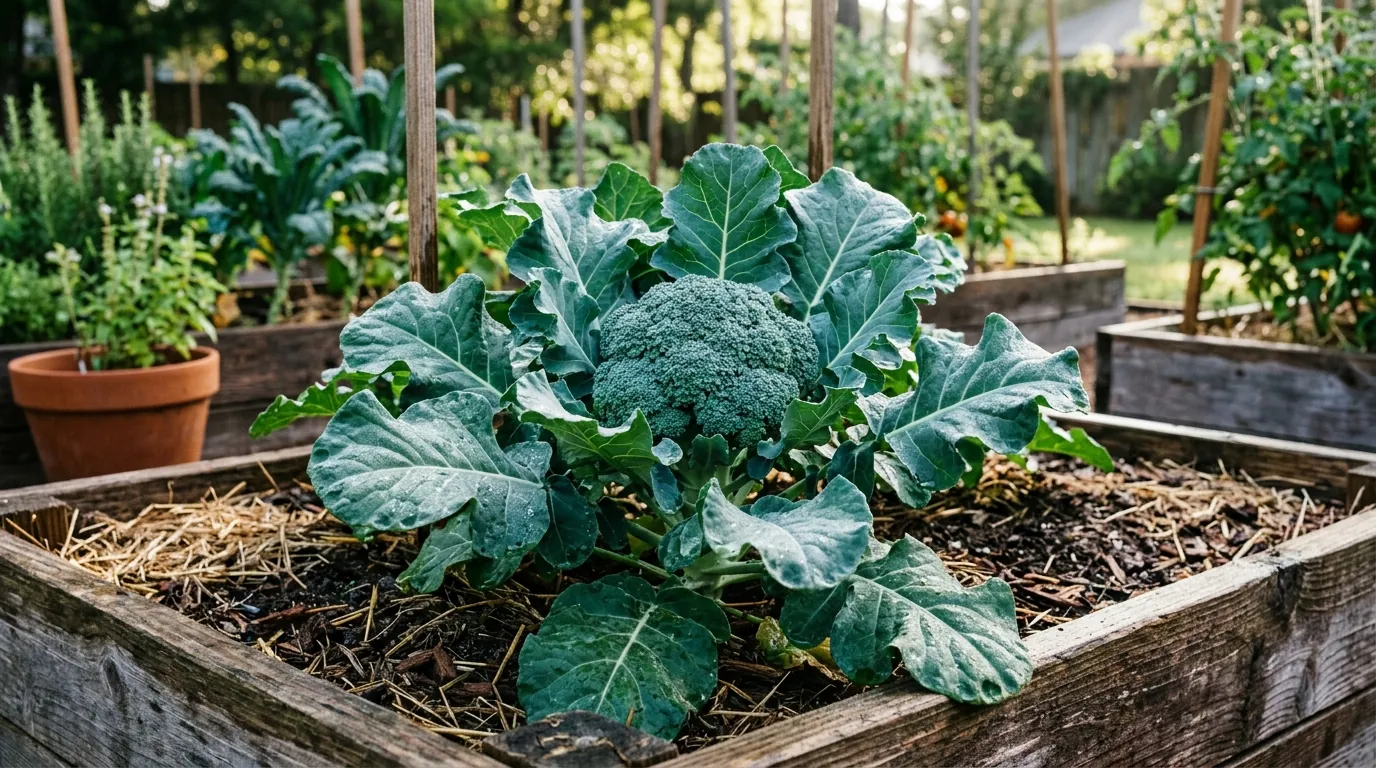
In zone 9 broccoli belongs to the winter garden. The Gulf South and North Florida sow or transplant from September to February, the Central Valley from August to March, Central Florida from August to January, and Texas in January and February and again in August and September. Southern California runs in January and February and from September to November, and the Arizona low desert depends on its fall run, from September to November, with one short extra window in January.
Zone 9 broccoli planting months by region
| Planting region | Share of zone 9 | Sow or transplant broccoli | Last frost, zone 9 ZIP codes | First frost, zone 9 ZIP codes |
|---|---|---|---|---|
| Texas Hot summers, spring and fall seasons | 23 percent | January and February, then August and September | February 20 | December 3 |
| Gulf South Humid subtropical | 21 percent | September to February | March 2 | November 26 |
| Northern California & Central Valley Mediterranean, mild winters and hot dry summers | 17 percent | August to March | February 22 | December 1 |
| Desert Southwest Low desert, hot and dry | 9 percent | September to November, then January | February 1 | December 10 |
| North Florida Humid subtropical, mild winter | 9 percent | September to February | March 1 | December 1 |
| Southern California Mediterranean | 9 percent | September to November, then January and February | February 2 | December 8 |
| Pacific Northwest Maritime, mild wet winters and cool summers | 6 percent | February to April, then July to September | March 13 | November 17 |
| Central Florida Subtropical | 5 percent | August to January | Rare | Rare |
Other regions (2 percent of the zone): Mid-South.
How we built this table: we placed all 4,284 zone 9 ZIP codes (2023 USDA map) in our planting regions; the months are each region's own calendar and the frost dates are NOAA 1991 to 2020 medians for the zone's ZIP codes there.
Growing broccoli through a mild winter
Gulf and Florida gardeners set out transplants from late summer into winter, and the plants stand through frosts that arrive around November 26 in the Gulf South and December 1 in North Florida. Broccoli tolerates temperatures down to the mid 20s°F, so the real risk is at the other end of the season. When spring warms, a typical last frost near March 2 is a signal that heads will soon open into flowers, so plant early in the window and let the roughly 90 days to harvest, our figure, finish before warm weather returns.
The Arizona low desert is the hardest place in the zone, with a typical last frost of February 1, a first frost of December 10, and highs that stay above 100°F into early fall. Seedlings set out at the start of the fall run need shade cloth and daily water, and many gardeners simply wait until nights cool. California is easier. The Central Valley has a typical last frost near February 22 and grows broccoli almost all winter, and a heat-tolerant variety such as Green Magic is the safe pick for warm autumns.
The Pacific Northwest edge of zone 9 follows a different clock, with a typical last frost of March 13 and sowings that start in spring and again in summer. Clubroot is the soil problem there, because wet, acid ground carries the disease for years, so lime toward pH 7.2 and rotate beds. Across zone 9, cabbage loopers and aphids work through brassicas in every warm spell, and a light row cover or Bt spray keeps both in check. Calabrese, the old Italian type, sends up side shoots for weeks after the main head is cut.
Zone 9 broccoli questions
Does broccoli really survive frost in zone 9?
Yes. The plants take a freeze into the mid 20s°F, though open heads are more tender than leaves. Cover a nearly finished head when a hard freeze is forecast. The typical first frost is December 3 in Texas and December 1 in the Central Valley.
What are the signs that broccoli is about to bolt?
The tight green buds swell and show yellow at the edges, and the head loosens. Cut it right away, because in warm weather it flowers within a day or two. Side shoots follow if the plant is kept watered.
Growing advice follows published guidance from University of Florida IFAS Extension, University of Arizona Cooperative Extension and University of California Cooperative Extension, broccoli guidance.
Keep planning
- How to grow broccoli: the full guide
- Broccoli planting calendar for every region
- Zone 9a planting calendar and zone 9b planting calendar
- All USDA zones and the Frost Lookup by ZIP code
- When to plant broccoli in zone 8
- When to plant beans in zone 9
- When to plant carrots in zone 9
- When to plant cucumbers in zone 9
- When to plant onions in zone 9
- When to plant strawberries in zone 9
- When to plant sweet potatoes in zone 9
- When to plant tomatoes in zone 9