
When to Plant Onions in Zone 9
USDA zone 9 covers zones 9a and 9b, with winter lows of 20 to 30°F (-7 to -1°C).
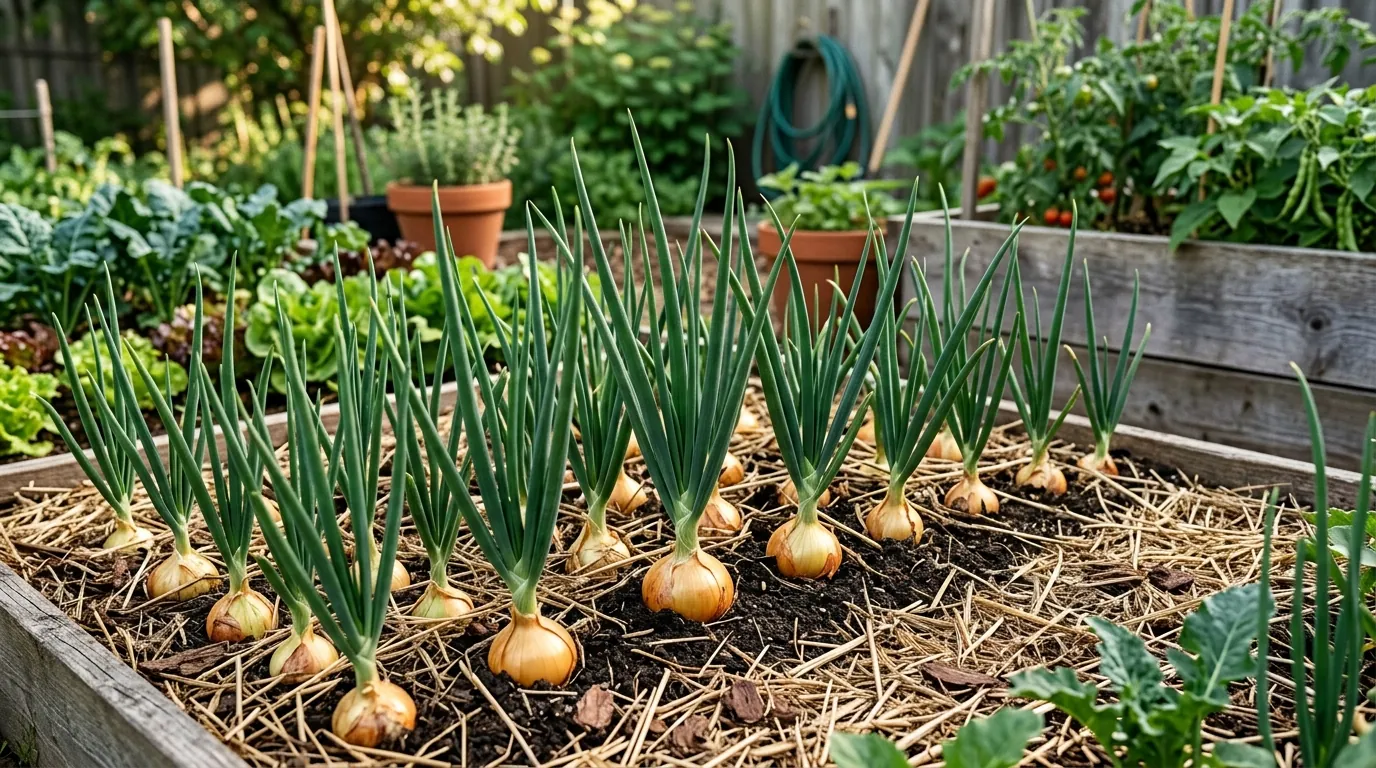
Onions are a cool-season crop across most of zone 9. The Gulf South, North Florida and Central Florida sow or set out from September to January, Texas in January and in October and November, the Arizona low desert in October and November, and the Central Valley from October to January. Southern California runs in January and February and from September to November, and the Pacific Northwest from February to April and in August and September.
Zone 9 onions planting months by region
| Planting region | Share of zone 9 | Sow or set out onions | Last frost, zone 9 ZIP codes | First frost, zone 9 ZIP codes |
|---|---|---|---|---|
| Texas Hot summers, spring and fall seasons | 23 percent | October and November, then January | February 20 | December 3 |
| Gulf South Humid subtropical | 21 percent | September to January | March 2 | November 26 |
| Northern California & Central Valley Mediterranean, mild winters and hot dry summers | 17 percent | October to January, then August | February 22 | December 1 |
| Desert Southwest Low desert, hot and dry | 9 percent | October and November | February 1 | December 10 |
| North Florida Humid subtropical, mild winter | 9 percent | September to January | March 1 | December 1 |
| Southern California Mediterranean | 9 percent | September to November, then January and February | February 2 | December 8 |
| Pacific Northwest Maritime, mild wet winters and cool summers | 6 percent | February to April, then August and September | March 13 | November 17 |
| Central Florida Subtropical | 5 percent | September to January | Rare | Rare |
Other regions (2 percent of the zone): Mid-South.
How we built this table: we placed all 4,284 zone 9 ZIP codes (2023 USDA map) in our planting regions; the months are each region's own calendar and the frost dates are NOAA 1991 to 2020 medians for the zone's ZIP codes there.
Zone 9 needs short-day onions, planted in the cool months
Onions decide when to form a bulb by day length, and that is the key to zone 9. Short-day types start bulbing at about 10 to 12 hours of light, so they swell in a southern spring before the heat arrives, while long-day types sold up north make leaves and barely any bulb here. Look for Texas Super Sweet (1015Y), Granex, the Vidalia type, Texas Early White and Red Creole. Intermediate-day varieties such as Candy suit the Central Valley and parts of Arizona.
The long season is what you plant for. Our figure is about 180 days from seed, so a sowing at the start of the window is harvested in late spring, and transplants set out in the middle of the window save about two months. The typical last frost in zone 9 is March 2 in the Gulf South and February 20 in Texas, and onion tops tolerate frost and light freezes, so planting in cool weather is safe. Pull the bulbs when most of the tops have fallen over and cure them in the shade for two weeks.
The Arizona low desert has a narrower window and a typical first frost of December 10, so transplants from a local nursery or bundled onion plants do better than seed. California's Central Valley is a major commercial onion region, and our calendar adds a second, late sowing there, in August. Sweet onions grown in the South hold only a few weeks in storage because of their high water content, so eat them first. Thrips and pink root are common, and rotating beds and watering evenly both help.
Zone 9 onions questions
Why did my zone 9 onions not form bulbs?
Almost always the wrong day length. Long-day varieties need 14 or more hours of light and never bulb properly in a southern spring. Switch to a short-day type and plant in the cool months, so the plants have time to size up before the days lengthen.
Can I grow onions from seed in zone 9?
Yes on the Gulf and in Texas, where the windows are long. Sow seed thinly in a flat or bed early in the window and transplant pencil-thick seedlings 4 inches (10 cm) apart, our spacing. Sets from a garden store are quicker but more prone to bolting.
Growing advice follows published guidance from Texas A&M AgriLife Extension, University of Florida IFAS Extension and University of California Cooperative Extension, onion guidance.
Keep planning
- How to grow onions: the full guide
- Onions planting calendar for every region
- Zone 9a planting calendar and zone 9b planting calendar
- All USDA zones and the Frost Lookup by ZIP code
- When to plant onions in zone 8
- When to plant beans in zone 9
- When to plant broccoli in zone 9
- When to plant carrots in zone 9
- When to plant cucumbers in zone 9
- When to plant strawberries in zone 9
- When to plant sweet potatoes in zone 9
- When to plant tomatoes in zone 9