
When to Plant Beans in Zone 9
USDA zone 9 covers zones 9a and 9b, with winter lows of 20 to 30°F (-7 to -1°C).
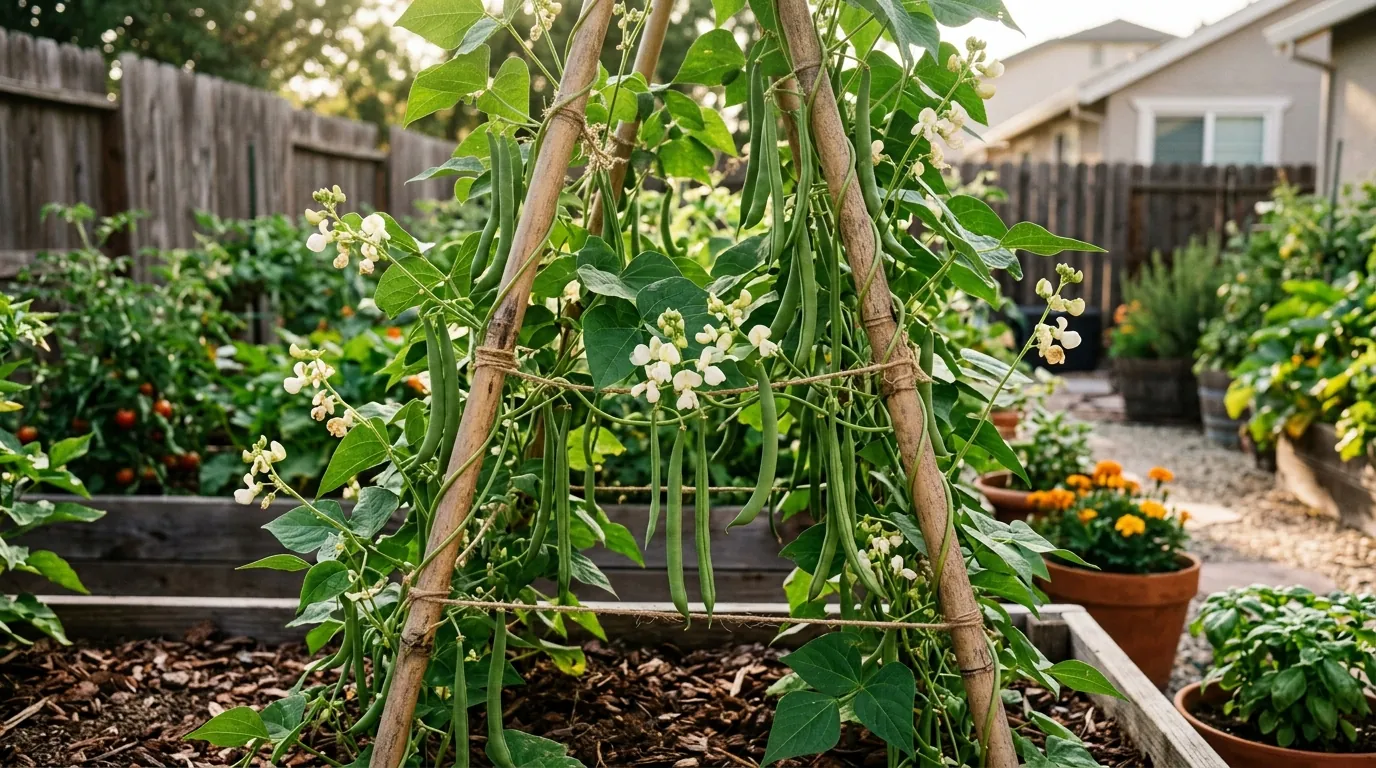
Beans are a two-season crop in most of zone 9, planted on either side of summer. The Gulf South and North Florida sow in March and April and in August and September, Texas in March and April and in August, and Central Florida from February to April and in August and September. The Arizona desert runs in February and March and in August and September, and the Central Valley and Southern California from March to July.
Zone 9 beans planting months by region
| Planting region | Share of zone 9 | Sow beans | Last frost, zone 9 ZIP codes | First frost, zone 9 ZIP codes |
|---|---|---|---|---|
| Texas Hot summers, spring and fall seasons | 23 percent | March and April, then August | February 20 | December 3 |
| Gulf South Humid subtropical | 21 percent | March and April, then August and September | March 2 | November 26 |
| Northern California & Central Valley Mediterranean, mild winters and hot dry summers | 17 percent | March to July | February 22 | December 1 |
| Desert Southwest Low desert, hot and dry | 9 percent | February and March, then August and September | February 1 | December 10 |
| North Florida Humid subtropical, mild winter | 9 percent | March and April, then August and September | March 1 | December 1 |
| Southern California Mediterranean | 9 percent | March to July | February 2 | December 8 |
| Pacific Northwest Maritime, mild wet winters and cool summers | 6 percent | May and June | March 13 | November 17 |
| Central Florida Subtropical | 5 percent | February to April, then August and September | Rare | Rare |
Other regions (2 percent of the zone): Mid-South.
How we built this table: we placed all 4,284 zone 9 ZIP codes (2023 USDA map) in our planting regions; the months are each region's own calendar and the frost dates are NOAA 1991 to 2020 medians for the zone's ZIP codes there.
Beans between the heat waves
Bean flowers drop when days pass about 90°F and nights stay warm, so a zone 9 crop has to flower in the mild weeks of spring or fall. That is why the calendar splits, and why a bed sown just before summer is wasted. The spring sowing in the Gulf South has a typical last frost near March 2 and about 269 frost-free days, and the fall sowing must finish before the first frost around November 26. Contender, a heat-tolerant bush bean, and Kentucky Wonder, a pole bean, are old southern standards.
The Arizona low desert squeezes beans into the short windows when it is neither frosty nor scorching. A typical last frost near February 1 opens the spring run, and the fall run has to start early enough for pods to form before nights turn cold. Water with drip tape and mulch to keep the roots cool. Tepary beans, a native desert species, tolerate heat and drought that wreck ordinary snap beans, and gardeners who want a dependable summer bean should try them.
Sandy southern soils bring root-knot nematodes, which swell the roots into galls and stunt the plants. Rotating beans with a cover crop and mulching both lessen the damage. California's Central Valley has a long window and little disease, though spider mites rise in dry heat, and a hard spray of water under the leaves slows them. The Pacific Northwest part of zone 9 sows later, in May and June, because the soil stays cold.
Zone 9 beans questions
Can I grow beans in a Florida summer?
Our Central Florida calendar shows spring and fall windows only. Summer heat and rain bring flower drop and rust, though yardlong beans and southern peas handle it far better than snap beans.
How deep should I sow beans in sandy zone 9 soil?
About an inch (3 cm), our depth, and a little deeper in dry sand so the seed does not dry out. Water the row lightly each day until the seedlings are through, then taper to twice a week.
Growing advice follows published guidance from University of Florida IFAS Extension and University of Arizona Cooperative Extension, bean guidance.
Keep planning
- How to grow beans: the full guide
- Beans planting calendar for every region
- Zone 9a planting calendar and zone 9b planting calendar
- All USDA zones and the Frost Lookup by ZIP code
- When to plant broccoli in zone 9
- When to plant carrots in zone 9
- When to plant cucumbers in zone 9
- When to plant onions in zone 9
- When to plant strawberries in zone 9
- When to plant sweet potatoes in zone 9
- When to plant tomatoes in zone 9