
When to Plant Cucumbers in Zone 9
USDA zone 9 covers zones 9a and 9b, with winter lows of 20 to 30°F (-7 to -1°C).
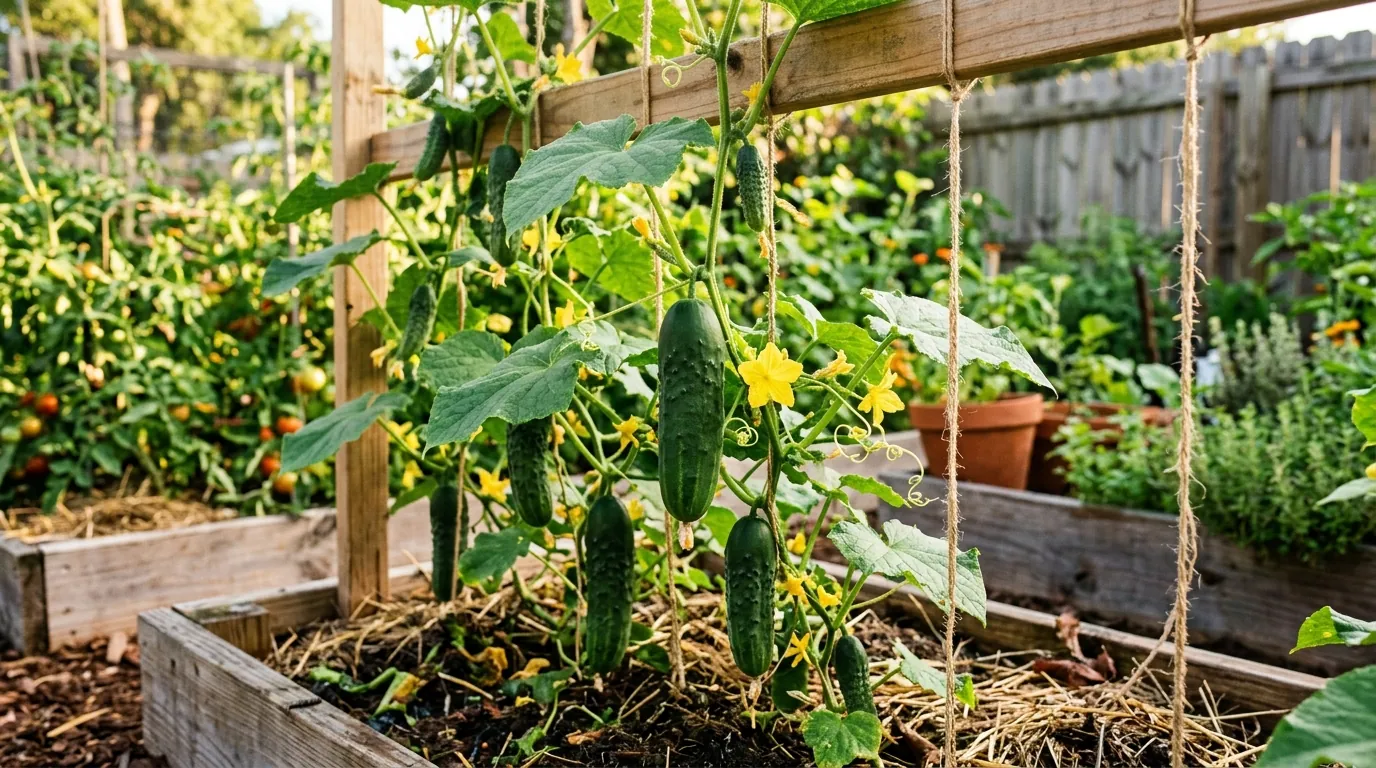
Zone 9 cucumber dates depend on whether summer is a friend or an enemy. The Gulf South and North Florida sow in March and April and from July to September, Texas in March and April and in August, and Central Florida from January to March and in September. The Central Valley and Southern California run from March to July, the Arizona desert in February and March and in August and September, and the Pacific Northwest in May and June.
Zone 9 cucumbers planting months by region
| Planting region | Share of zone 9 | Sow or set out cucumbers | Last frost, zone 9 ZIP codes | First frost, zone 9 ZIP codes |
|---|---|---|---|---|
| Texas Hot summers, spring and fall seasons | 23 percent | March and April, then August | February 20 | December 3 |
| Gulf South Humid subtropical | 21 percent | March and April, then July to September | March 2 | November 26 |
| Northern California & Central Valley Mediterranean, mild winters and hot dry summers | 17 percent | March to July | February 22 | December 1 |
| Desert Southwest Low desert, hot and dry | 9 percent | February and March, then August and September | February 1 | December 10 |
| North Florida Humid subtropical, mild winter | 9 percent | March and April, then July to September | March 1 | December 1 |
| Southern California Mediterranean | 9 percent | March to July | February 2 | December 8 |
| Pacific Northwest Maritime, mild wet winters and cool summers | 6 percent | May and June | March 13 | November 17 |
| Central Florida Subtropical | 5 percent | September, then January to March | Rare | Rare |
Other regions (2 percent of the zone): Mid-South.
How we built this table: we placed all 4,284 zone 9 ZIP codes (2023 USDA map) in our planting regions; the months are each region's own calendar and the frost dates are NOAA 1991 to 2020 medians for the zone's ZIP codes there.
Heat decides everything, from Florida to the desert
Arizona and the Gulf have two seasons because cucumbers set fruit poorly when days pass about 95°F and nights stay above 75°F. In the low desert, with a typical last frost of February 1 and a first frost of December 10, the spring crop goes out very early and has to finish before triple digits arrive. The fall sowing then grows into cooling weather and bears until frost, so many desert gardeners consider it the better crop. Shade cloth at 30 to 40 percent helps the seedlings through the first hot weeks.
The Central Valley is hot and dry rather than humid, so downy mildew is rare, and cucumbers enjoy the heat as long as drip irrigation keeps the moisture even. A typical last frost near February 22 lets sowing begin early, and about 285 frost-free days support the whole window. Armenian cucumbers, which are technically melons, thrive in heat that curls ordinary slicers, and Lemon, a round heirloom, is very productive.
In Florida and the Gulf, mildew, pickleworm and nematodes are the problems. Choose resistant types such as Poinsett 76, keep cucumbers out of the bed where any cucurbit grew in the last two years, and trellis the vines so air moves through them. Central Florida can lose plants to a late cold snap, so keep a sheet on hand. The Pacific Northwest edge of zone 9 is cool and does best with early types grown under a tunnel.
Zone 9 cucumbers questions
Can I grow cucumbers year round in zone 9?
Only in the warmest corners, and even there you will have gaps. Cold below 50°F stalls the vines, while heat past 95°F ruins fruit set, which is why most regions in our table show two windows.
Should I water cucumbers every day in zone 9?
In sand and in the desert, yes, during the first weeks and in hot spells. Elsewhere two or three deep waterings a week are enough. Irregular water makes bitter fruit, and drip irrigation or mulch keeps it steady.
Growing advice follows published guidance from University of Florida IFAS Extension and University of Arizona Cooperative Extension, cucumber guidance.
Keep planning
- How to grow cucumbers: the full guide
- Cucumbers planting calendar for every region
- Zone 9a planting calendar and zone 9b planting calendar
- All USDA zones and the Frost Lookup by ZIP code
- When to plant cucumbers in zone 8
- When to plant beans in zone 9
- When to plant broccoli in zone 9
- When to plant carrots in zone 9
- When to plant onions in zone 9
- When to plant strawberries in zone 9
- When to plant sweet potatoes in zone 9
- When to plant tomatoes in zone 9