
When to Plant Corn in Zone 9
USDA zone 9 covers zones 9a and 9b, with winter lows of 20 to 30°F (-7 to -1°C).
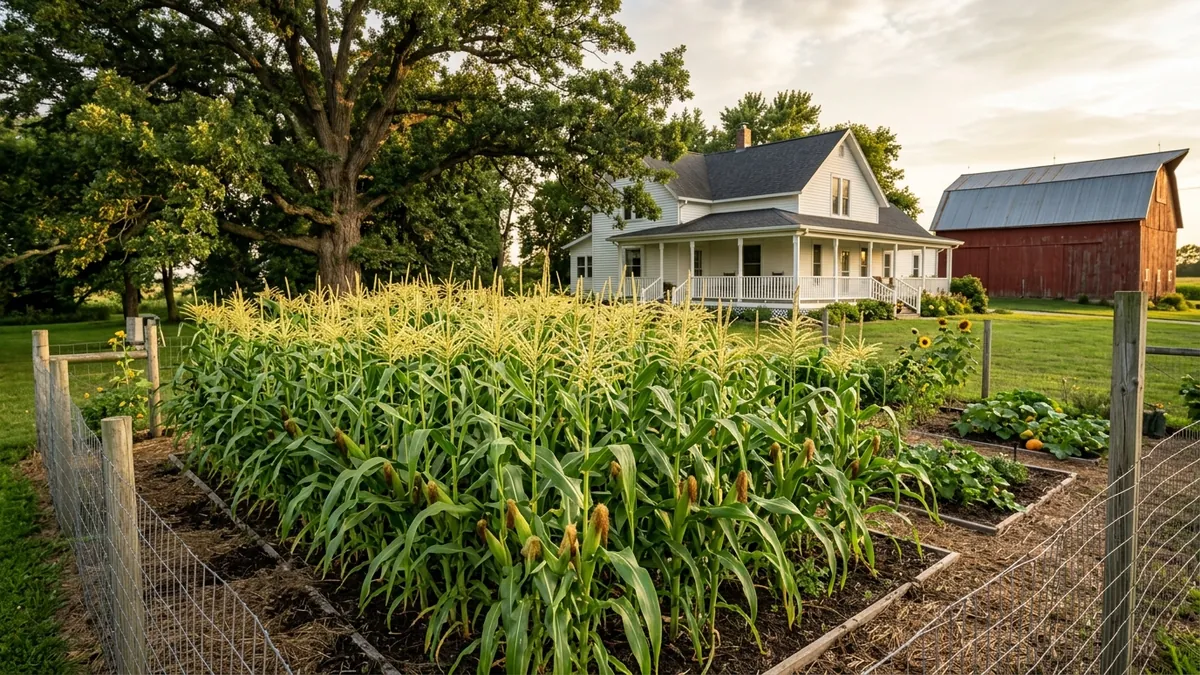
Zone 9 sweet corn is a race with summer. Texas, the Gulf South and North Florida plant in March and April, the Arizona desert in February and March, Central Florida from January to April, and the Central Valley and Southern California from March to July, while the Pacific Northwest edge of the zone plants in May and June.
Zone 9 sweet corn planting months by region
| Planting region | Share of zone 9 | Plant sweet corn | Last frost, zone 9 ZIP codes | First frost, zone 9 ZIP codes |
|---|---|---|---|---|
| Texas Hot summers, spring and fall seasons | 23 percent | March and April | February 20 | December 3 |
| Gulf South Humid subtropical | 21 percent | March and April | March 2 | November 26 |
| Northern California & Central Valley Mediterranean, mild winters and hot dry summers | 17 percent | March to July | February 22 | December 1 |
| Desert Southwest Low desert, hot and dry | 9 percent | February and March | February 1 | December 10 |
| North Florida Humid subtropical, mild winter | 9 percent | March and April | March 1 | December 1 |
| Southern California Mediterranean | 9 percent | March to July | February 2 | December 8 |
| Pacific Northwest Maritime, mild wet winters and cool summers | 6 percent | May and June | March 13 | November 17 |
| Central Florida Subtropical | 5 percent | January to April | Rare | Rare |
Other regions (2 percent of the zone): Mid-South.
How we built this table: we placed all 4,284 zone 9 ZIP codes (2023 USDA map) in our planting regions; the months are each region's own calendar and the frost dates are NOAA 1991 to 2020 medians for the zone's ZIP codes there.
Plant early enough to pollinate before the summer swelter
The typical last frost is as early as February 1 in the Arizona low desert and February 20 in Texas, which lets corn go in weeks ahead of most of the country. Early planting is a matter of survival, because corn pollinates poorly when tassels open in temperatures above about 95°F and the pollen dries before it reaches the silks. A planting in the first half of the window usually tassels in kinder weather. Corn needs about 90 days, our figure, and 12 inches (30 cm) between plants, our spacing.
Insects follow the warm weather. Corn earworm and fall armyworm feed on southern ears through the summer, and gardens on the Gulf and in Florida meet them by the time later plantings silk. Florida Staysweet is a supersweet bred at the University of Florida for southern conditions, and Bodacious is a popular sugar-enhanced hybrid. Staggering plantings spreads the harvest, but late ones carry the heaviest worm load, so plan on cutting the tips off some ears.
California and the desert grow corn in irrigated, dry heat, where earworms are fewer but water is everything. In the Central Valley, with about 285 frost-free days and a typical last frost near February 22, a planting every few weeks across the long window keeps ears coming. Desert gardeners should water deeply every few days and mulch the block. Central Florida is the exception, with a calendar that opens from January to April in the mildest part of the year, because corn planted into the summer wet season suffers rust and heavy worm damage.
Zone 9 sweet corn questions
Why are the ears on my zone 9 corn only partly filled?
Poor pollination is the usual cause. Hot, dry wind while the tassels shed pollen leaves silks unfertilized, and a single long row catches less pollen than a block. Plant in blocks of several short rows, water deeply while the silks emerge and, in a pinch, shake the tassels over the silks by hand in the morning.
Can I plant a second crop of sweet corn in summer in zone 9?
In the Central Valley and Southern California our window runs from March to July, so a second planting fits there. In Texas, the Gulf South, North Florida and Arizona the window is much shorter, and later plantings meet worms and heat at tasseling.
Growing advice follows published guidance from University of Florida IFAS Extension, Texas A&M AgriLife Extension and University of California Cooperative Extension, sweet corn guidance.
Keep planning
- How to grow sweet corn: the full guide
- Sweet corn planting calendar for every region
- Zone 9a planting calendar and zone 9b planting calendar
- All USDA zones and the Frost Lookup by ZIP code
- When to plant sweet corn in zone 8
- When to plant beans in zone 9
- When to plant broccoli in zone 9
- When to plant carrots in zone 9
- When to plant cucumbers in zone 9
- When to plant onions in zone 9
- When to plant potatoes in zone 9
- When to plant pumpkins in zone 9