
When to Plant Pumpkins in Zone 9
USDA zone 9 covers zones 9a and 9b, with winter lows of 20 to 30°F (-7 to -1°C).
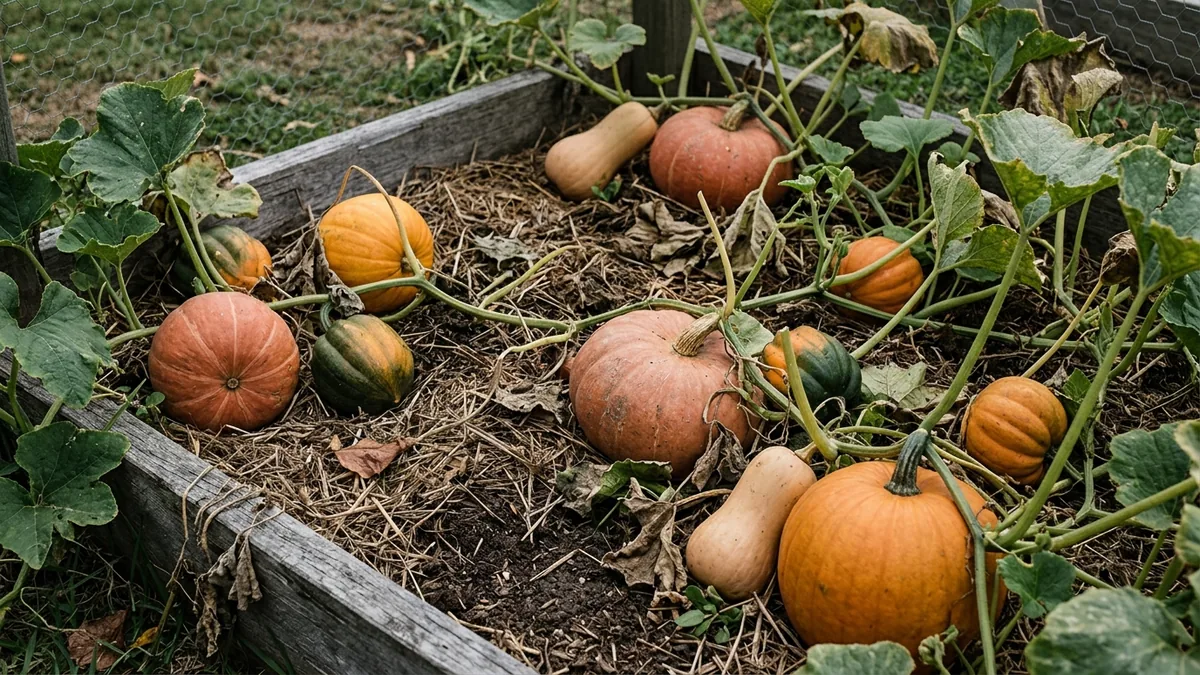
A zone 9 pumpkin patch comes down to two decisions: when to plant for a spring crop, and when to count back from Halloween for a fall one. Texas sows in April and again in June, the Gulf South and North Florida in March and April and in July, and the Central Valley and Southern California from March to July. The Arizona desert sows in March and in August, Central Florida in February and March and from July to September, and the Pacific Northwest in May and June.
Zone 9 pumpkins planting months by region
| Planting region | Share of zone 9 | Sow or set out pumpkins | Last frost, zone 9 ZIP codes | First frost, zone 9 ZIP codes |
|---|---|---|---|---|
| Texas Hot summers, spring and fall seasons | 23 percent | April, then June | February 20 | December 3 |
| Gulf South Humid subtropical | 21 percent | March and April, then July | March 2 | November 26 |
| Northern California & Central Valley Mediterranean, mild winters and hot dry summers | 17 percent | March to July | February 22 | December 1 |
| Desert Southwest Low desert, hot and dry | 9 percent | March, then August | February 1 | December 10 |
| North Florida Humid subtropical, mild winter | 9 percent | March and April, then July | March 1 | December 1 |
| Southern California Mediterranean | 9 percent | March to July | February 2 | December 8 |
| Pacific Northwest Maritime, mild wet winters and cool summers | 6 percent | May and June | March 13 | November 17 |
| Central Florida Subtropical | 5 percent | February and March, then July to September | Rare | Rare |
Other regions (2 percent of the zone): Mid-South.
How we built this table: we placed all 4,284 zone 9 ZIP codes (2023 USDA map) in our planting regions; the months are each region's own calendar and the frost dates are NOAA 1991 to 2020 medians for the zone's ZIP codes there.
Timing the vines between spring heat and a fall finish
A pumpkin needs about 120 days, our figure, and dislikes much of the weather in between. Vines that flower in 100°F heat drop their blossoms, and fruit that ripens in full summer sun scalds on the shoulders and rots where it touches the ground. In Texas, with a typical last frost near February 20 and about 289 frost-free days, the answer is to sow once in spring and again in June, so that the second crop flowers in milder weather and is ripe by Halloween.
Vine borers and squash bugs are the other worry in the Gulf and Florida, where warm winters let both survive in leaf litter. Cover seedlings with row cover until the first flowers open, then remove it so bees can work. Seminole pumpkin, a Florida heirloom, ranges widely over the ground and tolerates humidity and borers far better than a carving type, and its tan fruit make fine pies. Dickinson, the canning pumpkin, also does well. A late sowing on the Gulf needs nearly every day left before a first frost near November 26.
Arizona and California pumpkins ripen in dry heat, where water and shade matter most. The desert has a typical last frost of February 1 and a first frost of December 10, so the spring sowing goes in very early and the second window, in August, aims at a late autumn harvest. Leave the leaves intact to shade the fruit, run drip irrigation along the row, and slide a board under each pumpkin. The Central Valley, with about 285 frost-free days, runs a long window, and powdery mildew is its usual leaf disease, so water in the morning and pick resistant varieties.
Zone 9 pumpkins questions
When should I sow pumpkins for Halloween in zone 9?
Count back about 120 days from the end of October. That points to the second sowing in Texas, in in June, and the late sowing on the Gulf, in in July. In the Central Valley the later part of the window works, and the desert second window, in August, suits a pumpkin that finishes in autumn.
Why do my pumpkin vines wilt in the afternoon?
A big leaf area loses water fast in desert and Valley heat, so mild wilting that recovers by evening is normal. Wilting that persists in the morning points to a squash vine borer in the stem, bacterial wilt from cucumber beetles or dry soil, so check the base of the vine for frass and water deeply.
Growing advice follows published guidance from Texas A&M AgriLife Extension, University of Florida IFAS Extension and University of Arizona Cooperative Extension, pumpkin guidance.
Keep planning
- How to grow pumpkins: the full guide
- Pumpkins planting calendar for every region
- Zone 9a planting calendar and zone 9b planting calendar
- All USDA zones and the Frost Lookup by ZIP code
- When to plant pumpkins in zone 8
- When to plant beans in zone 9
- When to plant broccoli in zone 9
- When to plant carrots in zone 9
- When to plant sweet corn in zone 9
- When to plant cucumbers in zone 9
- When to plant onions in zone 9
- When to plant potatoes in zone 9