
When to Plant Zucchini in Zone 9
USDA zone 9 covers zones 9a and 9b, with winter lows of 20 to 30°F (-7 to -1°C).
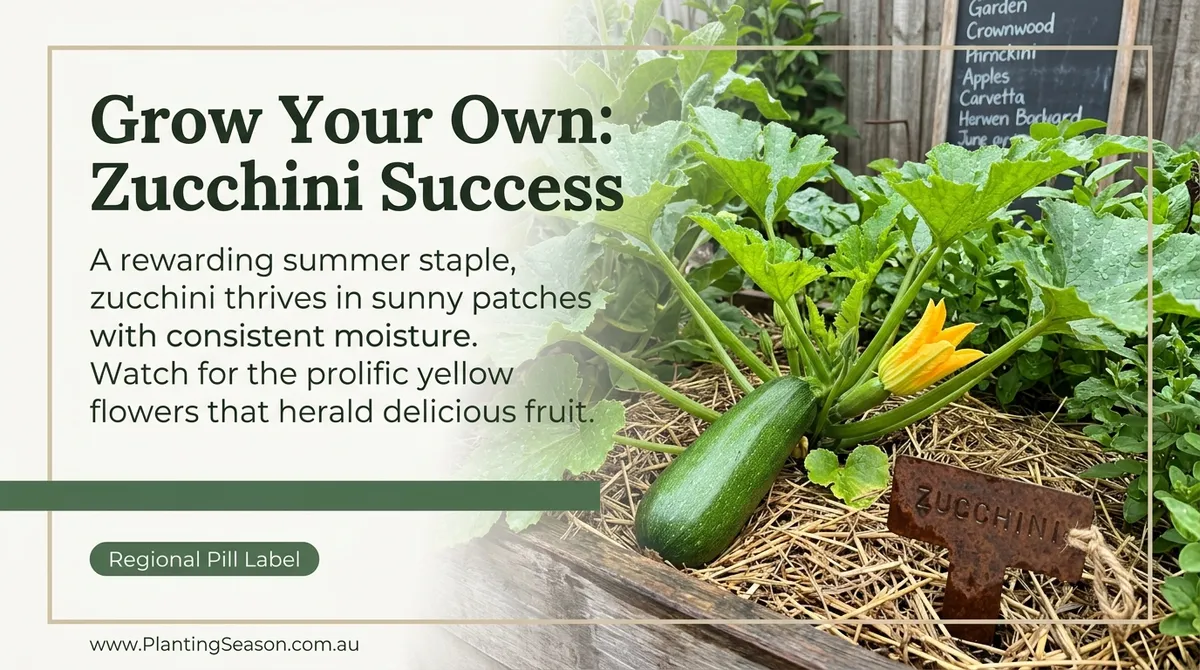
Zone 9 zucchini grows in two short bursts, because midsummer heat stops fruit set. The Gulf South and North Florida sow in March and April and in August and September, Texas in March and April and in August, the Arizona desert in February and March and in August and September, and Central Florida from January to March and in August and September. California runs from March to July without a break, and the Pacific Northwest edge of the zone sows in May and June.
Zone 9 zucchini planting months by region
| Planting region | Share of zone 9 | Sow or set out zucchini | Last frost, zone 9 ZIP codes | First frost, zone 9 ZIP codes |
|---|---|---|---|---|
| Texas Hot summers, spring and fall seasons | 23 percent | March and April, then August | February 20 | December 3 |
| Gulf South Humid subtropical | 21 percent | March and April, then August and September | March 2 | November 26 |
| Northern California & Central Valley Mediterranean, mild winters and hot dry summers | 17 percent | March to July | February 22 | December 1 |
| Desert Southwest Low desert, hot and dry | 9 percent | February and March, then August and September | February 1 | December 10 |
| North Florida Humid subtropical, mild winter | 9 percent | March and April, then August and September | March 1 | December 1 |
| Southern California Mediterranean | 9 percent | March to July | February 2 | December 8 |
| Pacific Northwest Maritime, mild wet winters and cool summers | 6 percent | May and June | March 13 | November 17 |
| Central Florida Subtropical | 5 percent | January to March, then August and September | Rare | Rare |
Other regions (2 percent of the zone): Mid-South.
How we built this table: we placed all 4,284 zone 9 ZIP codes (2023 USDA map) in our planting regions; the months are each region's own calendar and the frost dates are NOAA 1991 to 2020 medians for the zone's ZIP codes there.
Two seasons of zucchini, with the hottest weeks skipped
Pollen turns sterile above about 90°F, and young fruit shrivel at the tip, so the spring crop has to set its fruit before the real heat. The typical last frost is as early as February 1 in the low desert and February 20 in Texas, which lets seed go in weeks before most of the country. Sow about three quarters of an inch (2 cm) deep once the soil passes 65°F and leave about 31 inches (80 cm) between plants, our spacing. Fruit comes about 60 days from sowing, our figure.
Squash vine borer and pickleworm thrive in the warm, damp Gulf and Florida, where mild winters let both pests survive in leaf litter. Row cover until the first flowers open keeps them off, and a second sowing a few weeks later gives a spare plant. In the desert, whiteflies and heat stress are the issue, so give afternoon shade with a cloth and water deeply at dawn. Black Beauty is dependable everywhere, and the ribbed Costata Romanesco keeps cropping in warm weather.
The fall sowing is the sweeter crop. It starts into soil that is still warm, so germination takes only days, and cooler nights bring a long run of fruit before the first frost near November 26 on the Gulf and December 3 in Texas. California has no gap, with about 285 frost-free days in the Central Valley, and powdery mildew is its usual trouble, so water in the morning and keep the leaves dry. A plant sown every month through the long window spreads the harvest, so pick young and often.
Zone 9 zucchini questions
Can I grow zucchini through a zone 9 summer?
Not reliably in the Gulf, Texas or the desert. Pollen fails in extreme heat, so aim for the spring and fall windows and let a few plants rest in the hottest weeks.
Why do my zucchini flower and then drop?
Heat and poor pollination are the usual causes. Water deeply, plant flowers nearby to bring bees, and in the morning brush pollen from a male flower onto a female one, which has a tiny fruit behind the bloom.
Growing advice follows published guidance from University of Florida IFAS Extension, Texas A&M AgriLife Extension and University of Arizona Cooperative Extension, summer squash guidance.
Keep planning
- How to grow zucchini: the full guide
- Zucchini planting calendar for every region
- Zone 9a planting calendar and zone 9b planting calendar
- All USDA zones and the Frost Lookup by ZIP code
- When to plant beans in zone 9
- When to plant broccoli in zone 9
- When to plant carrots in zone 9
- When to plant sweet corn in zone 9
- When to plant cucumbers in zone 9
- When to plant onions in zone 9
- When to plant potatoes in zone 9