
How Long Do Vegetables Take to Grow? Days to Harvest Chart
Updated November 2026
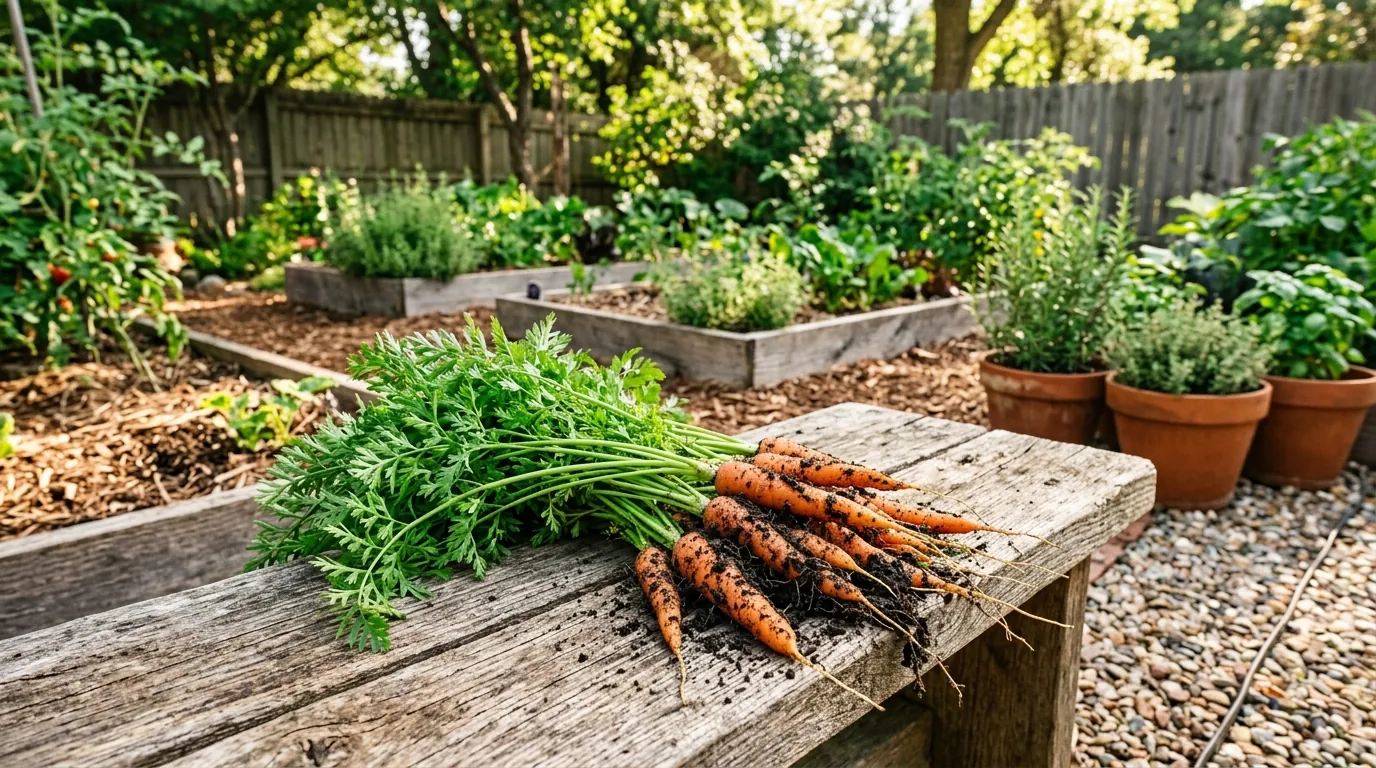
Days to harvest for potatoes, garlic, tomatoes and about 60 more crops, with a note on when each one is ripe.
Most vegetables take between one and four months to grow, and the table below gives the days to harvest for about 65 crops commonly grown in US gardens. Radishes are ready in a month, tomatoes and potatoes take around three months, and garlic stays in the ground for the better part of a year.
Quick answers, in days to harvest:
- Potatoes: 90 days.
- Garlic: 210 days.
- Carrots: 85 days.
- Tomatoes: 85 days.
- Sweet corn: 90 days.
Each count starts on the day you sow seed or set out a transplant and ends at the first pick. A cold spring adds weeks to all of them.
What the days to harvest figures mean
The numbers come from the Planting Season plant library, which also drives the app and the planting calendars for each US region. For every crop the figure is an average, counted from sowing seed or planting out a transplant, a crown or a seed potato, up to the first harvest. It marks the first pick and not the finish, so a zucchini plant goes on producing long after its number has passed.
Treat the figure as the date to start paying attention. Warm soil and long days shorten it, a cool or cloudy spell stretches it, and varieties differ, so a first early potato and a late storage potato are really two different crops. The notes beside each crop describe what ripe looks like, which is a better test than the calendar. To plan backward from a harvest date, use our guide to when to start seeds.
Days to harvest chart for US gardens
Each crop links to its growing guide or plant page, where you will find sowing months for all 18 of our US regions. Within each group the crops run from the quickest to the slowest.
Fast crops, under 60 days
| Crop | Days to harvest | How you know, or a tip |
|---|---|---|
| Radish | 30 | Pull the roots when they are about an inch across, because waiting longer makes them pithy and sharp. |
| Komatsuna | 35 | Cut leaves or whole plants at around eight inches tall; it keeps growing in both cool and warm weather. |
| Arugula | 40 | Snip young leaves before the plants bolt, because a hot spell turns the flavor harsh. |
| Mizuna | 40 | Cut the whole rosette an inch above the crown and it will usually send up a second flush. |
| Mustard greens | 40 | Harvest leaves at hand length for a milder bite, since big leaves turn peppery. |
| Endive and escarole | 45 | Gather the outer leaves into a loose bundle for a week to blanch the heart and soften the bitterness. |
| Tatsoi | 45 | Cut the flat rosette when it spans six to eight inches, or pick single leaves sooner. |
| Bok choy | 50 | Cut at soil level when the stalks are fat and the leaves still shiny, because long days push it to flower. |
| Cilantro | 50 | Take outer stems while the plant is bushy and sow again often, since summer heat sends it to seed. |
| Gai lan | 55 | Cut the center stalk while the buds are still closed so that side shoots keep coming. |
| Lettuce | 55 | Cut leaf types from about half size, or take whole heads before the center starts to stretch. |
| Spinach | 55 | Harvest the outer leaves first. Warm days trigger flowering, so sow again every couple of weeks. |
| Turnip | 55 | Pull roots at about two inches across for crisp, sweet flesh, and cook the greens as well. |
Medium crops, 60 to 100 days
| Crop | Days to harvest | How you know, or a tip |
|---|---|---|
| Cucumber | 60 | Pick while the skin is glossy and the fruit is firm, because yellowing means it has gone too far. |
| Daikon | 60 | Lift once the root shoulders push above the soil, ideally before summer heat arrives. |
| Dill | 60 | Snip fronds as you need them, and let a few plants flower if you want seed for pickling. |
| Green onion | 60 | Pull when the stems are about as thick as a pencil, or earlier if you like them slim. |
| Kohlrabi | 60 | Harvest when the bulb is two to three inches across, as larger bulbs turn woody. |
| Snow peas | 60 | Pick when the pods are flat and the peas inside are barely visible, checking the vines every other day. |
| Swiss chard | 60 | Cut outer stalks near the base and leave the center, and the plant keeps producing for months. |
| Zucchini | 60 | Cut fruit at six to eight inches, because a few days later it can double in size. |
| Basil | 65 | Pinch just above a leaf pair to delay flowering, and pick before nights drop toward 50°F. |
| Beet | 65 | Lift at one to two inches across for tender roots, and cook the tops as greens. |
| Bush beans | 65 | Pick when the pods are slim and snap cleanly; regular picking keeps the plants cropping. |
| Squash | 65 | Cut summer types young, and let winter types ripen until the rind is hard and the stem has dried. |
| Broccolini | 70 | Cut the main shoot while the buds are tight, then collect the side shoots that follow. |
| Kale | 70 | Take the lower leaves first and leave the top rosette; the flavor sweetens after a light frost. |
| Peas | 75 | Pick plump, bright green pods and eat them soon, before the sugars turn to starch. |
| Cantaloupe | 85 | Ripe fruit slips from the vine with a light push and smells sweet at the stem end. |
| Carrot | 85 | Brush back the soil at the top of a root, and shoulders about three quarters of an inch across mean it is ready. |
| Tomato | 85 | Pick when the fruit is fully colored and gives slightly. Our figure counts to the first ripe fruit. |
| Broccoli | 90 | Cut the main head while the buds are dense and dark green, before any yellow shows. |
| Cabbage | 90 | A head that feels hard when squeezed is ready, so cut it at the base. |
| Chili pepper | 90 | Pick at the mature color for the variety, and check the seed packet for what that color is. |
| Fava beans | 90 | Harvest when the pods are plump but the scar on each bean is still pale. |
| Potato | 90 | Lift new potatoes around flowering, or wait until the vines die back for a storage crop. |
| Rutabaga | 90 | Lift roots at three to five inches across, and leave some in the ground until after a frost. |
| Strawberry | 90 | Pick berries when they are red all the way to the stem, because they do not sweeten after picking. |
| Sweet corn | 90 | The silks turn brown and a kernel pierced with a thumbnail squirts milky juice when the ears are ready. |
| Watermelon | 90 | Look for a yellow patch where the melon rested and a dried, curly tendril beside the stem. |
| Bell pepper | 100 | Cut peppers with a short piece of stem; they turn red, yellow or orange if left on the plant longer. |
| Cauliflower | 100 | Harvest when the curd is firm and six to eight inches across, before it begins to separate. |
| Eggplant | 100 | Pick while the skin is glossy, because dull, soft skin means the fruit is overripe and seedy. |
Slow crops, over 100 days
| Crop | Days to harvest | How you know, or a tip |
|---|---|---|
| Shallot | 110 | Lift when the tops yellow and flop over, then cure the bulbs in a dry, airy place. |
| Brussels sprouts | 120 | Pick from the bottom of the stalk upward once the sprouts are firm and about an inch wide. |
| Celery | 120 | Cut the whole plant at the base or take outer stalks as they thicken, and keep the soil evenly moist. |
| Leek | 120 | Lift when the shafts are about an inch thick; they can stay in the ground through light frosts. |
| Parsnip | 120 | Wait until after the first hard frosts, since cold weather turns the starch to sugar. |
| Pumpkin | 120 | Cut with a few inches of stem once the rind resists a fingernail, and harvest before a hard freeze. |
| Sweet potato | 120 | Dig before the first frost, then cure the roots in a warm, humid place for a week or so. |
| Celeriac | 150 | Lift when the knob is three to four inches across, before hard freezes. |
| Sunchoke | 150 | Dig after the tops die back, and leave the tubers in the soil until you need them. |
| Onion | 180 | Harvest when most of the tops have fallen over, then cure the bulbs in a dry, airy spot. |
| Garlic | 210 | Lift when the lower third to half of the leaves have browned, then cure the bulbs in the shade. |
| Ginger | 270 | Dig when the leaves yellow; in cooler regions grow it in a pot and bring it indoors for winter. |
Perennials and fruit
| Crop | Days to harvest | How you know, or a tip |
|---|---|---|
| Globe artichoke | 180 | Cut the buds while they are tight and plump, before the scales open. |
| Blackberry | 365 | Pick when the berries turn fully black and dull, because shiny berries are still tart. |
| Fig | 365 | Let fruit droop on the stem and soften on the tree, because figs do not ripen after picking. |
| Raspberry | 365 | Ripe berries slip off easily; summer types fruit on second year canes and fall types can crop in their first year. |
| Rhubarb | 365 | Take only a few stalks in the first year, and never eat the leaves. |
| Asparagus | 730 | Hold off for the first two seasons while the crowns build up, then cut spears at six to eight inches. |
| Blueberry | 730 | Leave berries on the bush for a few days after they turn blue so they can sweeten. |
| Grape | 730 | Taste a berry before picking, as grapes stop ripening once they are off the vine. |
| Peach | 730 | Ripe fruit twists off easily and the background color has turned from green to yellow. |
| Apple | 1460 | Ripe apples lift off with a slight twist and the seeds have turned brown. |
Perennials and fruit work on a different clock from annual vegetables. Their figures count from planting a young plant to the first harvest, so they are measured in seasons rather than weeks, and the first crop is usually small.
Quick crops when the season is short
Gardeners in the Upper Midwest, the Mountain West, New England and Alaska often have only four or five frost free months, so the first group in the chart does most of the work. Radish takes 30 days, and arugula and mizuna take 40 and 40. Bok choy, tatsoi, lettuce and spinach are all ready in under two months, and you can pick the leafy ones a few leaves at a time well before that.
These crops have a lot in common: they stay small, they tolerate close spacing, and you can harvest them young. Our fast growing vegetables guide goes through the best of them. A good first bed is radishes, arugula and loose leaf lettuce sown in the same week, followed by bush beans or zucchini once the soil has warmed.
- Thin seedlings early, because crowded plants stall.
- Water evenly, since quick crops stop growing the moment they dry out.
- Pick often, as young leaves encourage new growth.
- Sow a short row every two weeks instead of one big planting.
How your region changes the count
A crop does not take the same number of days everywhere. A tomato set out into warm May soil in Tennessee races ahead of one planted into cold ground in Minnesota, and lettuce that grows briskly in mild spring weather can slow to a crawl in a cold Pacific Northwest February and bolt during a July heat wave in Texas. Heat drives growth, and every crop has a temperature range where it grows best.
Your average last spring frost and first fall frost set the outer limits of the season. Look up your dates on the frost dates page, check your USDA hardiness zone, and then open your regional hub for the months that suit your climate: Northeast and New England, Mid-Atlantic, Midwest and Great Lakes, Pacific Northwest, Texas, Southern California and Hawaii, among others. Tomato planting months show how wide the spread is: May to Jun in the Northeast, Mar and Jul to Aug in Texas and Aug to Feb in South Florida.
| Region | Sowing months |
|---|---|
| North Florida | Feb to Apr and Jul to Aug |
| Central Florida | Jan to Feb and Aug to Sep |
| South Florida | Aug to Feb |
| Gulf South | Mar to Apr and Jul to Aug |
| Desert Southwest | Feb to Mar and Aug to Sep |
| Texas | Mar and Jul to Aug |
| Southern California | Mar to Jul |
| Mid-South | Apr to Jun |
| Pacific Northwest | May to Jun |
| Northeast & New England | May to Jun |
| Mid-Atlantic | May to Jul |
| Midwest & Great Lakes | May to Jun |
| Upper Midwest & Northern Plains | May to Jun |
| Mountain West | May to Jun |
| Southern Plains | May to Jul |
| Northern California & Central Valley | Mar to Jul |
| Hawaii | Jan to Dec |
| Alaska | Jun |
Four things move the count the most:
- Soil temperature. Seed sits in cold ground for extra days before it even germinates.
- Day length. Onions and garlic respond to the season as much as to the calendar.
- Variety. Seed packets give a figure for that variety, and it can differ from our average.
- Stress. Dry spells, poor soil and crowding all hold a plant back, and a stalled plant crops late.
Counting back from the first fall frost
The days figure is most useful for warm season crops in the north. Take your average first fall frost date, subtract the days to harvest, and then subtract about two more weeks for the plants to slow down in cool autumn weather. That gives you the last sensible day to plant. A bush bean with 65 days, for example, needs to be sown at least 65 days plus two weeks before the first frost, and a pumpkin with 120 days needs a much earlier start.
If the date has already gone by, choose a quicker crop or a quicker variety, or sow something from the first group of the chart that can finish before the frost. The crop rotation guide suggests what to plant in each bed once a crop comes out.
Fitting quick crops around slow ones
The figure also tells you how long a crop holds its space. Radishes, lettuce and arugula can go between rows of slow parsnips, leeks or peppers and be finished before the big crop needs the room. Sow quick crops every two or three weeks so a fresh batch is ready as the last one ends, and sow slow crops once and leave them alone.
Potatoes
Potatoes are listed at 90 days, which fits an early or midseason variety. Late varieties take longer, and the count starts at planting and not when the first shoots show. Lift new potatoes about when the plants flower, and leave a storage crop until the vines have died back and the skins no longer rub off.
Read when to harvest potatoes for the signs to watch, and the potato growing guide for planting months in your region. Growing in a bag or bucket? See potatoes in containers.
Garlic
Garlic is the slowest annual here at 210 days. You plant it in fall and pull it the following summer, so it holds its bed all winter. In the Northeast the planting window is Oct, while in the Pacific Northwest it is Oct to Nov, which lets the cloves root before the ground freezes.
Harvest once the lower leaves have browned, then cure the bulbs somewhere shaded and airy. The garlic harvest guide explains the signs, and the garlic growing guide covers planting. Garlic also does well in pots, as garlic in containers shows.
Carrots
Carrots take 85 days, though a good share of that is spent waiting for seed to come up, which can take two weeks or more in cool soil. Keep the surface damp until the seedlings appear, because a dry spell in that first fortnight is the usual reason a row looks behind. After that, growth is steady.
You can thin by pulling baby carrots well before the full time and let the rest size up. Forked or split roots usually point to stony or recently manured ground, and the forked carrots guide explains the cure. The carrot growing guide lists sowing months for each region.
Putting the chart to work
Add the days figure to your planting date to estimate the first pick, then add a margin if you are planting late in the season. A row of bush beans sown on a warm day, at 65 days, should be producing in a little over two months. To work the other way, count back 85 days from the date you want ripe tomatoes and then add the six to eight weeks needed to raise transplants indoors. The tomato growing guide has the planting months for each region, and our guide to planning a vegetable garden helps you fit it all into one plan.
Questions
How long do vegetables take to grow?
Leafy greens and radishes are ready in one to two months, most warm season vegetables need two to four months, and onions, garlic and parsnips need much of a year. The chart above lists days to harvest for each crop.
How long do potatoes take to grow?
The chart above gives the average number of days from planting seed potatoes to the first harvest. Early varieties finish sooner, and late storage varieties need longer.
How long does garlic take to grow?
Garlic is the slowest annual in the chart above. Plant cloves in fall and pull the bulbs the following summer, and the chart gives the average days between the two.
How long do tomatoes take to grow?
The chart above counts the days from setting out a transplant to the first ripe fruit. Plants started from seed need another six to eight weeks indoors before that.
What vegetables grow the fastest?
Radishes lead, followed by arugula, mizuna, komatsuna and tatsoi, all of which are ready in about six weeks or less. Lettuce and spinach can be picked leaf by leaf even earlier.
Why is my crop taking longer than the days listed?
Days to harvest are averages. Cold weather, dry soil, shade and slow varieties add time, and planting at the right season for your region is the best way to stay close to the figure.